🌿 Easy Homemade Chimichurri Sauce
Fresh, punchy, and packed with herbs, this Easy Homemade Chimichurri Sauce is one of the simplest ways to add serious flavor to grilled steak, chicken, vegetables, sandwiches, and grain bowls. Fresh parsley, garlic, oregano, red wine vinegar, olive oil, and red pepper flakes come together in a vibrant sauce that takes only minutes to prepare.
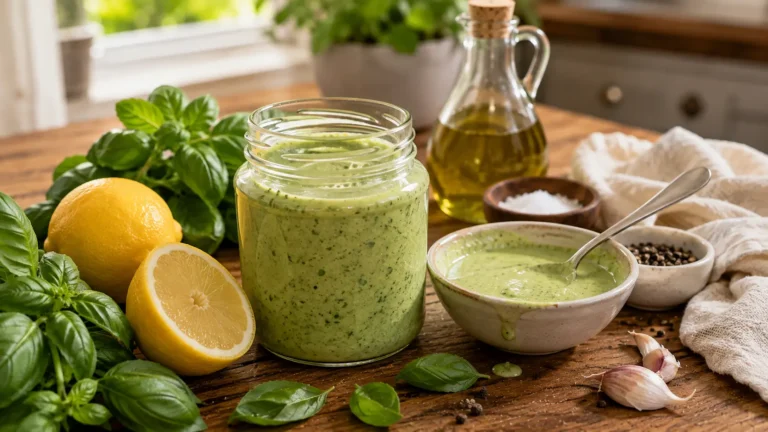
Unlike smooth blended herb sauces, traditional-style chimichurri should have plenty of visible texture. The parsley is finely chopped rather than puréed, the garlic remains noticeable, and the olive oil and vinegar create a loose, spoonable consistency. Every bite gives you a slightly different combination of herbs, acidity, garlic, and gentle heat.
Chimichurri is especially useful because you can make it ahead. In fact, giving the sauce a short rest before serving allows the garlic, vinegar, herbs, and olive oil to mingle and develop a more rounded flavor. Keep a jar in the refrigerator and you have an easy way to transform simple grilled foods throughout the week.
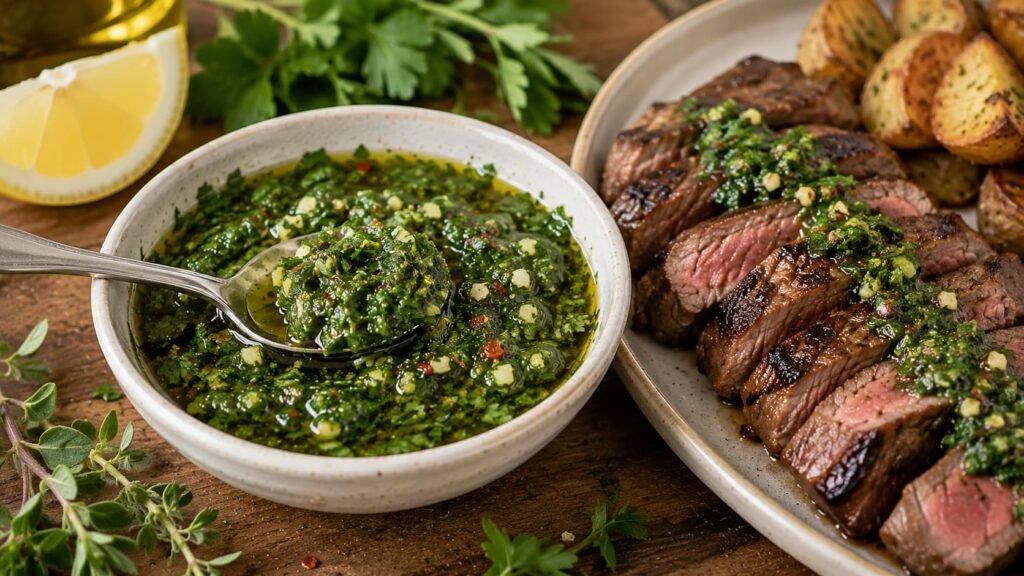
Easy Chimichurri Sauce in 10 Minutes
Chimichurri is strongly associated with Argentine cooking, particularly grilled meats and steak.
The beauty of the sauce is its simplicity.
Fresh parsley provides the herbal foundation. Garlic gives it its characteristic savory punch, while oregano adds an earthy note.
Red wine vinegar supplies the acidity that makes chimichurri particularly good with rich grilled meat. Extra-virgin olive oil carries all those flavors and gives the sauce its characteristic loose consistency.
A little crushed red pepper adds heat, but this isn’t supposed to be an overwhelmingly spicy sauce.
Another important distinction is texture.
Chimichurri isn’t pesto.
You don’t need to blend it into a perfectly smooth green paste. A good homemade chimichurri should still contain visible pieces of parsley, oregano, garlic, and pepper suspended naturally in the oil and vinegar.
That rustic texture is part of what makes it so good.
⭐ Why You’ll Love This Recipe
- Ready in about 10 minutes
- No cooking required
- Fresh, vibrant flavor
- Excellent with steak and grilled chicken
- Naturally dairy-free
- Easy to make ahead
- Simple everyday ingredients
- Adjustable heat level
- Works as a sauce, marinade, or finishing condiment
- Much more versatile than just a steak sauce
🛒 Ingredients
Fresh Flat-Leaf Parsley
Use 1 packed cup finely chopped fresh flat-leaf parsley.
Flat-leaf parsley has a stronger, fresher flavor than curly parsley and is easier to chop finely.
Remove the thick lower stems, but tender upper stems are perfectly fine.
The parsley should be chopped finely while retaining visible texture.
Fresh Garlic
Use 4 garlic cloves, finely minced.
Garlic is one of the defining flavors in chimichurri.
Because it remains raw, four cloves give the sauce plenty of punch without completely overwhelming the herbs.
Fresh Oregano
Use 2 tablespoons finely chopped fresh oregano.
Fresh oregano adds a distinctive earthy, slightly peppery flavor.
If fresh oregano isn’t available, you can substitute approximately 2 teaspoons dried oregano.
Extra-Virgin Olive Oil
Use ½ cup extra-virgin olive oil.
The olive oil forms the body of the sauce.
Choose an olive oil you enjoy because its flavor remains noticeable.
Red Wine Vinegar
Use 3 tablespoons red wine vinegar.
The vinegar provides the bright acidity that balances the olive oil and makes chimichurri so effective with grilled meat.
Crushed Red Pepper Flakes
Use ½ teaspoon crushed red pepper flakes.
This gives the sauce gentle warmth.
Increase or decrease the amount according to your preference.
Salt
Use ½ teaspoon kosher or fine sea salt, then adjust to taste.
Salt helps draw flavor from the herbs and garlic as the sauce rests.
Black Pepper
Use ¼ teaspoon freshly ground black pepper.
It adds another subtle layer of warmth.
Lemon Juice
Use 1 tablespoon fresh lemon juice.
Although vinegar remains the primary acid, a small amount of lemon juice adds extra brightness to this version.
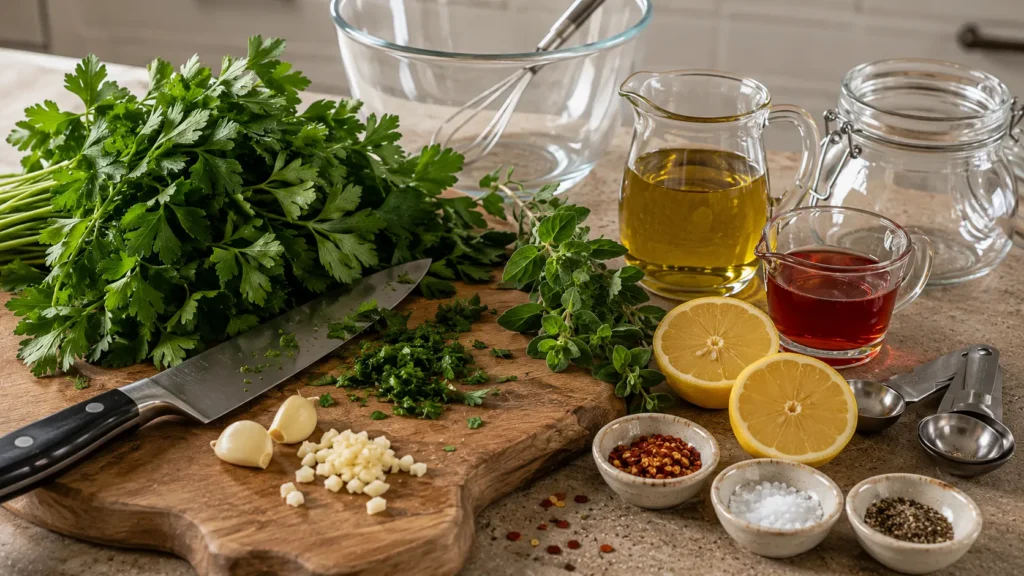
👩🍳 How to Make Chimichurri
1. Wash the parsley
Rinse the parsley thoroughly under cool water.
2. Dry it completely
Use a salad spinner or clean kitchen towels to remove as much moisture as possible.
Excess water can dilute the sauce.
3. Remove thick stems
Trim away the tough lower parsley stems.
Tender upper stems can remain.
4. Chop the parsley
Use a sharp chef’s knife to finely chop the parsley.
Don’t pulverize it into a paste.
5. Prepare the oregano
Remove the oregano leaves from the tougher stems and chop them finely.
6. Mince the garlic
Finely mince the garlic cloves.
The pieces should be small enough to distribute throughout the sauce.
7. Combine the herbs
Place the chopped parsley and oregano in a medium bowl.
8. Add the garlic
Stir in the minced garlic.
9. Add the seasonings
Add the crushed red pepper flakes, salt, and black pepper.
10. Add red wine vinegar
Pour the red wine vinegar over the herb mixture.
11. Add lemon juice
Add the fresh lemon juice.
12. Stir
Stir thoroughly and let the mixture sit for approximately 2–3 minutes.
This gives the vinegar time to begin mellowing the raw garlic.
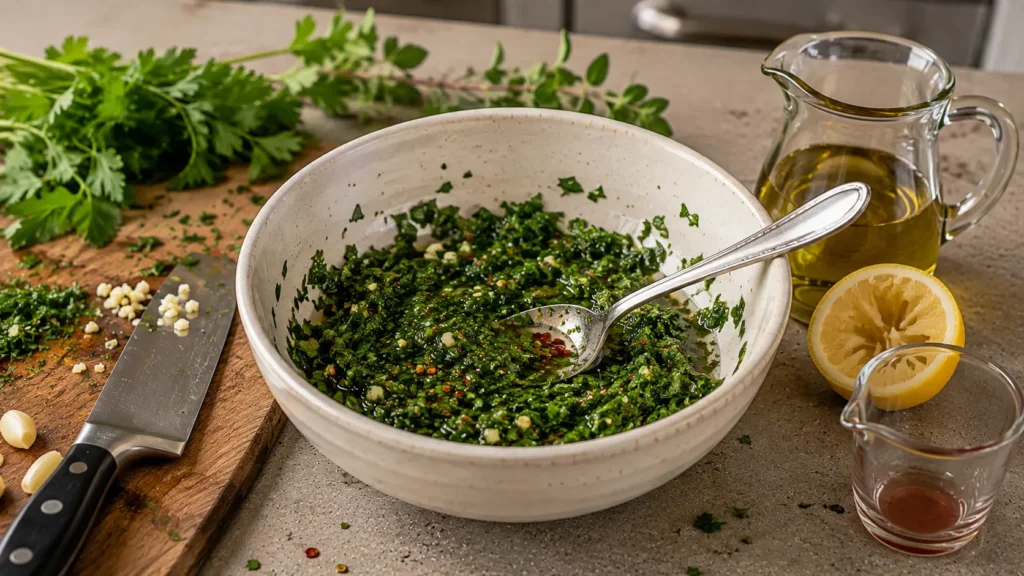
13. Add the olive oil
Slowly pour in the extra-virgin olive oil while stirring.
14. Mix thoroughly
Stir until the herbs, garlic, vinegar, and oil are evenly distributed.
The sauce should remain loose and spoonable.
15. Check the texture
If the chimichurri seems excessively thick with herbs, add another tablespoon of olive oil.
16. Taste
Taste and adjust the salt, vinegar, lemon, or red pepper flakes as needed.
17. Let it rest
Allow the chimichurri to rest for 20–30 minutes at room temperature before serving.
This makes a noticeable difference in flavor.
18. Stir again
The oil and vinegar naturally separate slightly.
Give the sauce a good stir before serving.
19. Serve
Spoon over grilled steak, chicken, roasted vegetables, potatoes, or crusty bread.
✨ Variations
Cilantro Chimichurri
Replace up to half the parsley with fresh cilantro.
This isn’t the classic version, but it creates a fresh variation that works particularly well with chicken and tacos.
Spicy Chimichurri
Increase the crushed red pepper flakes to 1 teaspoon or add a small finely chopped fresh chili.
Lemon Chimichurri
Increase the fresh lemon juice for a brighter citrus flavor.
Red Chimichurri
Add finely chopped roasted red pepper and a little smoked paprika for a red variation.
Mild Chimichurri
Reduce the garlic to three cloves and use only a pinch of crushed red pepper.
Extra-Garlicky Chimichurri
Increase to five or six garlic cloves if you enjoy a very pronounced raw-garlic flavor.
🔥 Tips for the Best Chimichurri
Use flat-leaf parsley. Its texture and flavor work particularly well here.
Dry the herbs thoroughly. Water dilutes both the olive oil and the flavor.
Chop rather than purée. Chimichurri should have texture.
Use a sharp knife. A dull knife bruises the herbs and makes chopping frustrating.
Don’t skip the resting time. Even 20 minutes helps the flavors develop.
Adjust the vinegar to taste. Chimichurri should have noticeable acidity.
Expect separation. Oil and vinegar naturally separate; simply stir before serving.
Be careful with garlic. Raw garlic becomes more pronounced as the sauce sits.
Don’t serve it ice-cold. Allow refrigerated chimichurri to sit briefly at room temperature before serving for better flavor and texture.
🥡 Storage & Freezing
Refrigerator
Transfer the chimichurri to an airtight glass jar or container.
Refrigerate for up to 5 days.
The herbs may gradually darken, but this is normal.
Before Serving
Olive oil can thicken considerably in the refrigerator.
Allow the chimichurri to sit at room temperature for approximately 15–20 minutes, then stir thoroughly before serving.
Freezing
Chimichurri can be frozen.
Spoon it into an ice cube tray and freeze until solid.
Transfer the frozen portions to an airtight freezer container and keep them for up to 3 months.
Thaw only the amount you need.
The herbs may lose some of their fresh appearance after freezing, but the sauce remains useful for marinades and cooked dishes.
❓ Chimichurri FAQs
What is chimichurri?
Chimichurri is an herb-based sauce associated particularly with Argentine cuisine. It commonly contains parsley, garlic, oregano, vinegar, olive oil, and chili.
Is chimichurri spicy?
It can have mild heat from crushed red pepper, but it doesn’t need to be very spicy.
Is chimichurri the same as pesto?
No. Pesto traditionally contains basil, Parmesan, nuts, and olive oil and is usually processed into a thicker sauce. Chimichurri is looser, vinegar-forward, and typically contains parsley, garlic, oregano, and chili.
Should chimichurri be blended?
You can use a food processor carefully, but hand-chopping gives you much better control over the traditional coarse texture.
What meat goes best with chimichurri?
Steak is the classic pairing, but it’s also excellent with grilled chicken, pork, lamb, and seafood.
Can chimichurri be used as a marinade?
Yes. It works particularly well as a marinade for steak and chicken. Keep any sauce that has contacted raw meat separate from the fresh chimichurri you plan to serve.
How long does homemade chimichurri last?
For best quality, refrigerate it in an airtight container and use it within about five days.
Why did my chimichurri turn darker?
Fresh chopped herbs naturally oxidize over time. Refrigeration slows this process but doesn’t completely prevent it.
Can I make chimichurri ahead of time?
Yes. In fact, making it a little ahead gives the flavors time to develop.
What else can I put chimichurri on?
Try it on roasted potatoes, grilled vegetables, sandwiches, grain bowls, eggs, crusty bread, or even as a finishing sauce for pizza.
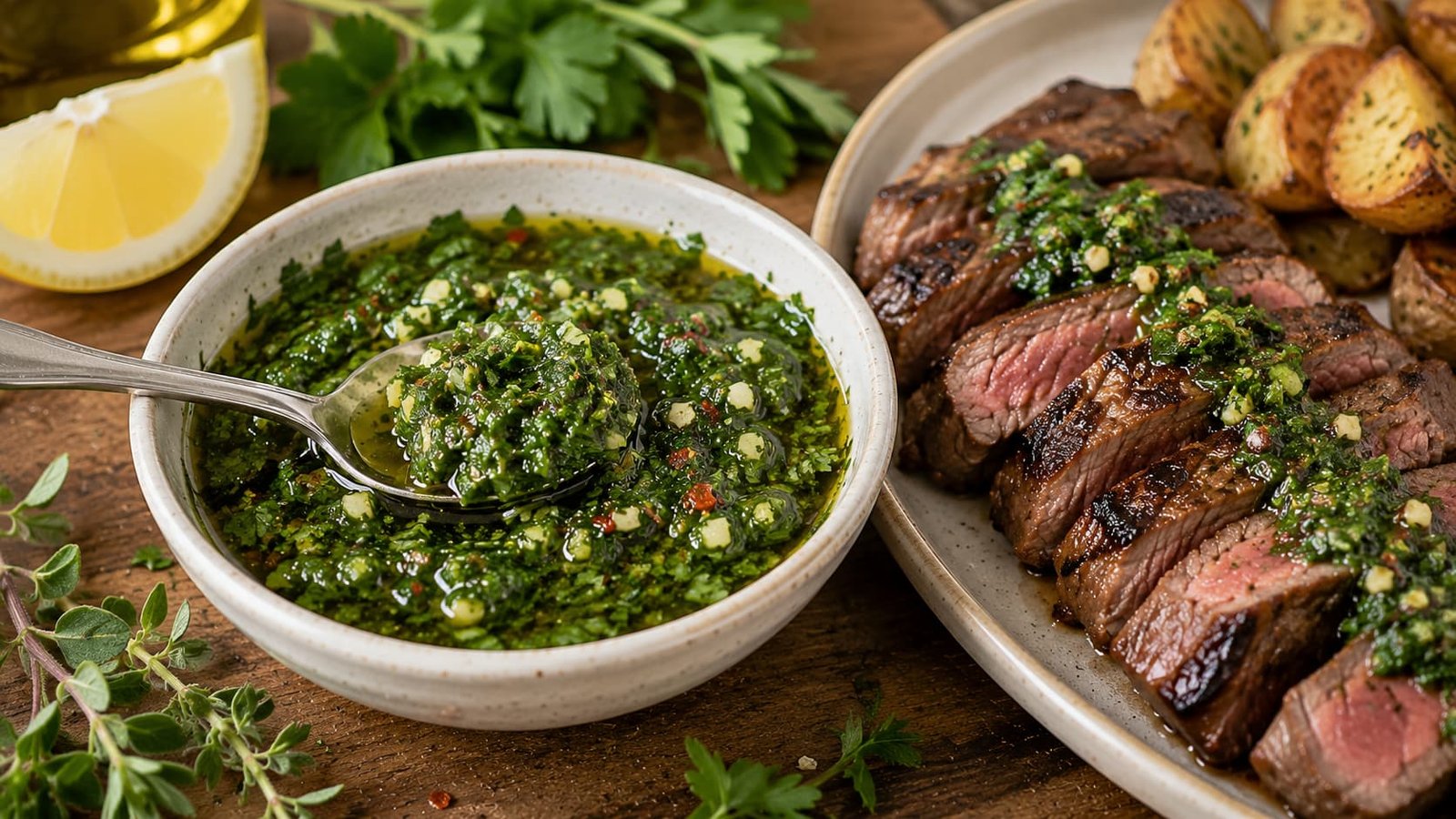
Easy Homemade Chimichurri Sauce
Ingredients
Method
- Rinse the parsley and oregano thoroughly and dry completely.
- Remove the tough lower stems from the parsley and oregano.
- Finely chop the parsley with a sharp chef’s knife, keeping some visible texture.
- Finely chop the oregano.
- Finely mince the garlic.
- Place the parsley, oregano, and garlic in a medium bowl.
- Add the crushed red pepper flakes, salt, and black pepper.
- Pour in the red wine vinegar and fresh lemon juice.
- Stir thoroughly and allow the herb mixture to sit for 2–3 minutes.
- Slowly pour in the extra-virgin olive oil while stirring.
- Continue stirring until the herbs and garlic are evenly distributed throughout the oil and vinegar.
- If the chimichurri is thicker than desired, add another small splash of olive oil.
- Taste and adjust the salt, vinegar, lemon juice, or red pepper flakes as desired.
- Let the chimichurri rest at room temperature for 20–30 minutes before serving.
- Stir thoroughly again immediately before serving.
- Spoon over grilled steak, chicken, vegetables, potatoes, or other dishes.