Easy Brown Butter Pumpkin Bread with Maple Glaze
There are plenty of pumpkin breads that are perfectly good on their own, but browning the butter first changes the character of the loaf completely. Instead of tasting only sweet and pumpkin-spiced, this version has a deeper, toasted flavor running through every slice.
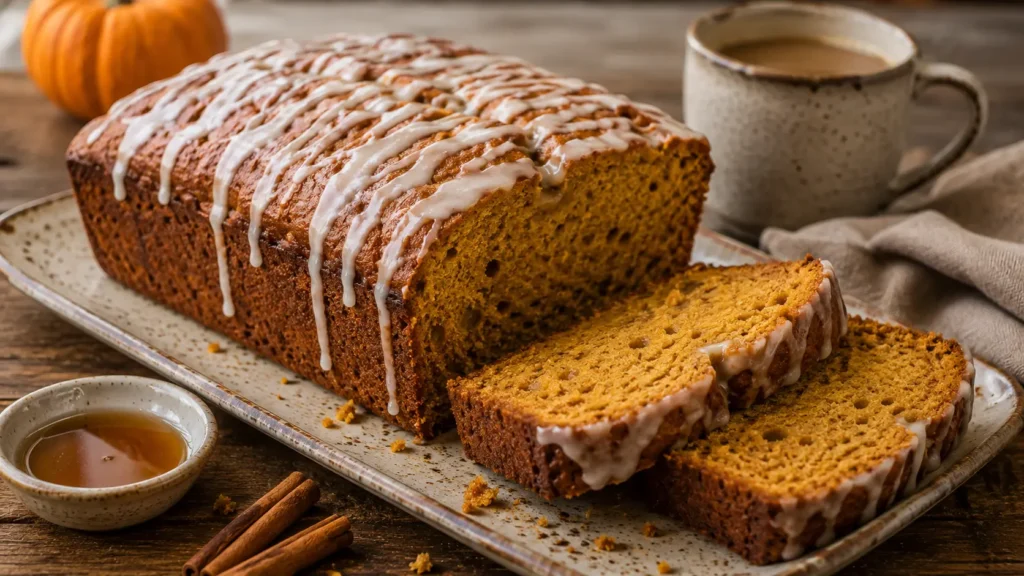
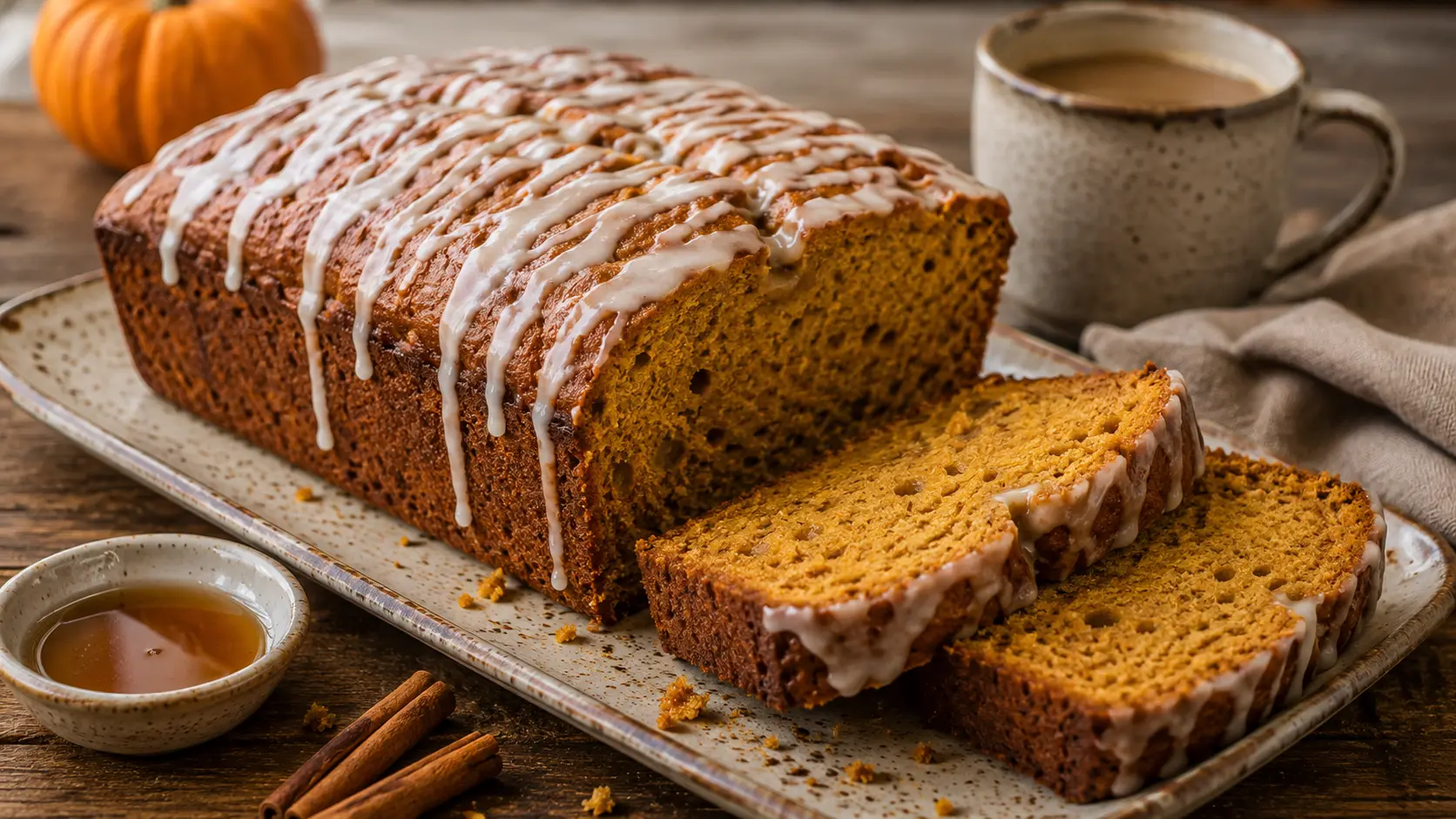
This Brown Butter Pumpkin Bread with Maple Glaze is moist without being heavy, warmly spiced without tasting overwhelmingly of cinnamon, and finished with a thin maple glaze that sets softly over the top. The browned butter contributes a subtle hazelnut-like richness, while pumpkin puree keeps the crumb tender for days.
It is the kind of fall bake that works just as well with morning coffee as it does for an afternoon snack or simple dessert—and, importantly, you don’t need a mixer to make it.
Easy Brown Butter Pumpkin Bread with Maple Glaze
The key difference between this loaf and ordinary pumpkin bread happens before the batter is even mixed: the butter is browned.
As butter cooks, its water evaporates and the milk solids begin to toast. Those little browned bits develop a nutty, almost caramel-like flavor that pairs particularly well with pumpkin, maple, cinnamon, and vanilla.
There is one small catch. Browning butter removes moisture, so simply replacing regular melted butter with browned butter can sometimes produce a drier loaf. This recipe compensates with pumpkin puree and a little neutral oil, giving us the flavor of browned butter without sacrificing the soft texture we want from pumpkin bread.
The maple glaze is intentionally simple. Rather than covering the loaf in thick frosting, we’re using just enough glaze to complement the bread while allowing the pumpkin and brown butter flavors to remain noticeable.
If you’ve been building a fall baking list, this loaf also fits naturally alongside Pumpkin Pie Baked Oatmeal for breakfast or Pumpkin Cinnamon Rolls with Maple Cream Cheese Frosting when you want something richer for brunch.
⭐ Why You’ll Love This Recipe
Brown butter adds real depth. Toasting the milk solids gives the bread a noticeably richer flavor than simply using melted butter.
It stays genuinely moist. Pumpkin puree, brown sugar, browned butter, and a small amount of oil create a tender crumb without making the loaf greasy.
No mixer required. Two bowls and a whisk are enough.
The pumpkin isn’t overwhelmed. Cinnamon, ginger, nutmeg, and cloves support the pumpkin rather than turning the bread into a spice cake.
The glaze is balanced. Maple adds sweetness and fall flavor without burying the loaf under frosting.
It’s make-ahead friendly. The bread keeps well, which makes it useful for fall brunches, Thanksgiving morning, or weekend baking.
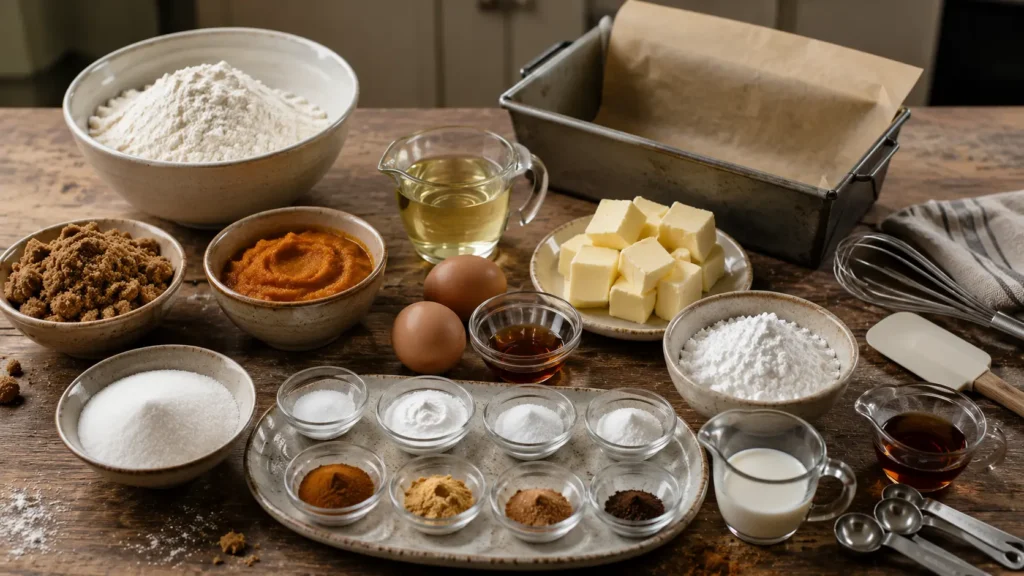
🛒 Ingredients
For the Pumpkin Bread
Unsalted butter — ½ cup (113 g)
This gets browned before being added to the batter. Unsalted butter gives you better control over the final seasoning.
Pumpkin puree — 1 cup (245 g)
Use plain 100% pumpkin puree rather than pumpkin pie filling, which already contains sugar and spices.
All-purpose flour — 1¾ cups (220 g)
Enough flour to support the pumpkin while keeping the crumb tender.
Baking soda — 1 teaspoon
Provides the main lift for the loaf.
Baking powder — ½ teaspoon
Adds a little additional rise and helps keep the loaf from becoming overly dense.
Fine salt — ½ teaspoon
Salt is especially important here because it balances the brown sugar and maple glaze.
Ground cinnamon — 1½ teaspoons
Ground ginger — ½ teaspoon
Ground nutmeg — ¼ teaspoon
Ground cloves — ⅛ teaspoon
Cloves are strong, so a small amount is enough.
Light brown sugar — ¾ cup (150 g)
Brown sugar contributes moisture and a subtle molasses flavor.
Granulated sugar — ¼ cup (50 g)
Helps create a balanced sweetness and tender crumb.
Large eggs — 2, room temperature
They provide structure and richness.
Neutral oil — ¼ cup (60 ml)
This small amount helps compensate for the moisture lost while browning the butter.
Pure vanilla extract — 2 teaspoons
For the Maple Glaze
Powdered sugar — 1 cup (120 g)
Pure maple syrup — 2 tablespoons
Use real maple syrup rather than pancake syrup for the cleanest maple flavor.
Milk or heavy cream — 1–2 tablespoons
Vanilla extract — ¼ teaspoon
Pinch of salt
A tiny amount keeps the glaze from tasting flat.
👩🍳 How to Make Brown Butter Pumpkin Bread
1. Prepare the pan
Preheat the oven to 350°F (175°C).
Lightly grease a 9 × 5-inch loaf pan, then line it with parchment paper, leaving some overhang on the long sides. This makes removing the finished loaf much easier.
2. Brown the butter
Place the butter in a light-colored saucepan or skillet over medium heat.
Allow it to melt completely. Continue cooking as it begins to foam, stirring or swirling the pan frequently.
The bubbling will gradually become quieter as the water evaporates.
3. Watch the milk solids
After several minutes, you’ll notice small golden-brown specks forming at the bottom of the pan and the butter will begin to smell nutty.
Remove it from the heat as soon as those milk solids become deep golden brown.
Don’t wait until they’re black.
Immediately pour the browned butter—including all those flavorful brown bits—into a heatproof bowl.
4. Let it cool slightly
Allow the butter to sit for about 10 minutes.
It can still be warm when mixed into the batter, but it shouldn’t be extremely hot.
5. Combine the dry ingredients
In a medium bowl, whisk together the flour, baking soda, baking powder, salt, cinnamon, ginger, nutmeg, and cloves.
Whisk thoroughly so the leaveners and spices are evenly distributed.
6. Mix the wet ingredients
In a large bowl, whisk together the pumpkin puree, brown sugar, granulated sugar, eggs, oil, and vanilla.
Whisk until smooth.
7. Add the brown butter
Slowly whisk the cooled brown butter into the pumpkin mixture.
Make sure to scrape all of the browned milk solids from the bowl into the batter. That’s where much of the toasted flavor lives.
8. Add the dry ingredients
Pour the dry ingredients into the wet mixture.
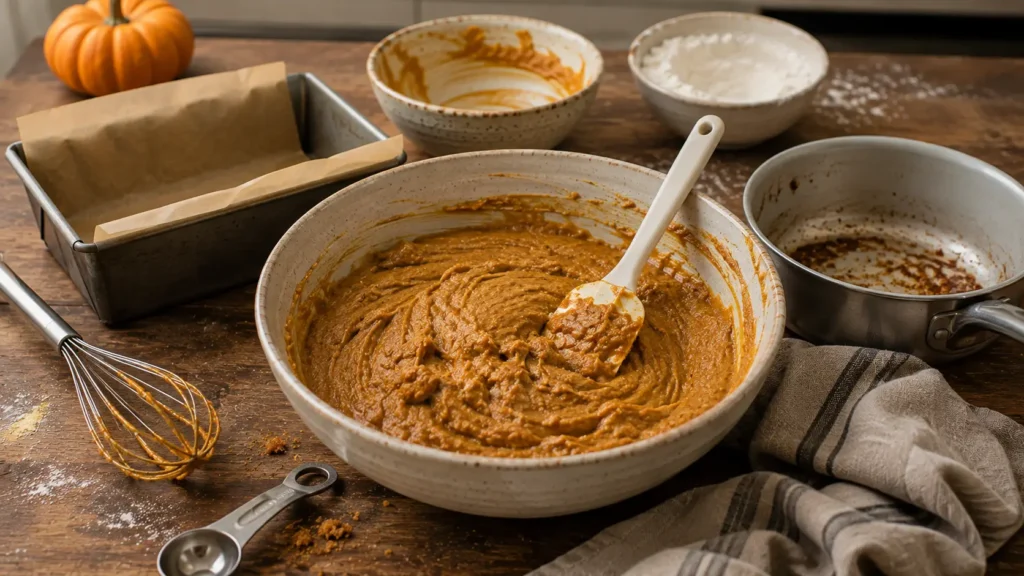
Using a silicone spatula, fold everything together gently.
Stop as soon as you can no longer see obvious streaks of dry flour.
Do not continue mixing until perfectly smooth. A few tiny lumps are preferable to overworked batter.
9. Transfer to the loaf pan
Scrape the batter into the prepared pan.
Spread it gently toward the corners and smooth the top without pressing the batter down.
10. Bake
Bake for approximately 55–65 minutes.
Start checking around the 50-minute mark because loaf pans and ovens vary considerably.
11. Check for doneness
Insert a wooden skewer or toothpick near the center.
It should come out clean or with several moist crumbs attached—not coated in wet batter.
For greater accuracy, the center of a quick bread is generally done when it reaches roughly 200–205°F (93–96°C).
If the top becomes deeply browned before the center finishes baking, loosely tent the loaf with aluminum foil.
12. Cool in the pan
Leave the bread in its pan for approximately 15 minutes.
Then use the parchment overhang to carefully lift it onto a wire rack.
13. Cool completely
This part matters.
Allow the loaf to cool completely before glazing it. Warm bread will melt the glaze and cause most of it to run straight off.
14. Make the maple glaze
Whisk together powdered sugar, maple syrup, vanilla, salt, and 1 tablespoon milk or cream.
Add additional milk a teaspoon at a time until the glaze is thick enough to coat a spoon but fluid enough to drizzle.
15. Glaze the loaf
Drizzle the maple glaze naturally across the cooled pumpkin bread.
Allow some glaze to run slowly down the sides rather than trying to cover every inch.
16. Let the glaze set
Leave the bread for approximately 15–20 minutes before slicing.
This gives the glaze time to set slightly and produces cleaner slices.
🍽️ Equipment
You don’t need specialized baking equipment:
- 9 × 5-inch loaf pan
- Light-colored saucepan or skillet
- Large mixing bowl
- Medium mixing bowl
- Whisk
- Silicone spatula
- Measuring cups and spoons or kitchen scale
- Parchment paper
- Wire cooling rack
- Wooden skewer or toothpick
A light-colored pan is especially useful for browning butter because you can actually see when the milk solids change from golden to brown.
🔁 Variations
Pecan Pumpkin Bread
Fold ¾ cup toasted chopped pecans into the batter before baking. Their toasted flavor works particularly well with brown butter.
Walnut Pumpkin Bread
Use chopped toasted walnuts instead of pecans for a slightly earthier flavor.
Chocolate Chip Pumpkin Bread
Fold in about ¾ cup semisweet chocolate chips. Keep the maple glaze light because chocolate adds additional sweetness.
No-Glaze Version
Skip the glaze entirely and sprinkle the top with coarse sugar before baking.
Maple-Pecan Finish
After glazing, scatter a small handful of finely chopped toasted pecans over the loaf before the glaze sets.
If you’re after a more dessert-like pumpkin bake instead, Pumpkin Cheesecake Snickerdoodle Cookies give you the same cozy seasonal direction with a completely different texture.
💡 Pro Tips
Don’t walk away from browning butter
Butter can move from beautifully toasted to burnt surprisingly quickly. Once brown flecks begin appearing, watch it continuously.
Transfer the butter immediately
Leaving browned butter in a hot pan means it continues cooking even after you’ve turned off the burner.
Measure flour carefully
Too much flour is one of the easiest ways to turn moist pumpkin bread into dry pumpkin bread.
If you’re measuring by volume, spoon flour into the measuring cup and level it rather than packing the cup directly into the flour.
Don’t overmix
Once flour becomes hydrated, mixing develops gluten. Too much mixing can produce a tougher, slightly rubbery loaf.
Use pumpkin puree—not pie filling
They are not interchangeable here.
Give it enough time to cool
Quick breads continue setting as they cool. Cutting the loaf immediately can make even properly baked bread appear gummy.
Glaze only when cool
If you want those visible ribbons of maple glaze instead of a transparent sugary coating, the loaf must be completely cool.
🧊 Storage & Freezing
Room Temperature
Store the unglazed or glazed bread in an airtight container for about 2 days at cool room temperature.
Refrigerator
For longer storage, refrigerate it in a tightly sealed container for up to 5 days.
Bring individual slices toward room temperature before eating for a softer texture.
Freezing
For best results, freeze the bread before adding the glaze.
Wrap the whole loaf or individual slices tightly in plastic wrap, then place them inside a freezer-safe bag or container.
Freeze for up to 3 months.
Thaw overnight in the refrigerator or for several hours at room temperature, then add fresh maple glaze.
❓ Frequently Asked Questions
Why did my pumpkin bread turn out gummy?
The most common causes are underbaking, cutting the loaf while it’s still hot, or using too much pumpkin puree.
Can I use pumpkin pie filling?
No. Pumpkin pie filling contains added sweeteners and spices and will change the recipe’s balance. Use 100% pumpkin puree.
Do I really need to brown the butter?
You could technically use ordinary melted butter, but you’d lose the toasted flavor that makes this particular pumpkin bread different.
Why does browned butter have little dark pieces in it?
Those are toasted milk solids, and you want them in the recipe. They’re responsible for much of brown butter’s distinctive flavor.
Can I make the bread without the maple glaze?
Absolutely. The loaf is flavorful enough to stand on its own.
Can I make it ahead for Thanksgiving?
Yes. Bake it a day ahead and store it well covered. For the freshest appearance, add the maple glaze after the loaf has cooled and closer to serving time.
🍽️ What to Serve With Brown Butter Pumpkin Bread
A thick slice is excellent with freshly brewed coffee, chai, black tea, or a cold glass of milk.
For a larger autumn brunch, pair it with savory eggs, fresh fruit, breakfast sausage, or yogurt so the meal isn’t overly sweet.
For a pumpkin-heavy brunch spread, Pumpkin Pie Baked Oatmeal offers a hearty oat-based option, while Pumpkin Cinnamon Rolls with Maple Cream Cheese Frosting work well when you want a more indulgent centerpiece.
The loaf also makes an easy addition to a Thanksgiving breakfast table because it can be prepared ahead rather than competing for oven space immediately before dinner.
📊 Nutrition
Approximate nutrition per slice when the loaf is divided into 10 slices, including maple glaze:
- Calories: ~360
- Carbohydrates: ~52 g
- Protein: ~4 g
- Fat: ~16 g
- Saturated Fat: ~7 g
- Fiber: ~2 g
- Sugar: ~32 g
- Sodium: ~260 mg
Nutrition values are estimates and will vary depending on ingredients, brands, slice size, and the amount of glaze used.
Easy Brown Butter Pumpkin Bread with Maple Glaze
Ingredients
Method
- Preheat oven to 350°F (175°C) and prepare a 9 × 5-inch loaf pan with parchment paper.
- Brown the butter over medium heat until the milk solids become golden brown and smell nutty. Transfer immediately to a bowl and cool for about 10 minutes.
- Whisk flour, baking soda, baking powder, salt, cinnamon, ginger, nutmeg, and cloves together.
- In another bowl, whisk pumpkin, both sugars, eggs, oil, and vanilla.
- Whisk in the slightly cooled browned butter, including the browned milk solids.
- Fold the dry ingredients into the wet mixture just until combined.
- Transfer the batter to the prepared loaf pan.
- Bake for 55–65 minutes, or until a tester inserted near the center comes out clean or with moist crumbs.
- Cool for 15 minutes in the pan, then transfer to a wire rack and cool completely.
- Whisk together the glaze ingredients, adding milk gradually until thick but pourable.
- Drizzle over the completely cooled loaf.
- Allow the glaze to set for 15–20 minutes before slicing.
Notes
- Use 100% pumpkin puree, not pumpkin pie filling.
- Watch browned butter closely because it can burn quickly.
- Don’t leave the browned milk solids behind—they contain much of the flavor.
- Avoid overmixing after adding the flour.
- If the loaf browns too quickly, loosely tent it with foil.
- Wait until the bread is completely cool before glazing.
- Freeze the loaf without glaze for the best texture after thawing.