🍗 Garlic Herb Roasted Chicken
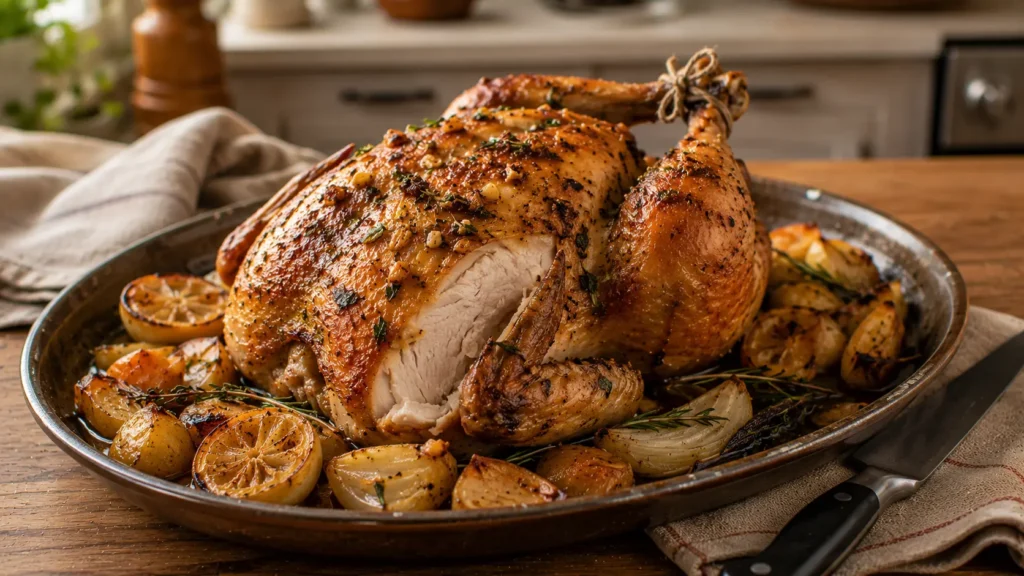
This Garlic Herb Roasted Chicken is the kind of classic dinner every home cook should have in their recipe collection. A whole chicken is coated with a buttery mixture of fresh garlic, rosemary, thyme, parsley, and lemon, then roasted until the skin is deeply golden and crisp while the meat stays tender and juicy.
The secret isn’t complicated. Thoroughly drying the chicken helps the skin brown, softened butter carries the herbs and garlic over the entire bird, and roasting at a relatively high temperature develops beautiful color without requiring hours in the oven. Lemon, onion, and fresh herbs inside the cavity gently perfume the chicken as it cooks.
Serve it with roasted potatoes, vegetables, mashed potatoes, salad, or crusty bread for an easy Sunday dinner. And don’t throw away the pan juices—they’re packed with roasted chicken, garlic, herb, and lemon flavor and are excellent spooned over the sliced meat.
Easy Garlic Herb Roasted Chicken
Roasting a whole chicken can seem more complicated than cooking individual chicken breasts or thighs, but the process is actually very straightforward.
The most important first step is getting the exterior very dry.
Moisture on the skin creates steam, which works against browning. Patting the chicken thoroughly with paper towels gives the butter and seasonings a dry surface to cling to.
Next comes the garlic herb butter.
Softened butter is mixed with fresh garlic, rosemary, thyme, parsley, lemon zest, salt, and pepper. Some is carefully rubbed underneath the breast skin, while the remainder coats the exterior.
The chicken then roasts uncovered until beautifully browned and safely cooked through.
After roasting, don’t immediately cut into it.
A 15-minute rest allows the juices inside the chicken to redistribute, giving you noticeably juicier slices.
⭐ Why You’ll Love This Recipe
- Golden, crispy chicken skin
- Tender and juicy meat
- Classic garlic herb flavor
- Simple ingredients
- Beautiful Sunday dinner
- Great for family meals
- No complicated techniques
- Delicious pan juices
- Excellent leftovers
- Perfect base recipe for whole chicken
🛒 Ingredients
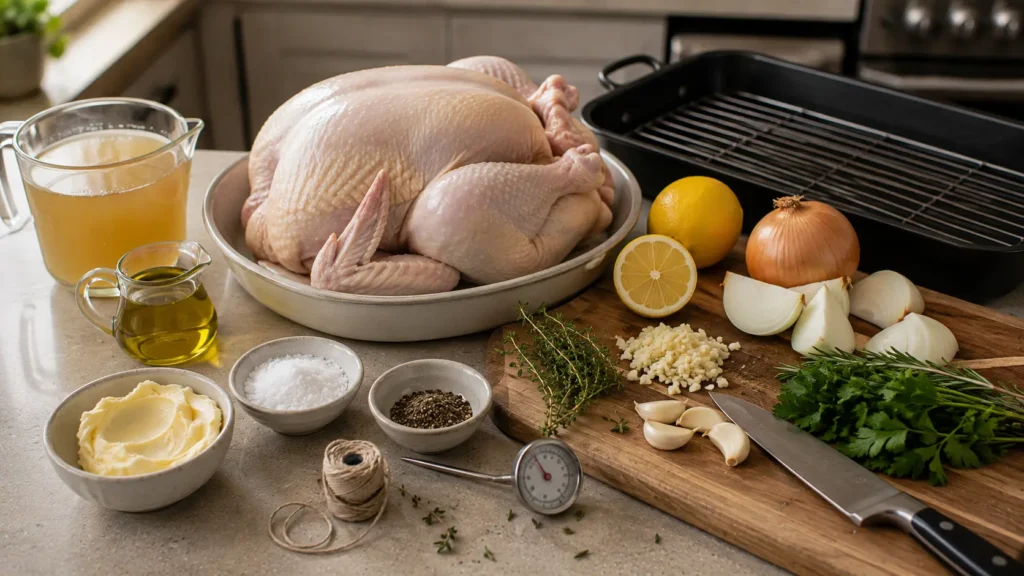
Whole Chicken
Use one 4–5 pound whole chicken.
A chicken in this size range cooks relatively evenly and gives approximately 6 servings.
Remove anything packaged inside the cavity before cooking.
Unsalted Butter
Use 5 tablespoons softened unsalted butter.
Butter helps the skin brown while carrying the garlic and herbs.
Using unsalted butter also gives you better control over seasoning.
Fresh Garlic
Use 5 garlic cloves, finely minced.
Garlic is one of the main flavors here, so fresh cloves are preferable to garlic powder.
Fresh Rosemary
Use 1 tablespoon finely chopped fresh rosemary, plus several whole sprigs for the cavity.
Rosemary adds a woodsy flavor that pairs naturally with roast chicken.
Fresh Thyme
Use 1 tablespoon fresh thyme leaves, plus several sprigs for the cavity.
Fresh Parsley
Use 2 tablespoons finely chopped fresh parsley.
Parsley adds freshness to the richer butter mixture.
Lemon
Use 1 large lemon.
You’ll use the zest in the herb butter and place lemon halves inside the chicken cavity.
Yellow Onion
Use 1 medium yellow onion, cut into thick wedges.
Some onion goes inside the chicken while the rest can roast underneath or around it.
Olive Oil
Use 1 tablespoon olive oil.
A light coating helps promote additional browning.
Kosher Salt
Use approximately 2 teaspoons kosher salt.
Season both the exterior and cavity.
Black Pepper
Use 1 teaspoon freshly ground black pepper.
Chicken Broth
Use approximately ½ cup low-sodium chicken broth in the bottom of the roasting pan.
It prevents drippings from scorching and helps create flavorful pan juices.
👩🍳 How to Make Garlic Herb Roasted Chicken
1. Bring the chicken out of the refrigerator
Remove the chicken from the refrigerator approximately 30 minutes before roasting.
This helps it cook more evenly.
2. Preheat the oven
Preheat your oven to 425°F (220°C).
3. Prepare the roasting pan
Place a roasting rack inside a roasting pan, or create a natural bed using thick onion wedges.
4. Remove the giblets
Check the chicken cavity and remove any giblets or packaging.
5. Dry the chicken thoroughly
Pat the entire chicken dry with paper towels, including around the legs and wings.
This is important for crispy skin.
6. Prepare the herbs
Finely chop the rosemary, thyme, and parsley.
7. Mince the garlic
Finely mince the garlic cloves.
8. Make the garlic herb butter
Combine softened butter, garlic, chopped rosemary, thyme, parsley, lemon zest, approximately 1 teaspoon salt, and ½ teaspoon black pepper.
Mix until evenly combined.
9. Season the cavity
Sprinkle a little salt and pepper inside the chicken cavity.
10. Add aromatics
Place the lemon halves, several onion wedges, rosemary sprigs, and thyme sprigs loosely inside the cavity.
Don’t pack it tightly.
11. Loosen the breast skin
Very carefully separate the skin from the breast meat using your fingers.
Try not to tear the skin.
12. Add butter underneath the skin
Spread approximately one-third of the garlic herb butter directly over the breast meat underneath the skin.
13. Coat the exterior
Rub the remaining garlic herb butter over the outside of the chicken.
Make sure the breasts, legs, and thighs receive some.
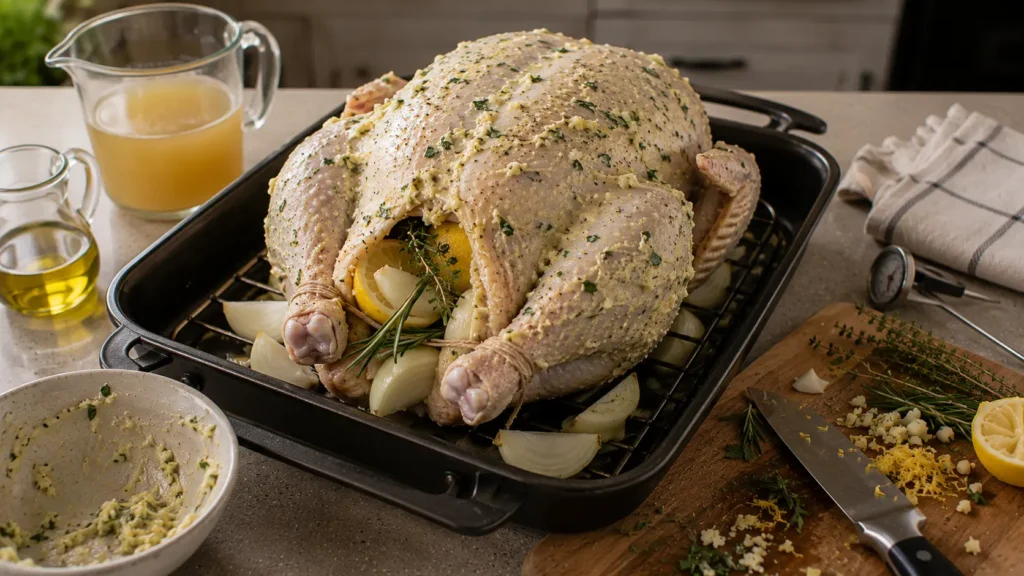
14. Add olive oil
Lightly drizzle the exterior with olive oil and rub it over the skin.
15. Season again
Sprinkle the remaining salt and pepper evenly over the exterior.
16. Tuck the wings
Tuck the wing tips underneath the chicken to reduce burning.
17. Tie the legs
Loosely tie the legs together with kitchen twine if available.
Don’t pull them excessively tight.
18. Position the chicken
Place the chicken breast-side up on the roasting rack or onion bed.
19. Add broth
Pour approximately ½ cup chicken broth into the bottom of the roasting pan.
Don’t pour it over the chicken.
20. Begin roasting
Transfer the pan to the oven and roast at 425°F (220°C) for 20 minutes.
21. Reduce the temperature
Reduce the oven temperature to 375°F (190°C) without removing the chicken.
22. Continue roasting
Roast for approximately another 50–65 minutes, depending on the chicken’s size.
23. Check doneness
Insert an instant-read thermometer into the thickest part of the thigh without touching bone.
The chicken is safely cooked when it reaches at least 165°F (74°C).
The breast should also reach 165°F.
24. Check the skin
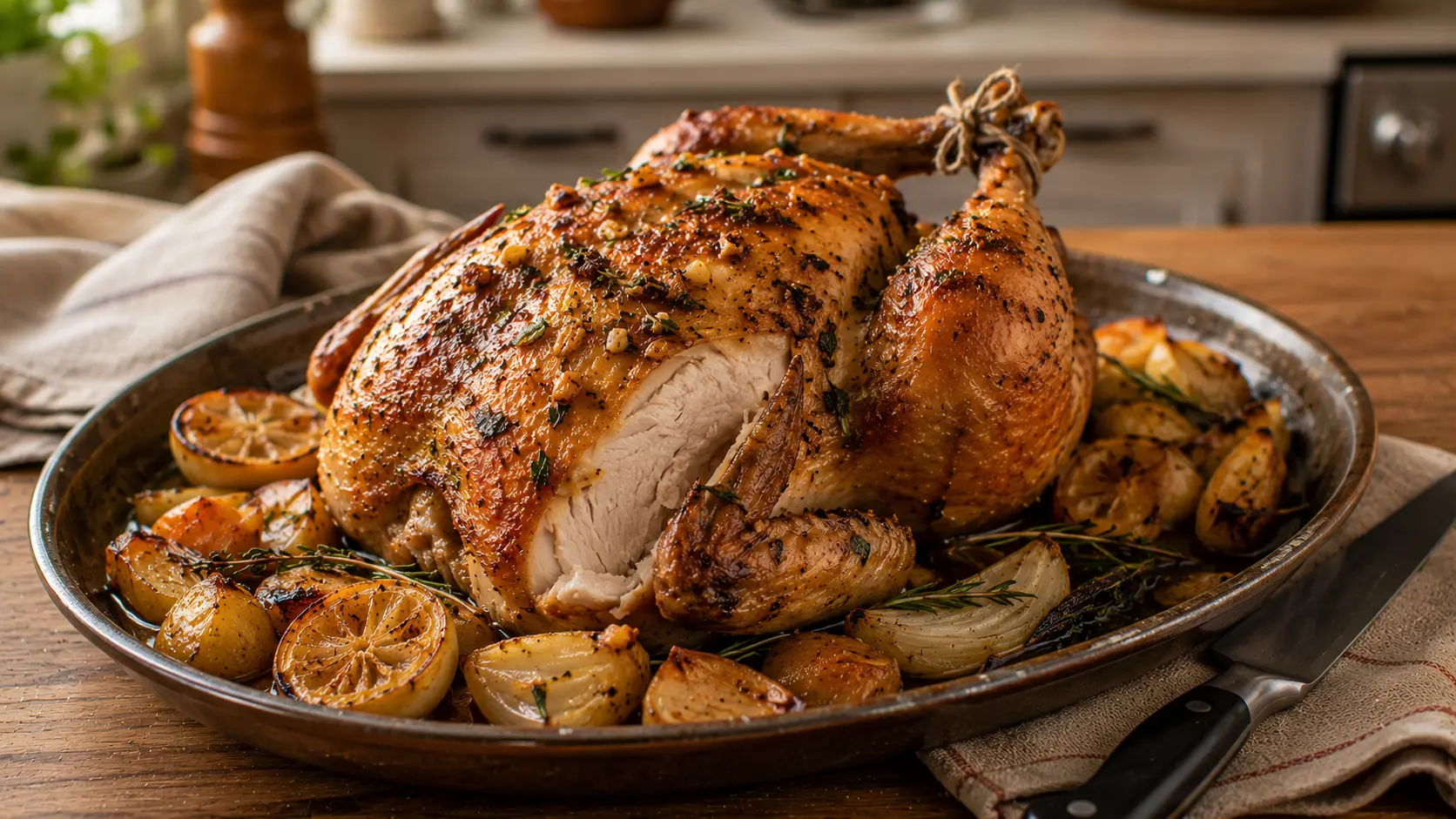
The exterior should be deeply golden with darker roasted areas around the legs and wings.
25. Remove from the oven
Carefully transfer the chicken from the oven.
26. Rest
Let it rest for 15 minutes before carving.
Do not skip this step.
27. Save the pan juices
Spoon excess fat from the pan juices if desired.
Taste the juices and adjust seasoning.
28. Carve
Remove the legs and thighs, then slice the breast meat.
29. Serve
Arrange the chicken on a platter and spoon a little warm pan juice over the meat.
✨ Variations
Garlic Lemon Roasted Chicken
Increase the lemon zest and add several additional lemon wedges around the roasting pan.
Rosemary Garlic Chicken
Use additional rosemary and reduce the thyme.
Herb Roasted Chicken with Vegetables
Add carrots, potatoes, and onion wedges around the chicken.
Cut them into relatively large pieces so they don’t overcook.
Paprika Herb Chicken
Add 1 teaspoon smoked or sweet paprika to the herb butter.
Garlic Parmesan Roasted Chicken
Add a small amount of finely grated Parmesan to the herb butter.
Watch the skin carefully because Parmesan can brown quickly.
Spicy Roasted Chicken
Add ½ teaspoon crushed red pepper flakes to the butter.
🔥 Tips for the Best Roasted Chicken
Dry the chicken extremely well. Moisture is the enemy of crispy skin.
Use softened—not melted—butter. Soft butter adheres to the chicken better.
Put some butter underneath the skin. This seasons the breast meat directly.
Don’t pack the cavity tightly. Air still needs to circulate.
Start with higher heat. The initial 425°F roasting helps begin browning the skin.
Use a meat thermometer. It’s much more reliable than judging doneness by color.
Measure away from bone. Bone can affect temperature readings.
Don’t continually open the oven. Every opening releases heat.
Rest before carving. Fifteen minutes makes a noticeable difference.
Save the drippings. They’re one of the best parts of roasting a whole chicken.
🥡 Storage, Reheating & Freezing
Refrigerator
Remove leftover meat from the bones and place it in an airtight container.
Refrigerate for up to 4 days.
Reheating
Place sliced chicken in a covered baking dish with a few tablespoons of chicken broth or pan juices.
Reheat at 325°F (165°C) until hot.
Keeping it covered helps prevent the meat from drying out.
Microwave
Individual portions can be microwaved in short intervals.
Add a spoonful of broth before reheating.
Freezing
Remove the meat from the carcass and transfer it to freezer-safe containers.
Freeze for up to 3 months.
Thaw overnight in the refrigerator before reheating.
Don’t Waste the Bones
The leftover carcass can be used to make homemade chicken stock.
❓ Garlic Herb Roasted Chicken FAQs
How long does it take to roast a whole chicken?
A 4–5 pound chicken will generally need approximately 70–85 minutes using this high-then-moderate-temperature method, but always rely on internal temperature rather than time alone.
What temperature should roasted chicken reach?
Chicken should reach at least 165°F (74°C) in the thickest parts of both the breast and thigh, measured away from bone.
How do you get crispy skin on roasted chicken?
Dry the skin thoroughly before seasoning and roast the chicken uncovered.
Should I cover chicken while roasting?
Not for this recipe. Leaving it uncovered helps the skin become golden and crisp.
Should I wash raw chicken?
No. Washing raw poultry can spread bacteria around the sink and surrounding surfaces. Pat it dry with disposable paper towels instead.
Why put butter under the chicken skin?
It directly seasons the breast meat and adds richness while the chicken roasts.
Do I need to truss the chicken?
No. Loosely tying the legs can create a tidy shape, but the chicken will still roast successfully without it.
Why does roast chicken need to rest?
Resting allows juices inside the meat to redistribute rather than immediately spilling onto the cutting board.
What should I serve with roasted chicken?
Roasted potatoes, mashed potatoes, carrots, green beans, broccoli, salad, rice, and crusty bread all work well.
Can I prepare the chicken ahead?
Yes. You can season the chicken and refrigerate it uncovered for several hours before roasting. This can actually help dry the skin further.
Garlic Herb Roasted Chicken
Ingredients
Method
- Remove the chicken from the refrigerator approximately 30 minutes before roasting.
- Preheat the oven to 425°F (220°C).
- Place a roasting rack inside a roasting pan or arrange thick onion wedges to create a bed for the chicken.
- Remove the giblets or any packaging from inside the chicken cavity.
- Pat the chicken thoroughly dry with paper towels.
- Combine the softened butter, minced garlic, chopped rosemary, thyme, parsley, lemon zest, 1 teaspoon salt, and 1/2 teaspoon black pepper.
- Season the inside of the chicken cavity lightly with additional salt and pepper.
- Place the lemon halves, several onion wedges, rosemary sprigs, and thyme sprigs loosely inside the cavity.
- Carefully loosen the skin over the chicken breasts without tearing it.
- Spread approximately one-third of the garlic herb butter underneath the breast skin.
- Rub the remaining garlic herb butter over the entire exterior of the chicken.
- Lightly drizzle the chicken with olive oil.
- Season the exterior with the remaining salt and black pepper.
- Tuck the wing tips underneath the chicken.
- Loosely tie the legs together with kitchen twine if desired.
- Place the chicken breast-side up on the roasting rack or onion bed.
- Pour 1/2 cup chicken broth into the bottom of the roasting pan without pouring it over the chicken.
- Roast at 425°F (220°C) for 20 minutes.
- Reduce the oven temperature to 375°F (190°C).
- Continue roasting for approximately 50–65 minutes, depending on the chicken’s size.
- Check the thickest parts of the breast and thigh with an instant-read thermometer, avoiding bone. The chicken should reach at least 165°F (74°C).
- Remove the chicken from the oven when cooked through and deeply golden.
- Rest for 15 minutes before carving.
- Skim excess fat from the pan juices if desired.
- Carve the chicken and serve with warm pan juices.