Easy Lemon Butter Baked Salmon: Perfect Weeknight Dinner
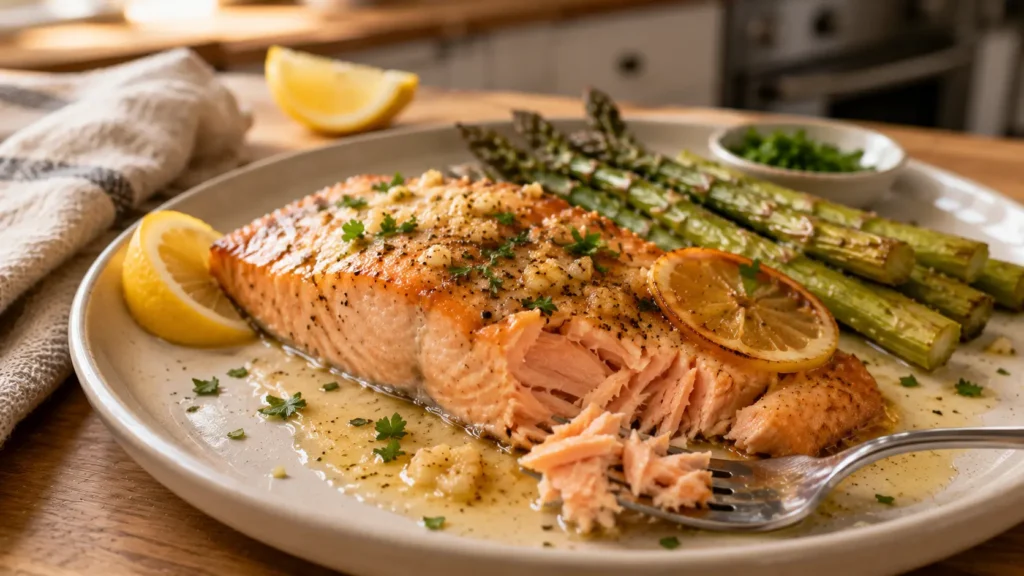
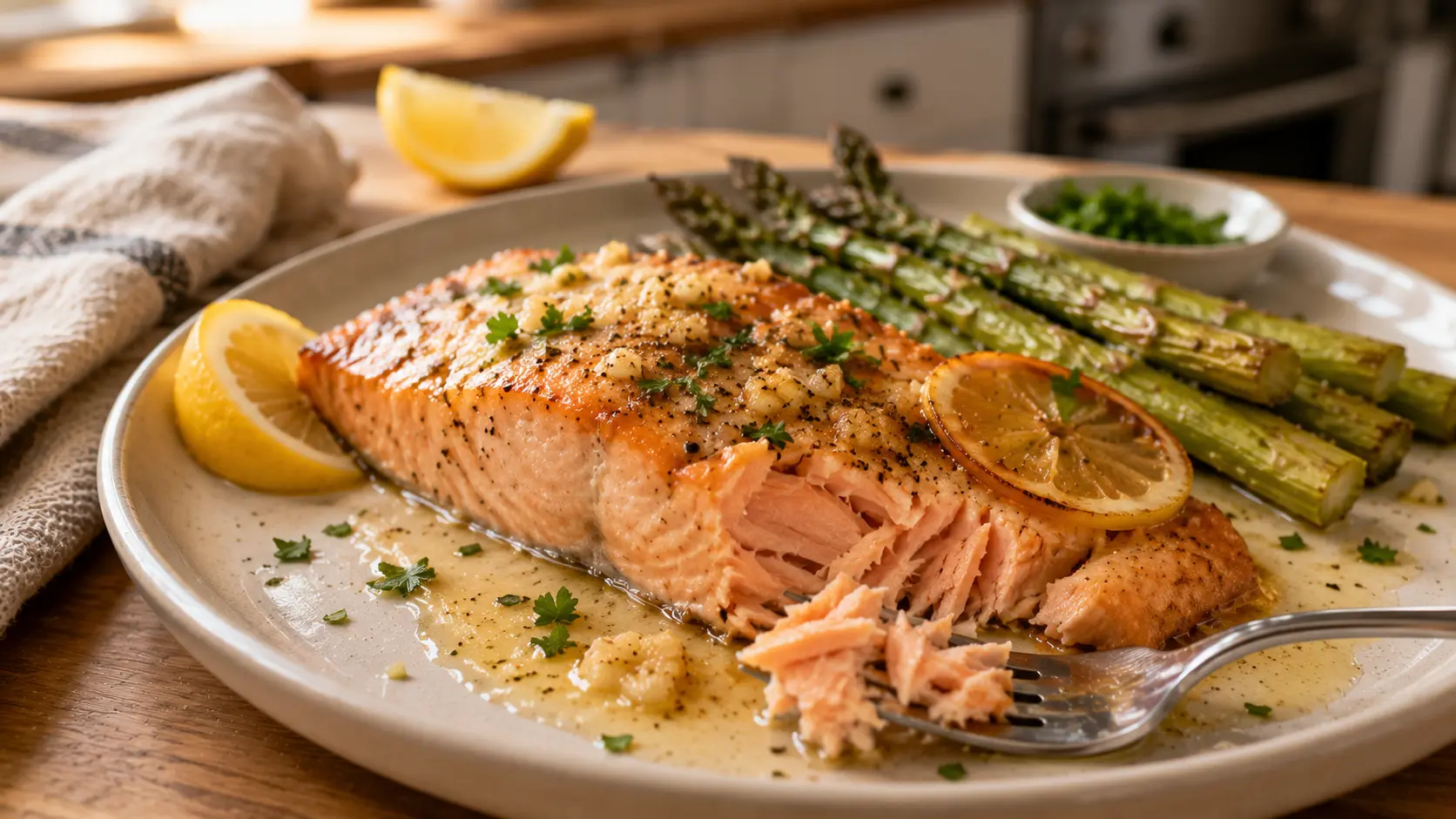
When dinner needs to be quick but you still want something fresh and satisfying, this Easy Lemon Butter Baked Salmon is one of those dependable recipes worth keeping on repeat. Tender salmon fillets bake in a simple mixture of melted butter, fresh lemon, garlic, and herbs, giving you plenty of flavor without a complicated marinade or long ingredient list.
The salmon goes from refrigerator to table in around 25 minutes, making it especially useful for busy weeknights. Baking also removes much of the guesswork that comes with cooking salmon on the stovetop—there’s no flipping, very little splatter, and the fish stays wonderfully moist when you avoid overcooking it.
Serve it with roasted vegetables, rice, potatoes, or a crisp salad for an easy dinner that feels special enough for guests but practical enough for a Tuesday night.
Easy Lemon Butter Baked Salmon
This recipe keeps the salmon itself at the center.
Instead of covering it with a heavy sauce, we make a simple lemon-garlic butter that melts over the fillets as they bake. The butter adds richness, lemon provides brightness, and garlic gives the dish savory depth.
A little paprika adds subtle color and flavor without turning this into a heavily seasoned salmon recipe.
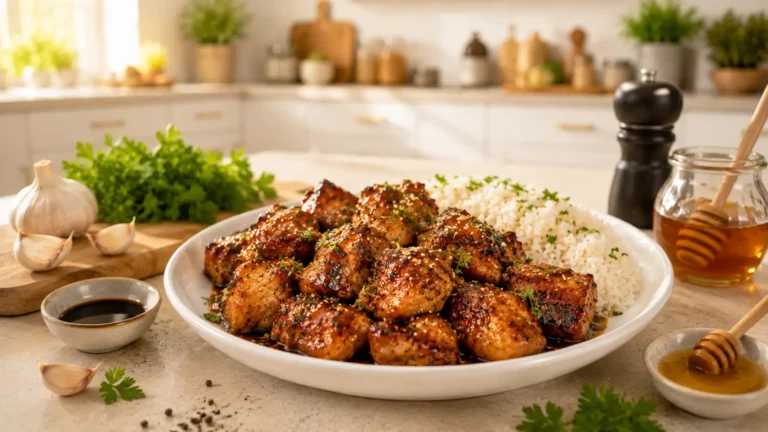
If quick chicken dinners are also part of your weekly rotation, our Garlic Butter Chicken Bites are another easy option built around that same garlic-and-butter combination.
Why You’ll Love This Baked Salmon
- Fast: Dinner can be ready in about 25 minutes.
- Simple ingredients: No specialty sauce or complicated marinade.
- Minimal cleanup: Everything can bake on one lined sheet pan.
- No flipping: Once the salmon enters the oven, it requires very little attention.
- Fresh lemon flavor: Lemon balances the richness of the salmon and butter.
- Easy to scale: Bake two fillets or enough for the whole family.
- Versatile: Serve it with vegetables, rice, potatoes, pasta, or salad.
- Weeknight-friendly: Most of the preparation takes only a few minutes.
Ingredients
Salmon Fillets
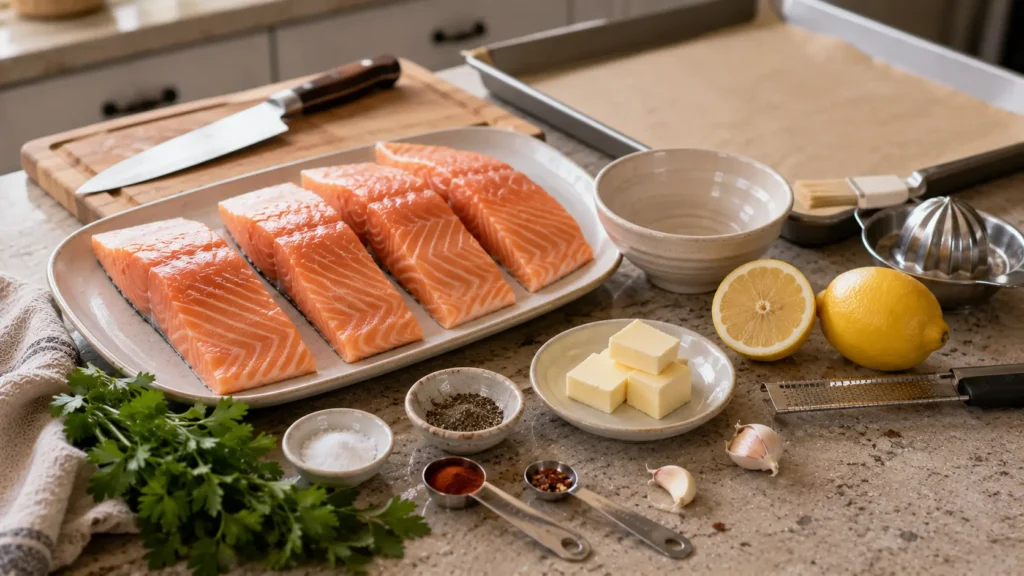
Use 4 salmon fillets, about 6 ounces each.
Fillets of similar thickness will cook more evenly, although naturally cut pieces will never be completely identical.
Skin-on or skinless salmon both work. If using skin-on salmon, bake it skin-side down.
Unsalted Butter
Use 4 tablespoons unsalted butter, melted.
Butter gives the salmon richness and helps carry the lemon, garlic, and herbs across the surface.
Fresh Lemon
You’ll need approximately 1 large lemon.
Use both fresh lemon juice and a little zest for stronger citrus flavor.
Keep another lemon available for wedges if you’d like to serve them alongside the finished salmon.
Fresh Garlic
Use 3 garlic cloves, finely minced.
Fresh garlic provides much better texture and aroma here than large amounts of garlic powder.
Fresh Parsley
Use 2 tablespoons finely chopped fresh parsley, divided between cooking and finishing.
Paprika
Use ½ teaspoon paprika.
This provides subtle warmth and helps give the salmon a beautiful natural color.
Salt
Use approximately ¾ teaspoon fine salt, adjusting according to taste and the size of your fillets.
Black Pepper
Use ¼ teaspoon freshly ground black pepper.
Optional Red Pepper Flakes
Add a small pinch if you’d like gentle heat.
Keep it restrained so it doesn’t overwhelm the lemon.
How to Make Lemon Butter Baked Salmon
1. Preheat the oven
Preheat your oven to 400°F (205°C).
Position a rack near the center.
2. Prepare the baking sheet
Line a rimmed baking sheet with parchment paper or aluminum foil.
This makes cleanup much easier.
3. Dry the salmon
Pat the salmon fillets dry with paper towels.
Removing excess surface moisture helps the butter and seasonings cling to the fish.
4. Arrange the fillets
Place the salmon on the prepared baking sheet.
If the salmon still has skin, position it skin-side down.
Leave a little space between each piece.
5. Melt the butter
Place the butter in a small heat-safe bowl and melt it gently.
Don’t brown it.
6. Add the garlic
Stir the minced garlic into the melted butter.
7. Add lemon
Stir in 2 tablespoons fresh lemon juice and approximately 1 teaspoon finely grated lemon zest.
8. Add seasonings
Mix in the paprika, salt, black pepper, and optional red pepper flakes.
9. Add parsley
Stir approximately half of the chopped parsley into the lemon butter.
Reserve the remainder for finishing.
10. Coat the salmon
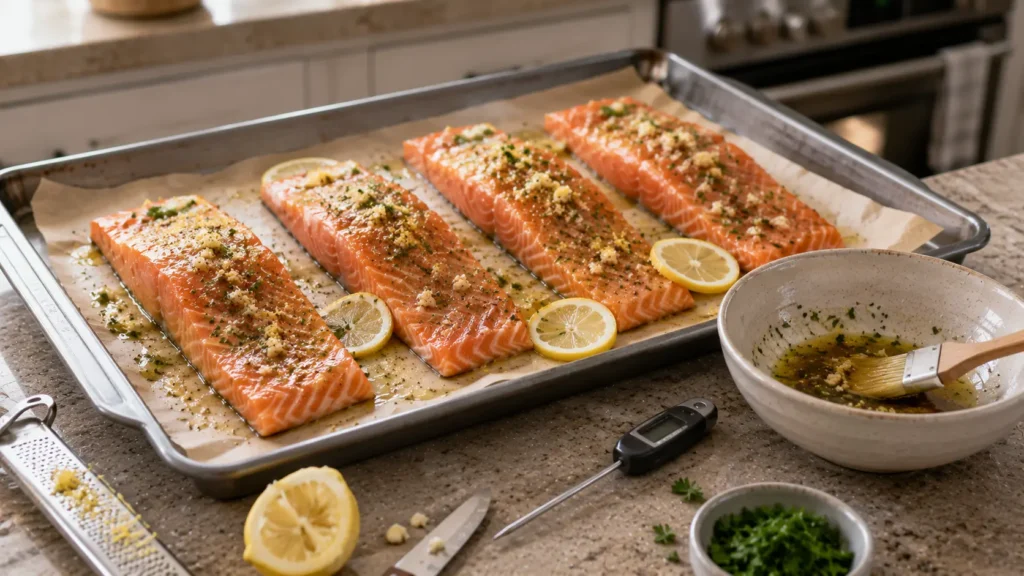
Spoon or brush the lemon-garlic butter generously over each salmon fillet.
Make sure some minced garlic remains on the surface rather than falling entirely onto the baking sheet.
11. Add lemon slices
Place several thin lemon slices around the salmon.
You can place one thin slice partially over some fillets, but don’t completely cover the fish.
12. Bake
Transfer the salmon to the oven.
Bake for approximately 10–14 minutes, depending on the thickness of your fillets and your preferred level of doneness.
13. Check the thickest portion
Check the center of the thickest fillet rather than relying exclusively on time.
The flesh should separate easily when gently pressed with a fork.
14. Check temperature
For food safety, the USDA recommends cooking fin fish to an internal temperature of 145°F (63°C). Measure at the thickest part with an instant-read thermometer.
15. Avoid overbaking
Remove the salmon once it reaches your desired safe doneness.
Leaving it in the oven unnecessarily will gradually dry out the fish.
16. Spoon over the pan juices
Carefully spoon a little of the buttery lemon cooking liquid from the baking sheet over each fillet.
17. Add fresh parsley
Scatter the remaining chopped parsley lightly over the salmon.
18. Add fresh lemon
Serve with fresh lemon wedges so everyone can add more acidity if desired.
19. Rest briefly
Let the salmon rest for approximately 2–3 minutes.
20. Serve
Serve while warm with your favorite simple side dishes.
Equipment You’ll Need
- Rimmed baking sheet
- Parchment paper or aluminum foil
- Small mixing bowl
- Citrus juicer
- Fine grater or zester
- Sharp knife
- Measuring spoons
- Pastry brush or spoon
- Instant-read food thermometer
Easy Variations
Honey Lemon Butter Salmon
Whisk 1 tablespoon honey into the butter mixture.
This creates a slightly sweeter glaze that caramelizes lightly around the edges.
If you enjoy sweet-savory salmon flavors, this is an easy direction to take the basic recipe.
Dijon Lemon Salmon
Whisk 1 tablespoon Dijon mustard into the lemon butter.
The mustard adds tanginess and helps create a slightly thicker coating.
Lemon Herb Salmon
Add fresh dill along with the parsley.
Dill is particularly good with both salmon and lemon.
Spicy Lemon Butter Salmon
Increase the red pepper flakes or add a small amount of cayenne.
Keep the heat moderate enough that you can still taste the lemon and salmon.
Garlic Herb Butter Salmon
Reduce the lemon slightly and add additional fresh herbs such as dill, chives, or thyme.
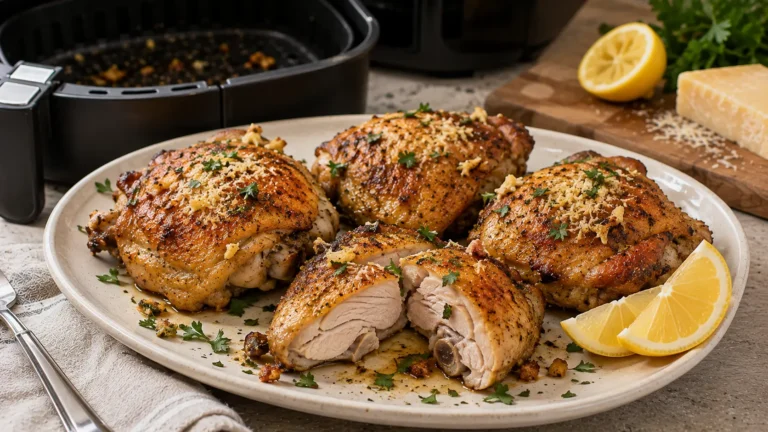
If garlic-forward dinners are your thing, Crispy Air Fryer Garlic Parmesan Chicken Thighs are another quick dinner option for a different night of the week.
Pro Tips for Perfect Baked Salmon
Choose similar-sized fillets. They’ll finish cooking closer to the same time.
Pat the salmon dry. This keeps excess water from diluting the butter mixture.
Use fresh lemon. Bottled lemon juice won’t provide the same fresh flavor.
Don’t cover the fish with lemon slices. Too many slices can prevent the surface from cooking evenly.
Watch thickness, not just weight. A thick center-cut fillet takes longer than a thin tail piece.
Use a thermometer. It removes much of the guesswork.
Don’t overcook it. Salmon continues to retain heat briefly after leaving the oven.
Add fresh herbs after baking too. This gives you both cooked herb flavor and fresh color.
How Long Should You Bake Salmon at 400°F?
For individual salmon fillets, 10–14 minutes at 400°F is a useful starting range.
However, thickness matters more than a universal cooking time.
A relatively thin fillet may finish sooner, while a thick center-cut portion can require additional time.
For safety, the USDA’s recommended minimum internal temperature for fin fish is 145°F (63°C).
Check the temperature in the thickest part of the fillet rather than touching the baking sheet with the thermometer probe.
How Do You Keep Baked Salmon Moist?
The most important factor is avoiding excessive cooking.
Salmon naturally contains fat, but even a rich piece becomes dry when left in the oven too long.
The lemon butter also coats the surface and adds richness, while baking at 400°F cooks the fillets relatively quickly.
Try to use similarly sized pieces and begin checking them toward the earlier end of the baking window.
Can I Bake a Whole Side of Salmon Instead?
Yes.
The same lemon-butter mixture works well on a larger side of salmon.
A whole side will generally need longer than individual portions, depending on its thickness and weight.
Use internal temperature rather than simply multiplying the cooking time.
Storage and Reheating
Refrigerator
Allow leftover salmon to cool promptly and transfer it to an airtight container.
Refrigerate and use within 3–4 days.
Freezer
Cooked salmon can be frozen, although its texture may be slightly less tender after thawing.
Wrap individual portions well and place them in a freezer-safe container.
Reheating
Salmon is best reheated gently.
Place it in a covered baking dish in a low oven until heated through rather than blasting it at very high heat, which can dry it out.
You can also enjoy leftover salmon cold in salads or grain bowls.
Frequently Asked Questions
Can I use frozen salmon?
Yes, but thaw it safely in the refrigerator first and pat it thoroughly dry before seasoning.
Should I remove the salmon skin?
You don’t need to.
Bake skin-on salmon with the skin against the baking sheet. The cooked flesh separates easily from the skin when served if you prefer not to eat it.
Can I use bottled lemon juice?
Fresh lemon is strongly recommended because both the juice and zest contribute flavor.
Can I prepare the lemon butter ahead?
Yes. Mix it earlier in the day and refrigerate it.
Because butter solidifies when chilled, gently soften or melt the mixture again before spooning it over the salmon.
Do I need to marinate the salmon?
No.
That’s one reason this recipe works so well for weeknight dinners.
Can I use olive oil instead of butter?
Yes. The flavor will be different, but extra-virgin olive oil works well with lemon, garlic, and salmon.
Is baked salmon better covered or uncovered?
For this recipe, bake the individual fillets uncovered.
Covering traps more moisture and changes the surface texture.
What to Serve with Lemon Butter Salmon
For an easy weeknight plate, pair the salmon with roasted broccoli, asparagus, green beans, rice, quinoa, or baby potatoes.
A fresh salad is another good choice. Our Fresh Harvest Apple Pecan Salad with Maple Vinaigrette gives you a crisp, sweet-savory side when you’re making this during the fall.
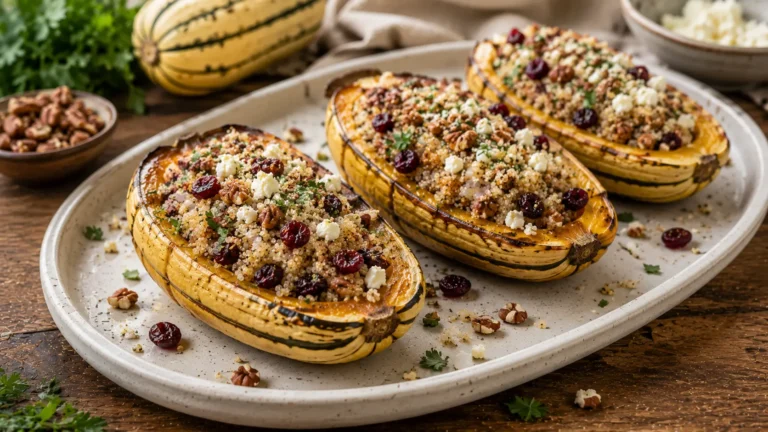
For a warmer vegetable side, Caramelized Brown Sugar Roasted Delicata Squash Rings pair particularly well with salmon during cooler months.
You could also serve it with Perfect Maple Roasted Brussels Sprouts with Bacon when you want a more substantial roasted vegetable alongside the fish.
And for nights when you’d rather make a one-pan chicken meal, our Easy Fall Sheet Pan Chicken and Vegetables gives you another straightforward dinner option with minimal cleanup.
Nutrition Information
Approximate nutrition per serving:
- Calories: 390
- Protein: 34g
- Carbohydrates: 2g
- Fat: 27g
- Saturated Fat: 10g
- Fiber: less than 1g
- Sugar: less than 1g
- Sodium: 500mg
Nutrition values are estimates and depend on the type of salmon, fillet size, butter used, and portion size.
Easy Lemon Butter Baked Salmon
Ingredients
Method
- Preheat oven to 400°F (205°C).
- Line a rimmed baking sheet with parchment paper or foil.
- Pat salmon fillets dry.
- Arrange salmon skin-side down, if applicable, with space between each fillet.
- Combine melted butter, garlic, lemon juice, and lemon zest.
- Stir in half the parsley, paprika, salt, pepper, and optional red pepper flakes.
- Spoon or brush the lemon butter over the salmon.
- Arrange several thin lemon slices around the fillets.
- Bake for approximately 10–14 minutes, depending on thickness.
- Check the thickest portion for doneness.
- For food safety, cook fin fish to an internal temperature of 145°F (63°C).
- Remove from the oven.
- Spoon a little lemon-butter pan liquid over the salmon.
- Sprinkle with remaining parsley.
- Rest for 2–3 minutes.
- Serve warm with fresh lemon wedges.
Notes
- Use salmon fillets of similar thickness for more even cooking.
- Skin-on or skinless salmon both work.
- Pat salmon dry before adding the lemon butter.
- Fresh lemon juice and zest provide the best flavor.
- Baking time varies according to fillet thickness.
- Use an instant-read thermometer when checking doneness.
- The USDA recommends 145°F (63°C) as the safe minimum internal temperature for fin fish.
- Avoid unnecessary additional baking once the salmon is done.
- Refrigerate cooked leftovers promptly and use within 3–4 days.