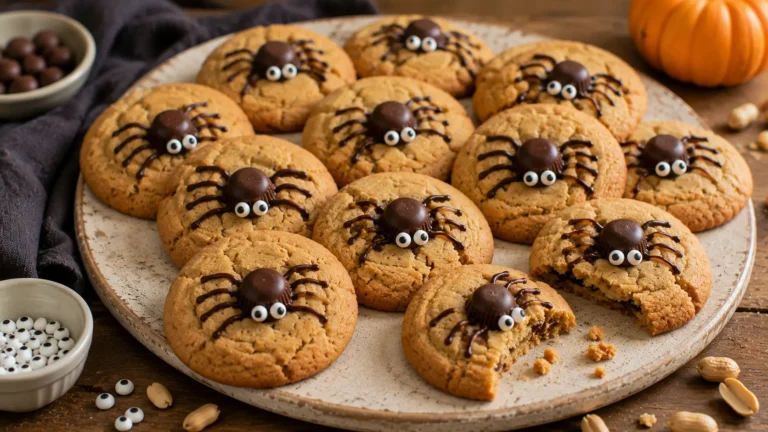
Lighter Gingerbread Cookie Dough Truffles – Easy No-Bake Holiday Treat
These Lighter Gingerbread Cookie Dough Truffles pack the cozy flavor of gingerbread cookies into soft, bite-sized treats without requiring any baking. They combine heat-treated flour, almond butter, maple syrup, molasses, vanilla, and classic gingerbread spices for a rich cookie-dough center, then get a thin coating of dark or white chocolate.
The result is a festive little dessert with plenty of ginger, cinnamon, and molasses flavor, but without relying on a traditional butter-and-sugar-heavy cookie dough. They’re especially convenient during the holidays because you can prepare them ahead, keep them refrigerated, and bring them out when you need a quick Christmas dessert.
And despite the name “cookie dough,” this recipe is designed to be eaten without baking: there are no raw eggs, and the flour is heat-treated before it goes into the truffles.

Easy No-Bake Gingerbread Cookie Dough Truffles
Gingerbread gets much of its distinctive character from the combination of molasses, ginger, cinnamon, cloves, and nutmeg. Those same flavors work beautifully in an edible cookie dough.
Almond butter replaces the large quantity of butter you’d normally find in cookie dough and also helps bind the mixture. Maple syrup provides sweetness, while a little molasses delivers the deeper caramelized flavor that makes these taste unmistakably like gingerbread.
The finished centers should be soft enough to bite easily but firm enough to roll into small balls and dip in chocolate.
For a holiday dessert platter, these truffles work especially well alongside Red Velvet Crinkle Cookies. You get two very different textures while keeping the festive Christmas theme.
Why You’ll Love These Gingerbread Truffles
- No baking: Once the flour has been safely heat-treated, the oven isn’t needed for the truffles themselves.
- No raw eggs: They’re specifically made as edible cookie dough.
- Classic gingerbread flavor: Molasses and warm spices make them unmistakably festive.
- Lighter approach: Almond butter replaces traditional cookie-dough quantities of butter.
- Naturally portioned: Each truffle is a small individual treat.
- Make-ahead friendly: Prepare them before your Christmas gathering.
- Freezer friendly: Keep a batch ready for holiday entertaining.
- Easy to decorate: A little chocolate drizzle is enough.
Ingredients
All-Purpose Flour
Use 1 cup all-purpose flour, but don’t use it raw.
The flour must first be heat-treated to reduce the risk associated with consuming uncooked flour.
Almond Butter
Use ½ cup smooth almond butter.
Choose a creamy variety that’s well stirred rather than one with a large layer of separated oil.
Pure Maple Syrup
Use ¼ cup pure maple syrup.
It sweetens the dough while helping bring the mixture together.
Molasses
Use 2 tablespoons unsulphured molasses.
Molasses is essential for creating that deep gingerbread flavor.
Avoid blackstrap molasses here because its flavor can be much stronger and more bitter.
Vanilla Extract
Use 1 teaspoon vanilla extract.
Ground Ginger
Use 1½ teaspoons ground ginger.
Ginger should be one of the dominant spices.
Ground Cinnamon
Add 1 teaspoon ground cinnamon.
Ground Nutmeg
Use ¼ teaspoon ground nutmeg.
Ground Cloves
Use ⅛ teaspoon ground cloves.
Cloves are strong, so only a small amount is needed.
Salt
A ¼ teaspoon fine salt balances the sweetness.
Milk
Have 1–3 tablespoons milk available.
You may not need all of it. Add only enough to create a soft, rollable cookie-dough consistency.
Dairy or unsweetened plant milk can work.
Chocolate Coating
Use approximately 8 ounces dark chocolate or white chocolate, finely chopped.
Dark chocolate gives the truffles a richer, less-sweet finish, while white chocolate creates a more traditional snowy Christmas appearance.
You can also coat half with each.
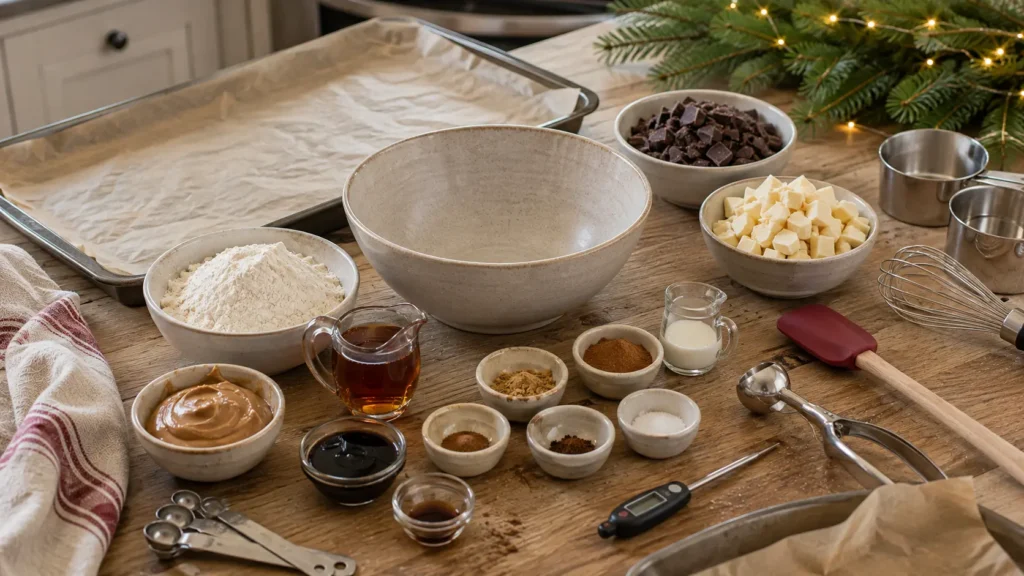
How to Make Gingerbread Cookie Dough Truffles
1. Heat-treat the flour
Preheat your oven to 350°F (175°C).
Spread the flour evenly over a parchment-lined baking sheet.
Bake for approximately 5–7 minutes, stirring once partway through.
For food-safety assurance, the flour should reach 165°F (74°C).
2. Cool the flour
Remove the flour from the oven and let it cool completely.
Don’t mix hot flour directly into the almond butter.
3. Break up any lumps
Once cool, whisk or sift the heat-treated flour if it has developed small clumps.
4. Combine the wet ingredients
In a medium bowl, combine:
- almond butter,
- maple syrup,
- molasses,
- and vanilla.
Stir until smooth.
5. Add the spices
Mix in the ginger, cinnamon, nutmeg, cloves, and salt.
The mixture should become fragrant and noticeably darker from the molasses.
6. Add the flour
Gradually fold the cooled heat-treated flour into the almond butter mixture.
The dough will become significantly thicker.
7. Adjust the consistency
If the dough feels dry or crumbly, add milk one teaspoon at a time.
Stop as soon as it holds together comfortably.
If it’s unusually soft, refrigerate it for 15–20 minutes rather than immediately adding lots of additional flour.
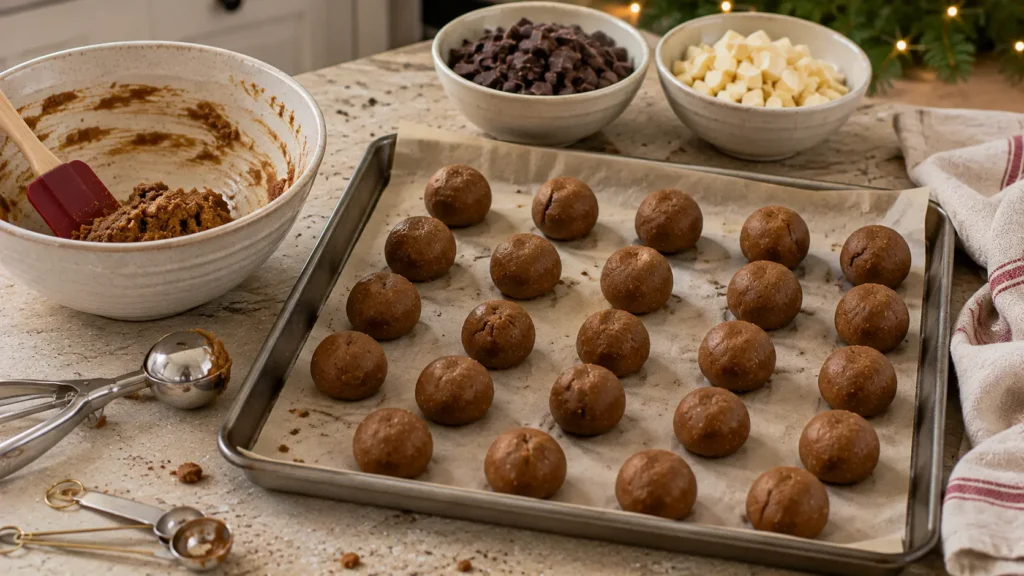
8. Portion the dough
Scoop approximately 1 tablespoon of dough for each truffle.
9. Roll into balls
Gently roll the portions into small balls.
They don’t need to be perfectly identical.
Aim for approximately 18–20 truffles.
10. Chill
Place the truffles on a parchment-lined tray and refrigerate for approximately 30 minutes.
This helps them remain firm during coating.
11. Melt the chocolate
Place the chopped chocolate in a microwave-safe bowl.
Microwave in short intervals, stirring thoroughly between each one, until almost completely melted.
Continue stirring until smooth.
You can also use a double boiler.
12. Dip the truffles
Lower one chilled gingerbread ball into the chocolate.
Turn it gently until coated, then lift it out and allow excess chocolate to drip back into the bowl.
13. Return to parchment
Place each coated truffle back onto the parchment-lined tray.
Don’t worry if a little chocolate pools around the base.
Small imperfections make homemade truffles look more realistic.
14. Decorate
Before the coating completely sets, add a very light sprinkle of:
- finely crushed gingerbread crumbs,
- cinnamon,
- or a contrasting chocolate drizzle.
Keep the decoration restrained.
15. Chill until set
Refrigerate the coated truffles for approximately 20–30 minutes, or until the chocolate is firm.
16. Serve
Let refrigerated truffles sit at room temperature for about 5–10 minutes before serving for a softer cookie-dough center.
Equipment You’ll Need
You’ll need:
- Baking sheet
- Parchment paper
- Medium mixing bowl
- Whisk
- Rubber spatula
- Measuring cups and spoons
- Cookie scoop or tablespoon
- Microwave-safe bowl or double boiler
- Fork or dipping tool
- Instant-read thermometer, recommended
Easy Variations
White Chocolate Gingerbread Truffles
Coat all of the truffles in melted white chocolate for a snowy Christmas appearance.
The sweeter coating pairs especially well with the stronger ginger and molasses center.
Dark Chocolate Gingerbread Truffles
Use dark chocolate for a richer flavor and less overall sweetness.
Half-and-Half Christmas Truffles
Coat half in white chocolate and half in dark chocolate.
Then drizzle each with the opposite chocolate for an easy assorted appearance.
Gingerbread Coconut Truffles
Roll freshly dipped truffles in a restrained amount of finely shredded unsweetened coconut.
Extra-Spiced Gingerbread Truffles
Increase the ginger slightly if you prefer a stronger gingerbread bite, but keep the cloves restrained.
Pro Tips for the Best Truffles
Heat-treat the flour. Don’t skip this just because the recipe contains no raw eggs.
Let the flour cool completely. Warm flour can alter the texture of the almond butter mixture.
Add milk gradually. A teaspoon can make a noticeable difference in a small batch of cookie dough.
Chill before dipping. Firm centers are much easier to coat.
Finely chop the chocolate. Smaller pieces melt more evenly.
Don’t overheat chocolate. Short heating intervals are safer than one long microwave session.
Keep the truffles small. Gingerbread, molasses, almond butter, and chocolate are flavorful, so bite-sized portions work particularly well.
Don’t chase perfect spheres. Slight differences make the finished batch look genuinely homemade.
Why You Should Heat-Treat Flour
Raw flour is an agricultural product and isn’t intended to be consumed untreated.
Since these gingerbread truffles never go through a normal baking process after the dough is prepared, the flour needs its own heat-treatment step.
Spread it relatively thinly so it heats evenly and verify that it reaches 165°F (74°C).
Then allow it to cool completely before preparing the edible cookie dough.
That one extra step gives you the cookie-dough texture without treating raw flour like a ready-to-eat ingredient.
Make-Ahead Instructions
These truffles are excellent for preparing ahead of Christmas.
Make the centers and refrigerate them for up to 24 hours before coating.
You can also prepare the entire recipe, including the chocolate coating, several days before serving.
Keep the finished truffles refrigerated in an airtight container.
Storage
Refrigerator
Store the truffles in an airtight container in the refrigerator for up to 5 days.
Separate layers with parchment paper if necessary.
Freezer
Freeze finished truffles for up to 2 months.
Place them in a single layer until firm before transferring them to a freezer-safe container.
Thaw overnight in the refrigerator.
Room Temperature
For the best texture and food quality, don’t use room-temperature storage as the primary storage method.
Take out only what you plan to serve and let them soften briefly before eating.
Frequently Asked Questions
Are gingerbread cookie dough truffles safe to eat without baking?
Yes, provided the recipe is prepared as directed. It contains no raw eggs, and the flour is heat-treated before being incorporated into the edible dough.
Why does flour need to be heat-treated?
Raw flour can contain harmful microorganisms, so edible cookie-dough recipes should use flour that has been properly heat-treated.
Can I use oat flour?
You can experiment with oat flour, but it will change both the flavor and texture. Don’t assume every packaged flour is ready to eat raw unless the manufacturer specifically indicates that it is.
Can I make these without almond butter?
Cashew butter is a good alternative because of its relatively mild flavor.
Sunflower seed butter may also work for a nut-free variation, although the flavor and appearance will change.
Why is my dough crumbly?
Your almond butter may be particularly thick or the flour may have been measured heavily.
Add milk one teaspoon at a time until the dough holds together.
Why is my dough too sticky?
Chill it first. If it remains extremely sticky afterward, a small amount of additional heat-treated flour can be incorporated.
Why is my chocolate coating too thick?
The chocolate may have cooled too much during dipping. Warm it gently again and stir.
Can kids help make these?
Children can help with appropriate age-based supervision, particularly with rolling cooled dough. An adult should handle the oven, hot flour, and melted chocolate.
What to Serve with Gingerbread Cookie Dough Truffles
These little truffles fit naturally onto a Christmas dessert platter with Red Velvet Crinkle Cookies. The red-and-white cookies add color while the gingerbread truffles provide warm molasses spice.
For a larger dessert table, slices of Cozy Eggnog Bundt Cake with Rum Glaze continue the nutmeg-and-holiday-spice theme.
You can also serve the truffles with mugs of Cozy Slow Cooker Christmas Wassail Punch. Apple, cranberry, orange, cinnamon, and ginger pair especially well with the molasses and gingerbread flavors.
Nutrition Information
Approximate nutrition per truffle, based on 20 truffles with dark chocolate:
- Calories: 145
- Protein: 3g
- Carbohydrates: 17g
- Fat: 8g
- Saturated Fat: 3g
- Fiber: 2g
- Sugar: 10g
- Sodium: 40mg
Nutrition values are estimates and vary according to the almond butter, milk, chocolate, and truffle size used.

Lighter Gingerbread Cookie Dough Truffles
Ingredients
Method
- Preheat oven to 350°F (175°C).
- Spread flour evenly on a parchment-lined baking sheet.
- Heat-treat for approximately 5–7 minutes, stirring once, until the flour reaches 165°F (74°C).
- Cool the flour completely.
- Whisk or sift cooled flour to remove lumps.
- Stir almond butter, maple syrup, molasses, and vanilla together until smooth.
- Mix in ginger, cinnamon, nutmeg, cloves, and salt.
- Gradually fold in the cooled heat-treated flour.
- Add milk one teaspoon at a time only as needed to produce a soft, rollable dough.
- Scoop approximately 1 tablespoon dough per truffle.
- Gently roll into 18–20 balls.
- Place on a parchment-lined tray and refrigerate for approximately 30 minutes.
- Melt the chopped chocolate gently, stirring frequently.
- Dip each chilled truffle into the melted chocolate.
- Allow excess chocolate to drip away before returning it to the parchment.
- Add optional gingerbread crumbs, cinnamon, or contrasting chocolate drizzle.
- Refrigerate for 20–30 minutes until the coating is set.
- Let sit for 5–10 minutes before serving for a softer center.
Notes
- Do not use untreated raw flour. Heat-treat it to 165°F (74°C) before making the edible cookie dough.
- There are no raw eggs in this recipe.
- Allow heat-treated flour to cool completely before mixing.
- Use unsulphured molasses rather than blackstrap for a balanced gingerbread flavor.
- Add milk only one teaspoon at a time.
- Chill the centers before dipping them in chocolate.
- Dark chocolate produces a less-sweet truffle; white chocolate creates a sweeter, more festive finish.
- Store finished truffles refrigerated.