Light Caramel Apple Sangria
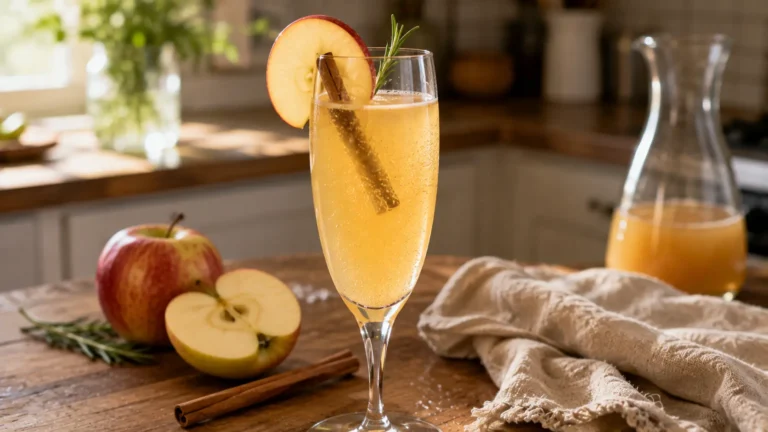
Crisp apples, chilled white wine, fresh apple cider, citrus, and just a touch of caramel come together in this Light Caramel Apple Sangria. It has all the cozy flavor of a caramel apple without turning into an overly sweet, syrupy cocktail.
This easy fall sangria is made for sharing. Fresh apple slices soak up the apple-cider mixture while orange and lemon keep everything bright and refreshing. A small amount of caramel syrup provides that unmistakable caramel-apple flavor, while sparkling water added just before serving keeps the drink light and lively.
Make a pitcher for an autumn dinner, Halloween gathering, Friendsgiving, or casual fall weekend with friends. Since the base benefits from chilling before serving, it’s also an easy cocktail to prepare ahead.
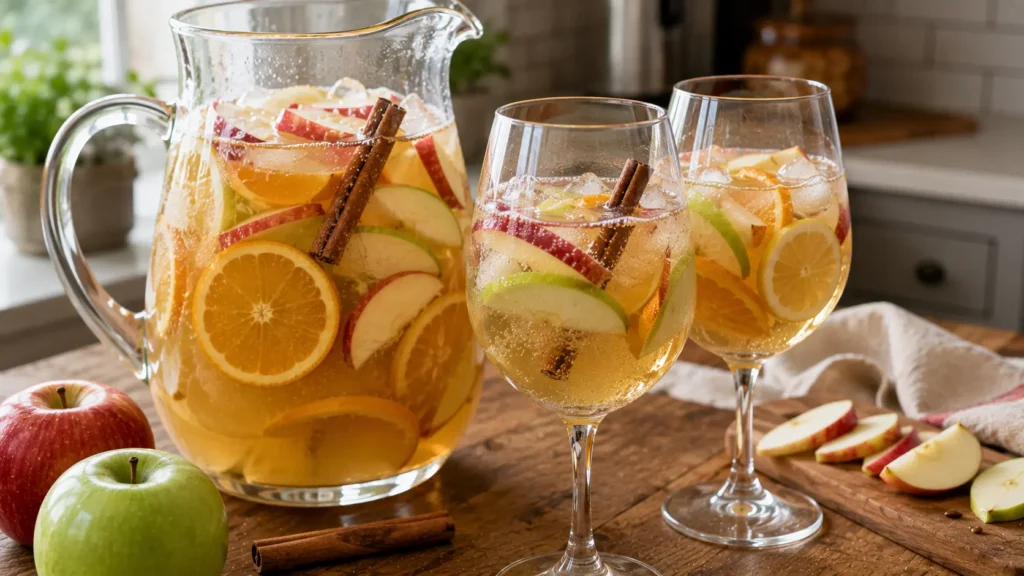
Easy Caramel Apple Sangria for Fall
Traditional sangria combines wine with fresh fruit and often additional spirits, juice, or sweetener.
For this fall version, we’re keeping things relatively simple.
A crisp dry white wine provides the base, while apple cider reinforces the seasonal apple flavor. Fresh apples, orange, and lemon infuse the pitcher as it chills.
Instead of pouring in a large amount of caramel sauce—which can make a cold drink heavy and overly sweet—we use just enough caramel syrup to give the sangria a subtle caramel-apple finish.
Right before serving, sparkling water lightens everything and adds gentle bubbles.
If you prefer a bubbly individual fall cocktail instead of a pitcher drink, our Easy Apple Cider Mimosa: 5-Minute Fall Cocktail is another simple apple-cider option.
Why You’ll Love This Caramel Apple Sangria
- Easy fall pitcher cocktail
- Crisp and refreshing
- Lighter than creamy caramel drinks
- Fresh apple flavor
- Subtle caramel sweetness
- Simple ingredients
- Easy to make ahead
- Perfect for entertaining
- Great for Halloween parties
- Beautiful for Thanksgiving gatherings
- Easy to adjust for sweetness
- No complicated cocktail equipment
- Naturally festive without being overly sweet
Ingredients
Dry White Wine
Use one 750 ml bottle of chilled dry white wine.
Pinot Grigio, Sauvignon Blanc, or a dry unoaked Chardonnay works well.
Avoid very sweet wines because the cider and caramel already provide sweetness.
Apple Cider
Use 1½ cups chilled apple cider.
Choose regular nonalcoholic apple cider rather than apple juice if possible. Cider generally has a deeper, fresher apple flavor.
Caramel Syrup
Use 2 tablespoons caramel syrup, then taste before adding more.
This recipe is supposed to taste lightly caramelized rather than like liquid candy.
Brandy
Add ¼ cup brandy.
It gives the sangria more depth without dominating the apple flavor.
Apples
Use 2 crisp apples.
Using one red and one green apple gives the pitcher natural color contrast.
Honeycrisp, Pink Lady, Granny Smith, or Fuji are all good choices.
Orange
Use ½ orange, thinly sliced.
Orange brings brightness and subtle citrus sweetness.
Lemon
Use ½ lemon, thinly sliced.
The acidity helps balance the cider and caramel.
Cinnamon Sticks
Add 2 cinnamon sticks.
They provide gentle fall spice as the sangria chills.
Sparkling Water
Add 1 cup chilled plain sparkling water immediately before serving.
This keeps the sangria fresh and light.
Ice
Use ice for serving rather than filling the pitcher during the chilling period.
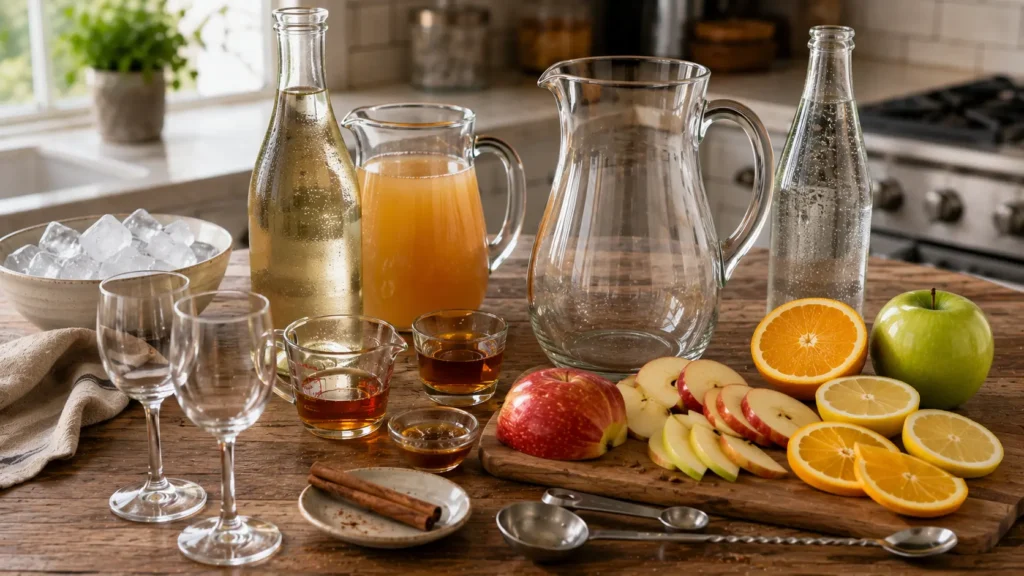
How to Make Light Caramel Apple Sangria
1. Chill the ingredients
For the best sangria, start with chilled wine, apple cider, and sparkling water.
This reduces the amount of ice you’ll need later.
2. Prepare the apples
Wash and core both apples.
Cut them into thin wedges or small slices.
Leave the peels on for color and texture.
3. Slice the citrus
Thinly slice half an orange and half a lemon.
Remove visible seeds.
4. Add the fruit
Place the apples, orange, and lemon in a large glass pitcher.
5. Add the cinnamon
Place two cinnamon sticks among the fruit.
6. Add the caramel syrup
Drizzle 2 tablespoons caramel syrup over the fruit.
7. Add the brandy
Pour in ¼ cup brandy.
8. Add the apple cider
Pour 1½ cups chilled apple cider into the pitcher.
9. Add the wine
Slowly pour in the bottle of dry white wine.
10. Stir
Use a long spoon to stir gently.
Don’t aggressively mash the fruit.
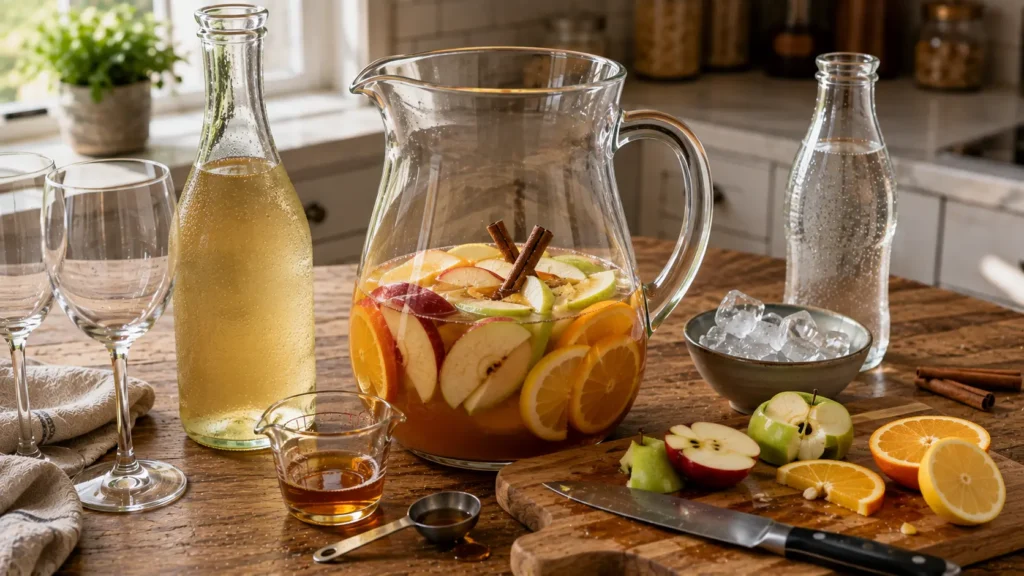
11. Chill
Cover the pitcher and refrigerate for at least 2 hours.
For a stronger fruit infusion, chill for approximately 4 hours.
I wouldn’t leave the citrus soaking overnight because its peel can eventually contribute bitterness.
12. Taste
Taste the chilled sangria before serving.
If you want a stronger caramel note, stir in another teaspoon or two of caramel syrup.
Avoid adding too much at once.
13. Add sparkling water
Immediately before serving, pour in 1 cup chilled sparkling water.
14. Stir gently
Give the pitcher one gentle stir to distribute the bubbles without flattening them.
15. Add ice to glasses
Fill individual wine glasses with a modest amount of ice.
16. Serve
Pour the sangria into each glass, making sure every serving gets a few pieces of fruit.
Garnish simply with an apple slice if desired.
How to Keep Caramel Apple Sangria Light
The biggest mistake with caramel apple cocktails is adding so much caramel that the drink becomes thick and sugary.
Caramel should be an accent here.
The apple cider already provides natural sweetness, so 2 tablespoons for the entire pitcher is a good starting point.
The dry wine, citrus, and sparkling water then keep that sweetness balanced.
If your particular cider is especially sweet, you may even prefer slightly less caramel.
Which Wine Is Best for Apple Sangria?
Choose something dry, crisp, and relatively inexpensive.
You don’t need an expensive bottle because we’re combining the wine with cider, fruit, and other flavors.
Good options include:
Pinot Grigio — light and crisp.
Sauvignon Blanc — brighter and more acidic.
Dry Riesling — fruity but still refreshing if genuinely dry.
Unoaked Chardonnay — slightly rounder while remaining fresh.
Avoid dessert wines and heavily oaked white wines.
Red Apples or Green Apples?
Use both if you can.
A tart green apple such as Granny Smith contrasts nicely with a sweeter Honeycrisp, Fuji, or Pink Lady.
The different colors also make the pitcher naturally attractive without requiring artificial garnishes.
Can I Make Sangria Ahead?
Yes—and you actually should give it some time to chill.
Prepare everything except the sparkling water and refrigerate for 2–4 hours.
Add the sparkling water immediately before serving.
This gives the fruit time to flavor the sangria without losing the carbonation.
For another make-ahead fall drink idea for entertaining, our Spiced Apple Cider Mimosa Bar works especially well for brunch gatherings.
Equipment You’ll Need
- Large glass pitcher
- Cutting board
- Sharp knife
- Measuring cup
- Measuring spoons
- Long-handled spoon
- Wine glasses
No cocktail shaker is required.
Easy Variations
Caramel Apple Prosecco Sangria
Replace part of the white wine and sparkling water with chilled Prosecco.
Pear Apple Sangria
Replace one apple with a firm ripe pear.
Cranberry Apple Sangria
Add ½ cup fresh cranberries for a Thanksgiving-inspired version.
Ginger Apple Sangria
Replace the sparkling water with ginger ale or ginger beer.
Keep in mind that ginger ale will make the drink sweeter.
Less Sweet Sangria
Reduce the caramel syrup to 1 tablespoon and use a particularly dry wine.
Stronger Caramel Flavor
Add caramel gradually, one teaspoon at a time.
It’s much easier to add sweetness than remove it.
Pro Tips
Start with cold ingredients. Your sangria will need less ice.
Choose dry wine. It balances the sweet cider and caramel.
Don’t overdo the caramel. This should remain refreshing.
Leave the apple skins on. They add natural color.
Don’t muddle the fruit. Gentle stirring is enough.
Chill before serving. Two to four hours gives the fruit time to infuse the wine.
Add bubbles last. Sparkling water should go in immediately before serving.
Don’t put ice in the pitcher while it chills. Melting ice will dilute the sangria.
Taste before adjusting sweetness. Different apple ciders vary considerably.
How to Make a Pretty Sangria Without Over-Styling It
The ingredients already provide plenty of natural color.
Use red and green apple slices, thin citrus rounds, and one or two cinnamon sticks in a clear pitcher.
That’s enough.
There’s no need for artificial autumn leaves, caramel-coated glass rims, piles of cinnamon, or excessive garnishes.
The best presentation should still look like something you’d actually serve and drink.
What to Serve with Caramel Apple Sangria
This drink pairs especially well with salty, savory, and lightly sweet fall foods.
Try it alongside:
- Cheese boards
- Baked Brie
- Roasted nuts
- Fall salads
- Roast chicken
- Turkey
- Puff pastry appetizers
- Apple desserts
Our Baked Brie with Honey, Pecans & Cranberries makes an especially good appetizer pairing because the salty cheese helps balance the fruit-forward sangria.
For a lighter seasonal meal, serve it alongside Fall Harvest Chopped Salad with Apple Cider Vinaigrette.
Can I Make It Without Brandy?
Yes.
Simply leave the brandy out and increase the apple cider by approximately ¼ cup.
You’ll still get plenty of flavor from the wine, fruit, cinnamon, and caramel.
Storage
Sangria is best enjoyed the day it’s made.
If you have leftovers, cover the pitcher and refrigerate for up to 24 hours.
The fruit will continue softening and the citrus can become slightly bitter with extended storage.
The sparkling water will also lose carbonation.
For that reason, if you know you won’t serve the entire batch, add sparkling water only to the portion you’re serving.
Frequently Asked Questions
Is caramel apple sangria very sweet?
Not this version. Dry white wine, citrus, and sparkling water balance the apple cider and small amount of caramel syrup.
Can I use apple juice instead of cider?
Yes, although apple cider gives the drink a deeper fall flavor.
Can I use red wine?
You can, but it will create a completely different flavor profile. A crisp white wine works particularly well with apple and caramel.
Do I need to peel the apples?
No. Leave the peels on.
How long should sangria chill?
About 2–4 hours works well for this recipe.
Can I chill it overnight?
You can prepare most components ahead, but I prefer not to leave citrus slices soaking overnight because the peel may eventually contribute bitterness.
When do I add sparkling water?
Immediately before serving.
Can I add more caramel?
Yes, but add it gradually. Too much will overpower the wine and make the drink excessively sweet.
Can I use caramel sauce?
A thin caramel syrup mixes more easily into a cold drink. Thick dessert caramel sauce may not dissolve evenly.
Should I add ice to the pitcher?
Add ice to individual glasses instead. That prevents the entire pitcher from becoming diluted.
Nutrition Information
Approximate nutrition per serving, assuming 8 servings:
- Calories: 170
- Carbohydrates: 18g
- Sugar: 14g
- Protein: less than 1g
- Fat: 0g
Nutrition is an estimate and varies significantly according to the wine, cider, caramel syrup, and serving size.
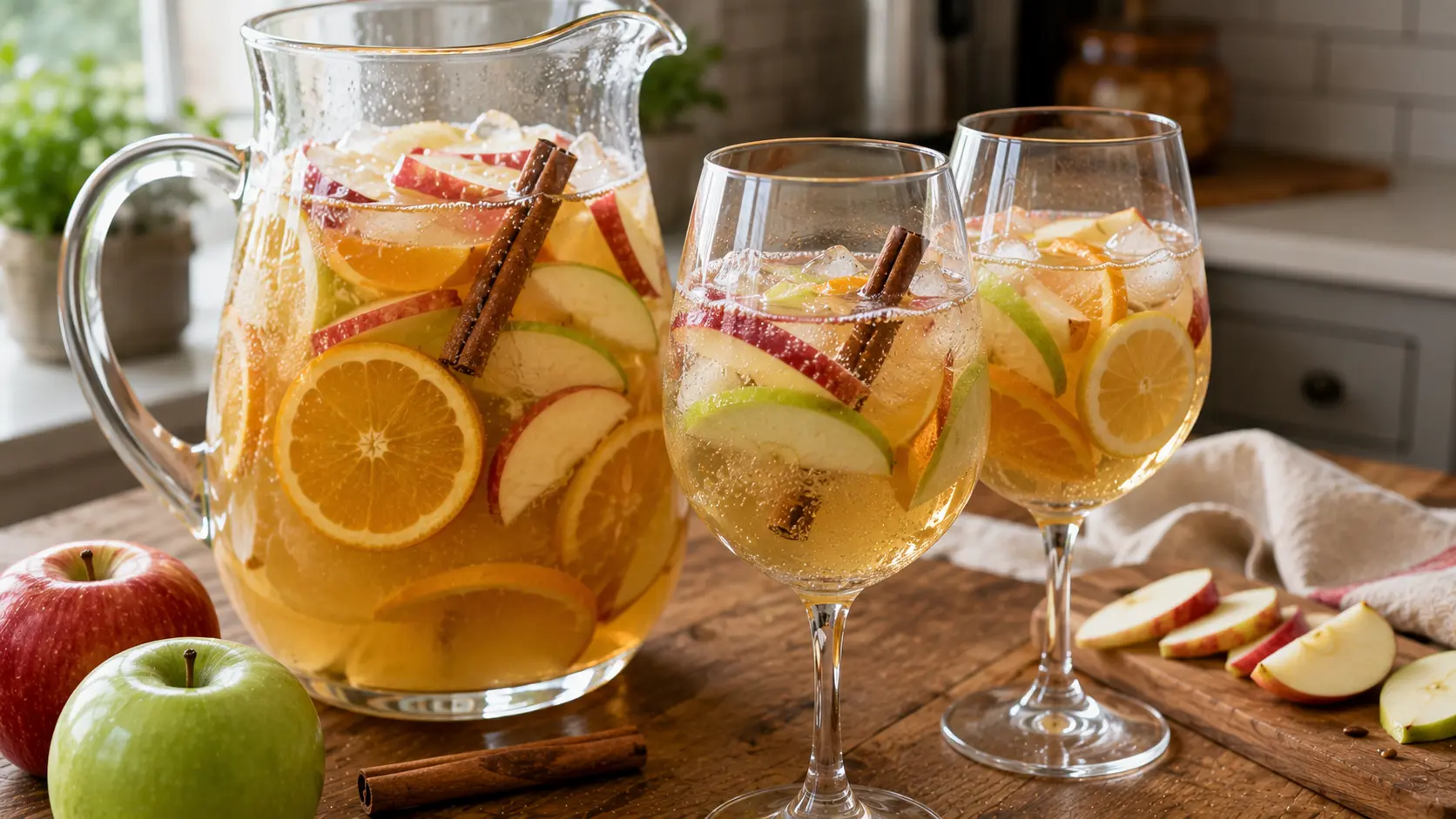
Light Caramel Apple Sangria
Ingredients
Method
- Wash, core, and thinly slice the apples.
- Thinly slice the orange and lemon and remove visible seeds.
- Place apples, orange, lemon, and cinnamon sticks in a large pitcher.
- Add caramel syrup and brandy.
- Pour in the chilled apple cider.
- Add the chilled white wine.
- Stir gently without crushing the fruit.
- Cover and refrigerate for 2–4 hours.
- Taste and adjust the caramel sweetness if desired.
- Immediately before serving, add chilled sparkling water.
- Stir gently.
- Add ice to individual glasses.
- Pour in the sangria, including several fruit pieces in each glass.
- Serve immediately.
Notes
- Use a dry white wine to prevent the sangria from becoming overly sweet.
- Start with only 2 tablespoons caramel syrup.
- Use pourable caramel syrup rather than very thick dessert caramel.
- Leave the apple skins on for natural color.
- Chill for approximately 2–4 hours before serving.
- Add sparkling water only immediately before serving.
- Add ice to individual glasses rather than the pitcher.
- For the best flavor and fruit texture, enjoy the sangria the day it’s made.
- If omitting brandy, replace it with approximately ¼ cup additional apple cider.