Easy Roasted Pumpkin and Carrot Soup with Crispy Sage
Sweet pumpkin and carrots roast until caramelized, then blend with garlic, onion, warm spices, and vegetable broth into this Easy Roasted Pumpkin and Carrot Soup with Crispy Sage. It’s smooth, cozy, and full of naturally sweet fall flavor without requiring a long list of ingredients.
Roasting the vegetables first is what makes this soup special. Instead of simply simmering everything in broth, high heat develops browned edges and concentrates the pumpkin and carrots before they’re blended. A little cream rounds everything out without making the soup excessively heavy.
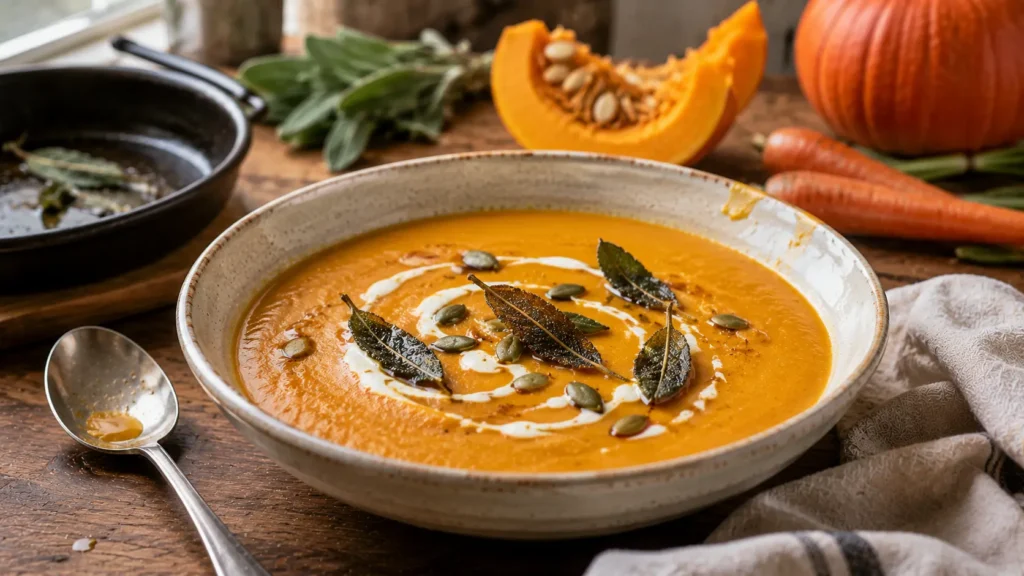
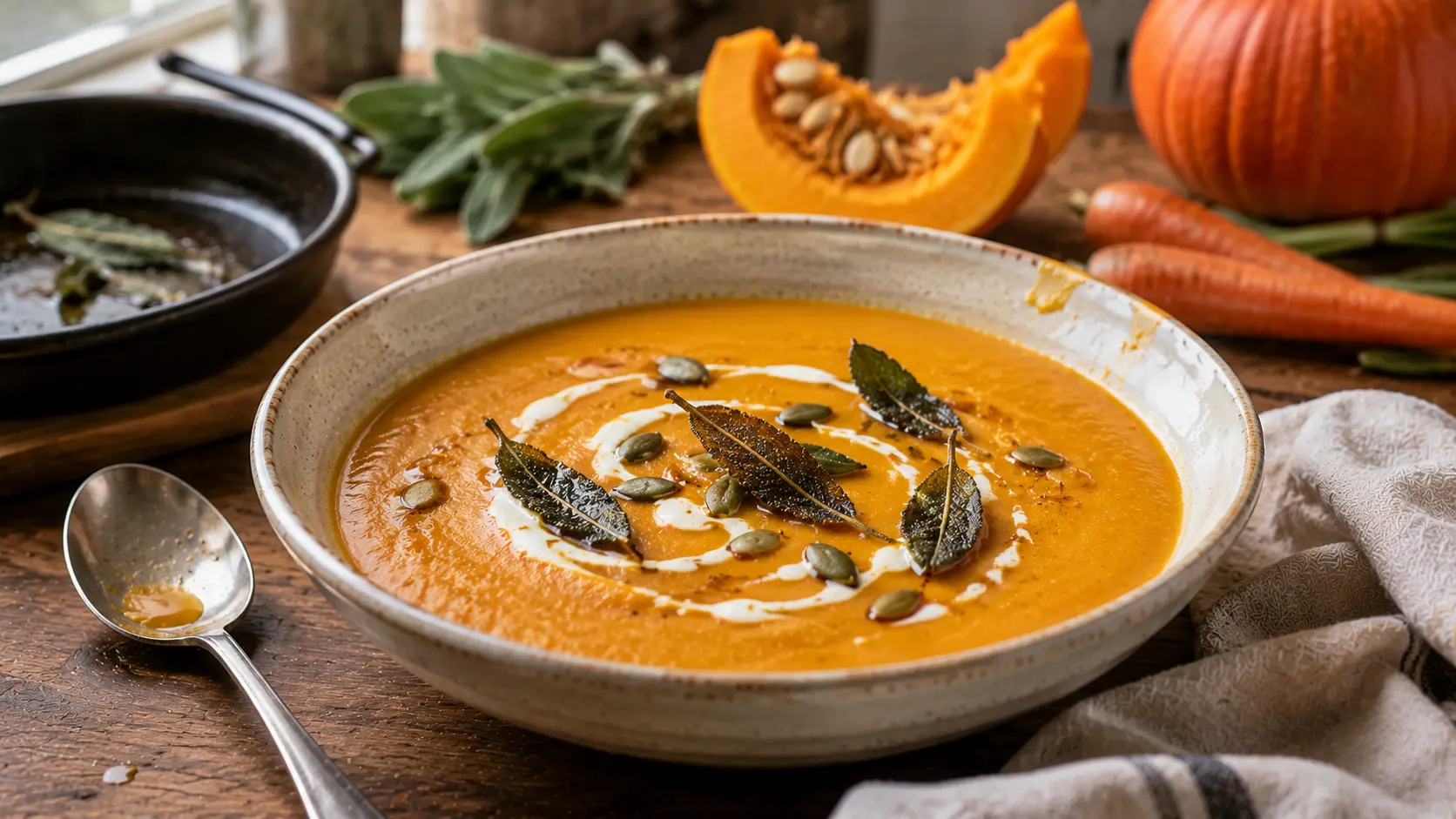
The finishing touch is crispy sage cooked briefly in butter until fragrant and delicate. Add a few toasted pumpkin seeds and a small swirl of cream, and you have an easy fall soup that looks beautiful enough for entertaining but is simple enough for a weeknight dinner.
Easy Roasted Pumpkin and Carrot Soup
Pumpkin soup can sometimes taste surprisingly flat. Pumpkin has a delicate flavor, and simply boiling it with broth doesn’t always bring out its best qualities.
Roasting changes that.
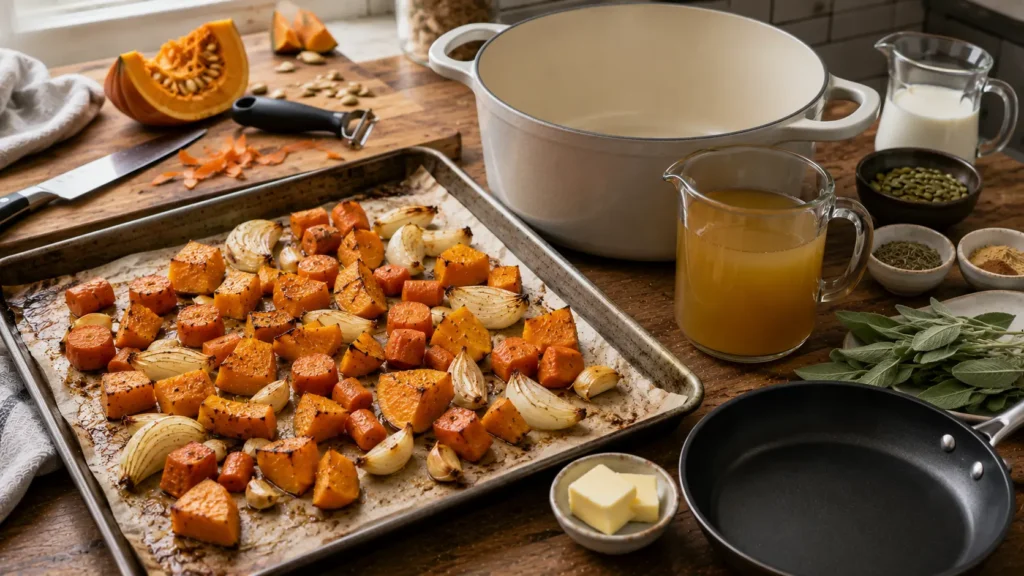
As pumpkin, carrots, onion, and garlic roast, their natural sugars begin to caramelize. You’ll see browned corners on the pumpkin and darker edges on some carrot pieces.
Those imperfect brown spots mean more flavor in the finished soup.
After roasting, everything goes into a pot with vegetable broth and a restrained combination of thyme, ginger, and nutmeg. Once simmered briefly and blended, a little cream creates a silky texture.
If you’re specifically craving the classic version, Creamy Butternut Squash Soup is still the better choice for a squash-forward soup. This pumpkin-and-carrot version has a sweeter roasted vegetable profile and crispy sage finish.
Why You’ll Love This Recipe
- Perfect fall comfort food
- Roasted rather than boiled vegetables
- Naturally creamy texture
- Sweet pumpkin and carrots
- Crispy buttery sage topping
- Simple ingredients
- Vegetarian
- Easy to make
- Freezer-friendly
- Great for meal prep
- Beautiful Thanksgiving starter
- Easy to make dairy-free
- Naturally colorful
- Cozy without being overly heavy
Ingredients
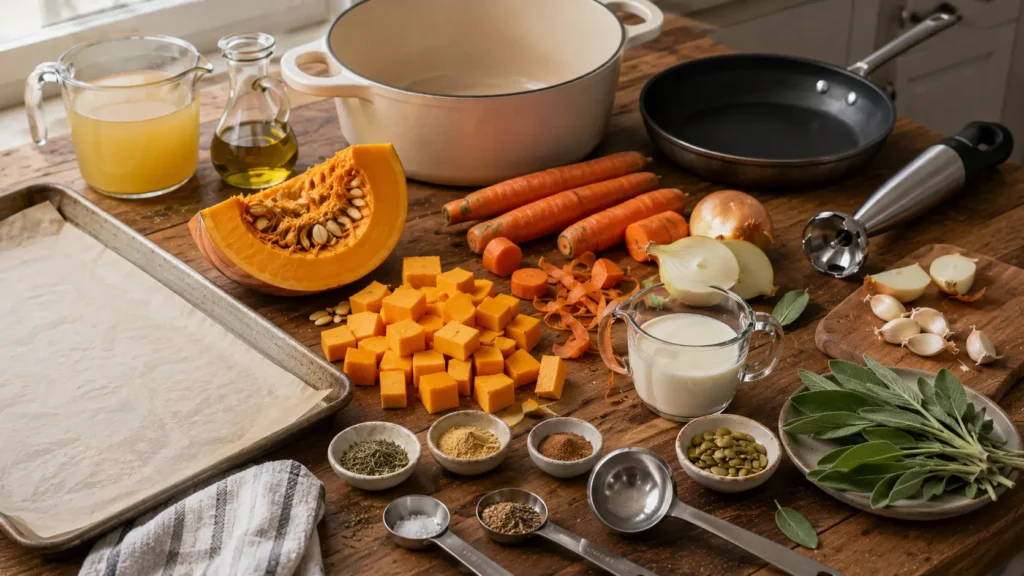
Pumpkin
You’ll need about 4 cups peeled and cubed fresh pumpkin, approximately 1½ pounds prepared.
Choose a cooking pumpkin rather than a large carving pumpkin.
Sugar pumpkins or pie pumpkins have sweeter, denser flesh and work particularly well.
Carrots
Use 4 medium carrots, peeled and cut into chunks.
Carrots reinforce the pumpkin’s natural sweetness and give the finished soup a beautiful orange color.
Yellow Onion
Use 1 medium yellow onion, cut into wedges.
There’s no need to dice it because everything will eventually be blended.
Garlic
Use 4 garlic cloves.
Roasting mellows their sharpness and brings out their sweetness.
Olive Oil
You’ll need approximately 2 tablespoons extra-virgin olive oil for roasting.
Vegetable Broth
Use 4 cups low-sodium vegetable broth.
You can substitute chicken broth if the soup doesn’t need to remain vegetarian.
Dried Thyme
Use ½ teaspoon dried thyme.
Ground Ginger
Use ¼ teaspoon ground ginger.
This provides subtle warmth without turning the soup into a heavily spiced pumpkin dish.
Nutmeg
Add just ⅛ teaspoon ground nutmeg.
A small amount is enough.
Heavy Cream
Use ½ cup heavy cream.
It softens the roasted flavors and gives the soup a silky finish.
Salt and Black Pepper
Season throughout the recipe and adjust after blending.
For the Crispy Sage
Fresh Sage Leaves
Use approximately 12–16 fresh sage leaves.
Choose leaves that look fresh and dry them thoroughly before frying.
Butter
Use 2 tablespoons unsalted butter.
As the sage crisps, the butter will develop a lightly nutty flavor.
Pumpkin Seeds
Use ¼ cup roasted pumpkin seeds, or pepitas, for optional crunch.
How to Make Roasted Pumpkin and Carrot Soup
1. Preheat the oven
Preheat your oven to 425°F (220°C).
Line a large rimmed baking sheet with parchment paper.
2. Prepare the pumpkin
Carefully peel the pumpkin, remove the seeds and stringy interior, and cut the flesh into approximately 1-inch chunks.
The pieces don’t need to be perfectly uniform.
3. Prepare the carrots
Peel the carrots and cut them into thick chunks.
4. Cut the onion
Peel the onion and cut it into wedges.
5. Add the garlic
Peel the garlic cloves and leave them whole.
6. Season the vegetables
Spread the pumpkin, carrots, onion, and garlic over the prepared baking sheet.
Drizzle with olive oil.
Season with salt and black pepper.
7. Toss
Toss everything until lightly coated.
Spread the vegetables into a single layer.
Avoid crowding them too tightly.
8. Roast
Roast for approximately 30–35 minutes, turning the vegetables once around halfway through.
The pumpkin and carrots should be completely tender with genuine browned and caramelized edges.
9. Check the garlic
If the garlic begins browning too quickly, remove those cloves before the remaining vegetables finish roasting.
10. Transfer to the pot
Transfer the roasted pumpkin, carrots, onion, and garlic to a large soup pot.
11. Add the broth
Pour in the vegetable broth.
12. Add the seasonings
Stir in the dried thyme, ground ginger, and nutmeg.
13. Simmer
Bring the mixture to a gentle simmer.
Cook for approximately 10 minutes so the flavors can come together.
14. Blend
Remove the pot from the heat.
Use an immersion blender to puree the soup until smooth.
Alternatively, carefully blend the soup in batches using a countertop blender. Never overfill a blender with hot liquid, and vent according to the manufacturer’s instructions.
15. Check the consistency
If the soup is too thick, add a little additional broth.
16. Add the cream
Return the soup to low heat and stir in the heavy cream.
Don’t vigorously boil the soup after adding the cream.
17. Taste
Taste and adjust the salt, pepper, ginger, or nutmeg if necessary.
Make the Crispy Sage
18. Melt the butter
Place the butter in a small skillet over medium heat.
Let it melt and begin to foam.
19. Add the sage
Make sure the sage leaves are completely dry.
Add them carefully to the butter in a single layer.
20. Fry briefly
Cook for approximately 20–30 seconds per side, depending on the size of the leaves.
They should darken slightly and become crisp without burning.
21. Drain
Transfer the sage to a paper towel.
It will become even crispier as it cools.
22. Serve
Ladle the warm soup into bowls.
Top each serving with a few crispy sage leaves and roasted pumpkin seeds.
Add a small swirl of cream if desired.
Why Roast the Pumpkin and Carrots?
Roasting accomplishes two things.
First, it removes some moisture from the vegetables, concentrating their flavor.
Second, the high oven temperature creates caramelization on their surfaces.
Those browned edges contribute flavors you won’t get from vegetables cooked entirely in liquid.
Don’t worry if every pumpkin cube isn’t perfectly golden. In fact, variation is desirable—some pieces may remain bright orange while others develop deep brown edges.
That’s what homemade roasted vegetables actually look like.
How to Choose a Pumpkin for Soup
Don’t use the giant pumpkin you’d normally carve for Halloween.
Large carving pumpkins tend to have watery, fibrous flesh.
Instead, look for a smaller sugar pumpkin or pie pumpkin.
These have denser, sweeter flesh and are intended for cooking.
Depending on availability, other flavorful cooking pumpkins can also work.
How to Make Perfect Crispy Sage
Fresh sage can go from beautifully crisp to burned very quickly.
Make sure the leaves are completely dry before putting them into hot butter. Water can cause dangerous splattering.
Keep the heat moderate and watch the leaves closely.
You’ll notice the bubbling around each leaf begin to slow as its moisture cooks away.
Remove the leaves while they’re crisp but still recognizable as sage—not dark brown and bitter.
Equipment You’ll Need
- Large rimmed baking sheet
- Parchment paper
- Large soup pot or Dutch oven
- Immersion blender
- Small skillet
- Cutting board
- Sharp chef’s knife
- Vegetable peeler
- Measuring cups
- Measuring spoons
- Ladle
Easy Variations
Dairy-Free Pumpkin Carrot Soup
Replace the heavy cream with full-fat coconut milk and fry the sage in olive oil instead of butter.
Coconut will contribute noticeable flavor, so use it only if you enjoy that combination.
Spicy Pumpkin Soup
Add a small pinch of cayenne or red pepper flakes.
Apple Pumpkin Soup
Roast one peeled tart apple with the pumpkin and carrots for additional sweetness and acidity.
Ginger Pumpkin Carrot Soup
Increase the ground ginger or add a small amount of freshly grated ginger.
Extra-Savory Version
Add a little smoked paprika for a deeper savory flavor.
No-Cream Version
Simply leave out the cream.
Pumpkin and carrots create a naturally creamy texture when thoroughly blended.
Pro Tips
Use cooking pumpkin. Sugar or pie pumpkins have better flavor and texture than carving pumpkins.
Don’t overcrowd the baking sheet. Crowding encourages steaming rather than browning.
Roast until you see color. Those caramelized edges add important flavor.
Keep the spices restrained. This is savory soup, not pumpkin pie.
Add broth gradually when adjusting consistency. You can always thin soup, but it’s harder to reverse an overly watery texture.
Don’t boil after adding cream. Gentle heat is sufficient.
Dry the sage completely. Wet sage can cause butter to splatter.
Watch the sage closely. It cooks extremely quickly.
Add crispy sage immediately before serving. It softens if left sitting in soup.
What to Serve with Pumpkin and Carrot Soup
This soup pairs particularly well with:
- Crusty bread
- Grilled cheese
- Roasted chicken
- Turkey sandwiches
- Green salads
- Fall grain bowls
- Thanksgiving dinner
For a fresh contrast, serve it alongside Easy Fall Harvest Chopped Salad with Apple Cider Vinaigrette. The apples and apple-cider dressing balance the creamy roasted vegetable soup nicely.
For another seasonal vegetable side, Caramelized Brown Sugar Roasted Delicata Squash Rings can work particularly well as part of a larger fall or Thanksgiving spread.
Make It for Thanksgiving
This soup works beautifully as a Thanksgiving starter because you can make the soup itself ahead and prepare the crispy sage shortly before serving.
Keep portions relatively small if you’re serving a full holiday dinner.
You could pair it with Brown Butter Sage Roasted Turkey Breast for Two for a smaller Thanksgiving menu where the sage flavor subtly connects the starter and main course.
Make-Ahead Instructions
Prepare the soup through the blending stage up to 2 days ahead.
Cool it and refrigerate in an airtight container.
When you’re ready to serve, gently reheat it on the stovetop and stir in the cream.
Prepare the crispy sage shortly before serving so it remains crunchy.
Storage
Refrigerator
Store cooled soup in an airtight container for up to 4 days.
Keep crispy sage separate.
Reheating
Warm gently over medium-low heat, stirring occasionally.
If the soup has thickened in the refrigerator, add a splash of broth.
Avoid aggressively boiling cream-based soup.
Can You Freeze Pumpkin Carrot Soup?
Yes.
For the best texture, freeze the soup before adding the heavy cream.
Cool completely and transfer to freezer-safe containers, leaving room for expansion.
Freeze for up to 3 months.
Thaw overnight in the refrigerator, reheat gently, then stir in fresh cream.
Make a fresh batch of crispy sage for serving.
Frequently Asked Questions
Can I use canned pumpkin?
Fresh roasted pumpkin gives this particular recipe its characteristic roasted flavor. Canned pumpkin can work in a shortcut version, but you lose the caramelization from roasting.
Do I have to peel the carrots?
Not necessarily. Well-scrubbed carrots can be roasted with their skins, although peeling gives the soup a slightly smoother finish.
Can I use chicken broth?
Yes, if you don’t need the soup to remain vegetarian.
Can I make this vegan?
Yes. Use vegetable broth, coconut milk or another suitable dairy-free cream, and olive oil instead of butter for the sage.
Why is my soup too thick?
Pumpkins vary in moisture content. Add additional broth gradually until you reach the consistency you prefer.
Why is my soup watery?
It may contain too much broth. Simmer it uncovered briefly to reduce before adding cream.
Can I roast the vegetables ahead?
Yes. Refrigerate the roasted vegetables and finish the soup within the next day or two.
Can I use butternut squash instead?
Technically yes, but then you’re essentially making butternut squash soup. For this recipe, cooking pumpkin keeps the flavor and recipe identity distinct.
Can I make the crispy sage ahead?
It’s best made close to serving. Humidity and moisture cause fried sage to lose its crispness.
What can I use instead of pumpkin seeds?
Try toasted sunflower seeds or homemade croutons.
Nutrition Information
Approximate nutrition per serving, assuming 6 servings:
- Calories: 245
- Protein: 4g
- Carbohydrates: 29g
- Fat: 14g
- Saturated Fat: 6g
- Fiber: 5g
- Sugar: 10g
- Sodium: 410mg
Nutrition information is an estimate and varies with the pumpkin, broth, cream, butter, and toppings used.
Easy Roasted Pumpkin and Carrot Soup with Crispy Sage
Ingredients
Method
- Preheat oven to 425°F (220°C) and line a rimmed baking sheet with parchment paper.
- Peel and seed the pumpkin and cut the flesh into approximately 1-inch chunks.
- Peel and chop the carrots into thick pieces.
- Cut the onion into wedges and peel the garlic.
- Spread pumpkin, carrots, onion, and garlic over the baking sheet.
- Drizzle with olive oil and season with salt and black pepper.
- Toss and spread into a single layer.
- Roast for 30–35 minutes, turning once halfway through, until tender with caramelized edges.
- Transfer the roasted vegetables to a large soup pot.
- Add vegetable broth, thyme, ginger, and nutmeg.
- Bring to a gentle simmer and cook for 10 minutes.
- Remove from heat and blend until smooth using an immersion blender.
- Add additional broth if necessary to adjust the consistency.
- Return to low heat and stir in the heavy cream.
- Taste and adjust seasoning.
- Melt butter in a small skillet over medium heat.
- Add completely dry sage leaves.
- Fry approximately 20–30 seconds per side, watching closely.
- Transfer crispy sage to a paper towel.
- Ladle soup into bowls.
- Top with crispy sage and roasted pumpkin seeds.
- Add a small cream swirl if desired and serve.
Notes
- Use sugar pumpkin, pie pumpkin, or another pumpkin intended for cooking rather than a large carving pumpkin.
- Give the vegetables enough room on the baking sheet so they roast instead of steam.
- Roast until genuine caramelized edges develop.
- Keep the ginger and nutmeg subtle so the soup remains savory.
- Add extra broth after blending if the soup is too thick.
- Don’t vigorously boil after adding heavy cream.
- Sage must be completely dry before frying.
- Make crispy sage shortly before serving.
- Refrigerate soup for up to 4 days.
- For freezing, freeze before adding cream for the best texture.