Fresh Vietnamese Spring Rolls with Shrimp and Two Dipping Sauces
Looking for something fresh, colorful, and absolutely delicious that doesn’t require turning on the oven? These Fresh Vietnamese Spring Rolls with Shrimp and Two Dipping Sauces are packed with juicy shrimp, tender rice noodles, crunchy vegetables, and fragrant herbs, all wrapped in soft, translucent rice paper. Dip them into a rich, creamy peanut sauce or a bright, tangy Vietnamese dipping sauce, and you’ll understand why these refreshing rolls are such a favorite.
Unlike deep-fried spring rolls, Vietnamese fresh spring rolls are served cool or at room temperature. Their delicate rice paper wrappers hold a beautiful combination of textures: tender shrimp, soft vermicelli noodles, crisp lettuce, crunchy carrots, and aromatic mint and cilantro. The ingredients are simple, but when they’re layered and rolled together, they create a light, satisfying dish that feels special enough for entertaining.
What makes this recipe even better is having two different dipping sauces to choose from. The creamy peanut-hoisin sauce brings a nutty, savory sweetness, while the traditional-style Vietnamese fish sauce dip adds a wonderful balance of salty, sweet, sour, and spicy flavors. Whether you’re preparing a fresh lunch, a colorful appetizer platter, or a light dinner, these homemade shrimp spring rolls are worth trying.
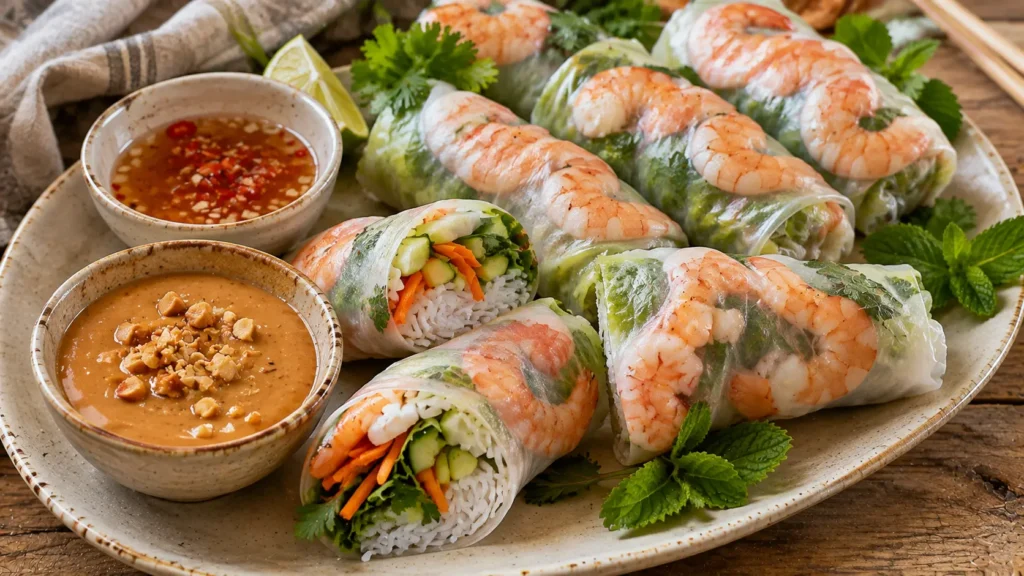
Easy Fresh Vietnamese Spring Rolls
Vietnamese fresh spring rolls, called gỏi cuốn, are soft rice paper rolls commonly filled with cooked shrimp, pork, rice vermicelli, fresh vegetables, and herbs.
They’re different from crispy fried spring rolls because the rice paper is softened in water rather than fried. The finished rolls have a delicate, slightly chewy wrapper and a cool, fresh filling.
This recipe focuses on shrimp, lettuce, cucumber, carrots, rice noodles, mint, and cilantro. It’s a convenient home-kitchen variation that keeps the fresh flavors and contrasting textures associated with Vietnamese spring rolls.
The most important part of making them successfully is learning how to soften and handle rice paper. It only needs a brief dip in lukewarm water before it becomes flexible. Over-soaking can make the wrapper sticky and difficult to roll.
The fillings should also be prepared before you begin assembling. Once everything is ready, the rolls come together quickly.
For another flavorful meal featuring shrimp, try our Garlic Dijon Shrimp and Salmon Foil Packs when you want a warm seafood dinner.
⭐ Why You’ll Love These Vietnamese Spring Rolls
- Fresh and colorful: Shrimp, vegetables, and herbs create a beautiful presentation.
- Two dipping sauces: Enjoy creamy peanut sauce or tangy Vietnamese fish sauce.
- No deep-frying: The rice paper wrappers are softened in water.
- Great for lunch: Light yet satisfying with noodles and protein.
- Perfect for entertaining: Make a colorful appetizer platter for guests.
- Customizable fillings: Adjust the vegetables and herbs to your taste.
- Naturally gluten-free option: Use certified gluten-free sauces and ingredients if required.
- Fun to assemble: Rolling the wrappers becomes easier with a little practice.
🛒 Ingredients for Vietnamese Spring Rolls
This recipe makes approximately 12 spring rolls, serving 4 people as a light meal or 6 as an appetizer.
For the spring rolls
12 round rice paper wrappers (approximately 22 cm)
Rice paper wrappers are the delicate, translucent sheets used to hold the fillings.
Look for wrappers labeled rice paper or bánh tráng in the international section of a grocery store or an Asian food market.
Choose wrappers large enough to hold the shrimp, noodles, and vegetables without tearing.
1 pound (450 g) raw shrimp, peeled and deveined
Medium or large shrimp work well.
Cook the shrimp until opaque and firm, then cool and slice each shrimp lengthwise into two thinner pieces.
You can also use fully cooked, peeled shrimp to save time.
4 ounces (115 g) dried rice vermicelli noodles
Thin rice vermicelli noodles provide a tender, satisfying filling.
Follow the package instructions, then rinse with cool water and drain thoroughly.
12 small lettuce leaves
Butter lettuce, green leaf lettuce, or tender romaine leaves work well.
Remove thick stems if necessary to make rolling easier.
1 medium cucumber
Cut into thin matchsticks.
Cucumber adds a refreshing crunch.
2 medium carrots
Peel and julienne into thin strips.
Carrots add sweetness, color, and texture.
1 cup fresh mint leaves
Mint gives the rolls their signature refreshing flavor.
½ cup fresh cilantro leaves
Cilantro adds a fragrant herbal note.
½ cup fresh Thai basil leaves (optional)
Thai basil adds a distinctive aromatic flavor.
Regular basil can be used if Thai basil isn’t available.
Warm water, for softening the wrappers
Use a shallow dish or large plate filled with lukewarm water.
For the creamy peanut-hoisin dipping sauce
¼ cup (65 g) creamy peanut butter
Use smooth peanut butter for a creamy sauce.
3 tablespoons hoisin sauce
Hoisin adds sweet and savory flavor.
Check the label for wheat, soy, or other allergens if necessary.
1 tablespoon soy sauce
Adds savory depth.
Use tamari if you need a gluten-free alternative, and verify the other sauce ingredients.
1 tablespoon fresh lime juice
Brightens the sauce.
1 teaspoon honey or brown sugar
Adds a little sweetness, depending on your peanut butter and hoisin sauce.
1 small garlic clove, finely minced
Fresh garlic adds flavor.
3–5 tablespoons warm water
Thin the sauce until it reaches a smooth, dippable consistency.
1 teaspoon sriracha (optional)
Adds mild heat.
1 tablespoon chopped roasted peanuts (optional)
For garnish and extra crunch.
For the Vietnamese fish sauce dipping sauce
3 tablespoons fish sauce
Fish sauce provides the salty, savory base.
Choose a good-quality Vietnamese-style fish sauce if available.
3 tablespoons fresh lime juice
Adds acidity and brightness.
3 tablespoons granulated sugar
Balances the fish sauce and lime.
½ cup (120 ml) warm water
Helps dissolve the sugar and creates the right consistency.
1 garlic clove, finely minced
Adds aroma and depth.
1 small red chili, thinly sliced
Use Thai bird’s eye chili for a hotter sauce or a milder red chili if preferred.

👩🍳 How to Make Fresh Vietnamese Spring Rolls
Step 1: Prepare the shrimp
If using raw shrimp, peel and devein them.
Rinse briefly if needed and pat dry.
Step 2: Cook the shrimp
Bring a pot of water to a gentle boil.
Add the shrimp and cook for approximately 2–4 minutes, depending on their size, until opaque and firm.
Shrimp should reach 145°F (63°C).
Step 3: Cool the shrimp
Transfer the cooked shrimp to a bowl of ice water for approximately 1–2 minutes to stop the cooking.
Drain and pat dry.
Step 4: Slice the shrimp
Cut each shrimp in half lengthwise.
This creates thinner pieces that fit neatly inside the rolls and look beautiful through the translucent rice paper.
Step 5: Cook the rice noodles
Prepare the rice vermicelli according to the package instructions.
Drain and rinse with cool water to stop the cooking.
Step 6: Prepare the vegetables
Wash and dry the lettuce, cucumber, carrots, mint, cilantro, and optional Thai basil.
Cut the cucumber and carrots into thin matchsticks.
Step 7: Arrange your filling station
Place the shrimp, noodles, vegetables, and herbs in separate bowls or on a large tray.
Keep everything within easy reach.
Step 8: Make the peanut sauce
In a small bowl, combine peanut butter, hoisin sauce, soy sauce, lime juice, honey, minced garlic, and optional sriracha.
Step 9: Adjust the peanut sauce
Whisk in warm water, one tablespoon at a time, until smooth and creamy.
Transfer to a serving bowl and garnish with chopped peanuts if desired.
Step 10: Make the fish sauce dip
In another bowl, combine warm water and sugar.
Stir until the sugar dissolves.
Step 11: Add the remaining sauce ingredients
Stir in fish sauce, lime juice, minced garlic, and sliced chili.
Taste and adjust the balance of sweetness, saltiness, and acidity.
Step 12: Prepare the rice paper water
Fill a large shallow dish with lukewarm water.
Place a clean, slightly damp cutting board or work surface beside it.
Step 13: Soften one rice paper wrapper
Dip a rice paper wrapper into the water for approximately 3–5 seconds, or according to its package instructions.
The wrapper may still feel slightly firm when removed; it will continue softening on the work surface.
Step 14: Add the lettuce and noodles
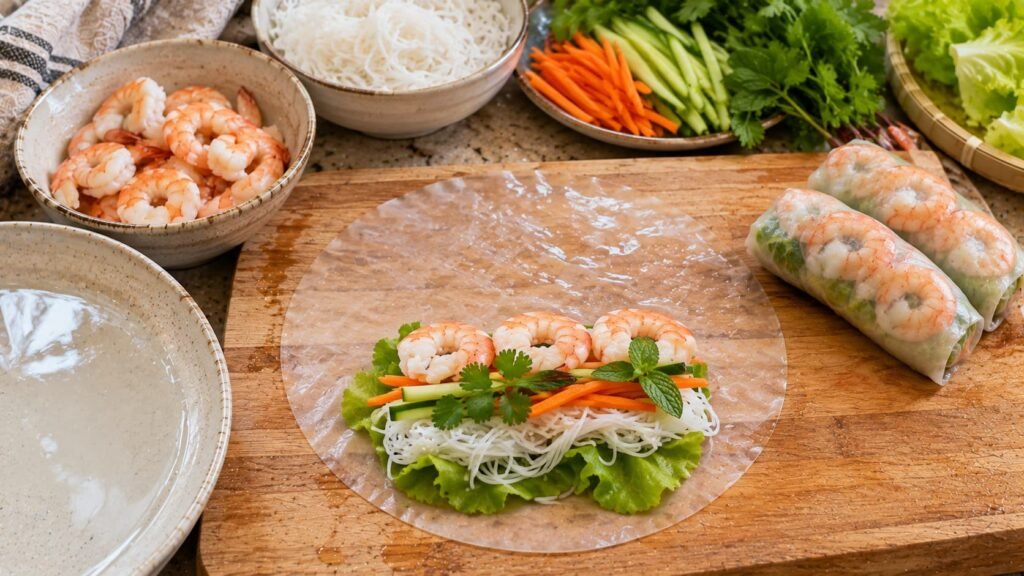
Place a small lettuce leaf on the lower third of the wrapper.
Add a small portion of rice noodles.
Step 15: Add the vegetables and herbs
Arrange cucumber, carrot, mint, cilantro, and optional Thai basil over the noodles.
Avoid overfilling.
Step 16: Position the shrimp
Place approximately three shrimp halves in a horizontal row above the vegetable filling, with the pink outer sides facing down against the wrapper.
This helps create the classic shrimp-visible appearance when rolled.
Step 17: Begin rolling
Fold the bottom edge of the wrapper over the lettuce and noodles.
Roll forward once, keeping the filling compact but not overly tight.
Step 18: Fold in the sides
Fold the left and right sides inward, then continue rolling over the shrimp.
The rice paper should hold everything together.
Step 19: Repeat with remaining wrappers
Continue until you’ve made approximately 12 spring rolls.
Place finished rolls on a lightly damp plate or tray, leaving a little space between them so they don’t stick.
Step 20: Serve with both sauces
Arrange the fresh spring rolls on a platter with separate bowls of peanut-hoisin sauce and Vietnamese fish sauce dip.
Serve promptly for the best texture.
💡 Expert Tips for Perfect Vietnamese Spring Rolls
Don’t soak rice paper too long
Rice paper continues to soften after it leaves the water. Excessive soaking makes it sticky and fragile.
Work with one wrapper at a time
Trying to soften several wrappers at once can cause them to stick together.
Use a slightly damp surface
A damp cutting board helps prevent the wrapper from sticking while you assemble.
Keep the filling portions small
Overfilling is one of the most common reasons spring rolls tear.
Dry the vegetables thoroughly
Excess moisture inside the rolls can make them slippery and difficult to handle.
Slice the shrimp lengthwise
Thin shrimp halves create a beautiful presentation and help the rolls stay compact.
Keep finished rolls separated
Rice paper can stick to other rice paper, so avoid stacking the rolls directly on top of one another.
Prepare the sauces first
Having the sauces ready makes assembly and serving easier.
🔄 Variations and Substitutions
Shrimp and avocado spring rolls
Add thin avocado slices for extra creaminess.
Shrimp and mango spring rolls
Add ripe mango strips for a sweet, tropical variation.
Chicken spring rolls
Replace shrimp with thin strips of fully cooked chicken.
Tofu spring rolls
Use cooked tofu instead of shrimp for a plant-based filling.
For a vegetarian version, replace the fish sauce dip with a soy- or tamari-based dipping sauce.
Extra-herb spring rolls
Increase the mint, cilantro, and Thai basil for a more aromatic filling.
Spicy peanut dipping sauce
Add extra sriracha or chili oil to the peanut-hoisin sauce.
Noodle-free spring rolls
Replace the rice vermicelli with additional lettuce and vegetables for a lighter roll.
🧊 Storage and Make-Ahead Instructions
Refrigerating
Fresh spring rolls are best enjoyed shortly after assembly because the rice paper gradually becomes firmer and can dry out.
If necessary, store them in a single layer in an airtight container in the refrigerator, separated with lightly damp, food-safe parchment or a clean damp towel.
For best texture, enjoy within 24 hours.
Storing the dipping sauces
Store both sauces in separate airtight containers in the refrigerator.
The peanut sauce is best used within approximately 3–4 days, while the fish sauce dip is best used within approximately 3–4 days as a conservative homemade storage recommendation.
Make-ahead preparation
You can cook the shrimp, prepare the noodles, wash and cut the vegetables, and make the sauces ahead of time.
Store the components separately in the refrigerator.
Assemble the rolls shortly before serving for the freshest texture.
Can you freeze fresh spring rolls?
Freezing is not recommended because the rice paper and fresh vegetables lose their pleasant texture after thawing.
❓ Frequently Asked Questions
What are Vietnamese fresh spring rolls called?
They’re commonly called gỏi cuốn in Vietnamese.
Are Vietnamese spring rolls fried?
Fresh spring rolls are not fried. They use softened rice paper wrappers and are served cool or at room temperature.
What is the difference between spring rolls and summer rolls?
In English, the terms are sometimes used differently depending on the region. Summer rolls often refers specifically to fresh Vietnamese rice paper rolls, while spring rolls can also refer to fried varieties.
What kind of shrimp should I use?
Medium or large cooked shrimp work well. Slice them lengthwise for easier rolling.
Why does my rice paper tear?
It may be over-soaked, overfilled, or pulled too tightly during rolling.
Can I make Vietnamese spring rolls ahead of time?
Yes, but they have the best texture when freshly assembled. Prepare the components in advance and roll shortly before serving.
Are Vietnamese shrimp spring rolls gluten-free?
They can be, but you must verify the labels of the rice paper, noodles, hoisin sauce, soy sauce, and other packaged ingredients.
What dipping sauce goes with Vietnamese spring rolls?
Creamy peanut-hoisin sauce and Vietnamese fish sauce dip are two popular choices.
Can I make spring rolls without noodles?
Yes. Replace the noodles with extra lettuce, cucumber, and carrots.
🍽️ What to Serve with Vietnamese Spring Rolls
Fresh Vietnamese spring rolls make a refreshing appetizer, light lunch, or starter for an Asian-inspired dinner.
Serve them alongside a crisp cucumber salad, steamed edamame, or a simple rice dish.
For a more filling meal, pair them with a warm protein dish or a bowl of light soup.
If you’re looking for another easy seafood recipe, our Garlic Dijon Shrimp and Salmon Foil Packs offer a completely different flavor profile while keeping seafood at the center of the meal.
You can also enjoy these rolls with extra herbs, lime wedges, and both dipping sauces arranged on a large serving platter.
❤️ Final Thoughts
These Fresh Vietnamese Spring Rolls with Shrimp and Two Dipping Sauces are a delicious way to enjoy fresh vegetables, tender shrimp, fragrant herbs, and flavorful homemade sauces in one beautiful dish.
The creamy peanut-hoisin sauce and tangy Vietnamese fish sauce dip give you two different ways to enjoy every bite.
Whether you’re making a light lunch, preparing appetizers for guests, or simply trying something new in your kitchen, these homemade Vietnamese spring rolls are fresh, satisfying, and fun to make.
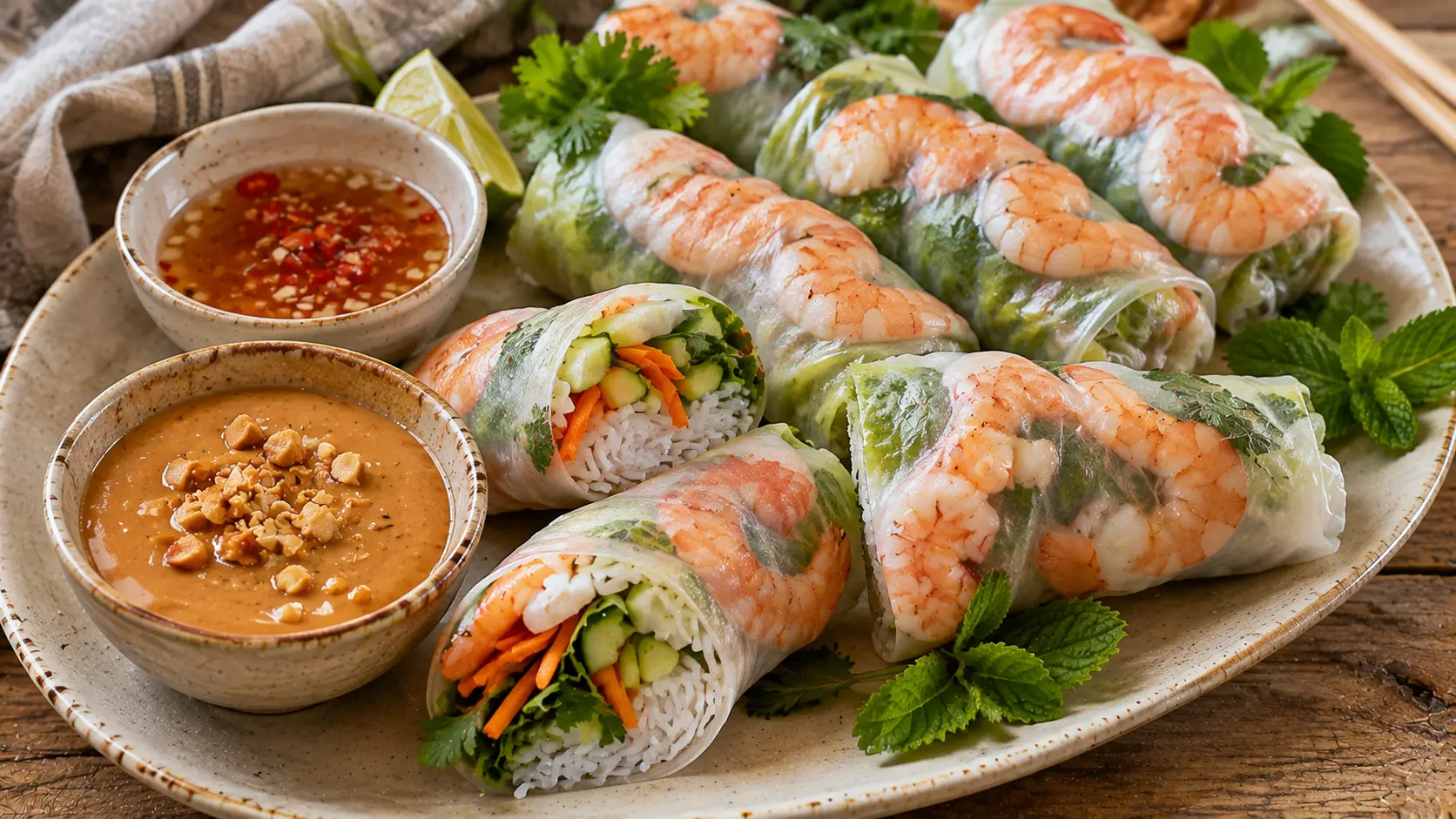
Fresh Vietnamese Spring Rolls with Shrimp and Two Dipping Sauces
Ingredients
Method
- Bring a pot of water to a gentle boil. Add the raw shrimp and cook for approximately 2–4 minutes until opaque and fully cooked to 145°F (63°C).
- Transfer the shrimp to ice water briefly, drain, and pat dry.
- Slice each cooked shrimp lengthwise into two thinner halves.
- Cook the rice vermicelli according to package directions. Drain, rinse with cool water, and set aside.
- Wash and dry the lettuce, cucumber, carrots, mint, cilantro, and optional Thai basil.
- Cut the cucumber and carrots into thin matchsticks.
- For the peanut sauce, whisk together peanut butter, hoisin, soy sauce, lime juice, honey, garlic, and optional sriracha.
- Add warm water gradually until smooth and creamy. Garnish with chopped peanuts if desired.
- For the fish sauce dip, dissolve sugar in warm water, then stir in fish sauce, lime juice, garlic, and chili.
- Arrange all spring roll fillings near a clean, slightly damp work surface.
- Dip one rice paper wrapper briefly into lukewarm water for approximately 3–5 seconds, following package guidance.
- Lay the wrapper flat and allow it to soften.
- Place lettuce, a small portion of vermicelli, cucumber, carrots, and herbs on the lower third.
- Arrange approximately three shrimp halves above the vegetables, pink sides facing the wrapper.
- Fold the bottom edge over the filling and roll forward once.
- Fold in both sides and continue rolling gently but firmly.
- Repeat with the remaining wrappers and fillings.
- Arrange the finished rolls separately on a platter and serve promptly with both dipping sauces.
Notes
-
Don’t over-soak rice paper; it continues softening after removal from the water.
-
Avoid overfilling the wrappers.
-
Keep the vegetables dry to prevent slippery fillings.
-
Store cooked shrimp refrigerated until assembly.
-
Check packaged sauces for peanuts, soy, wheat, fish, and other allergens.
-
For the best texture, eat assembled rolls fresh, preferably within 24 hours.
-
Store prepared dipping sauces refrigerated for approximately 3–4 days.