
Creamy Roasted Butternut Squash Soup with Garlic and Herbs
Imagine coming home on a chilly evening to a warm bowl of velvety butternut squash soup, filled with the rich sweetness of oven-roasted squash, mellow roasted garlic, and fragrant herbs. This Creamy Roasted Butternut Squash Soup with Garlic and Herbs is everything you want in a comforting homemade soup: beautifully smooth, naturally sweet, savory, and full of cozy fall flavors. Every spoonful tastes rich and satisfying, yet the recipe is surprisingly simple to prepare.
The secret to its incredible flavor is roasting the butternut squash instead of boiling it. As the squash caramelizes in the oven, its natural sweetness becomes deeper and more concentrated, creating a delicious foundation for the soup. Roasted onion and garlic add savory complexity, while thyme, sage, and a touch of nutmeg bring warmth without overpowering the delicate flavor of the squash.
Whether you’re preparing a comforting weeknight dinner, planning a Thanksgiving appetizer, or looking for a nourishing make-ahead lunch, this roasted butternut squash soup is an excellent choice. With a handful of everyday ingredients and about an hour from start to finish, you can make a beautiful homemade soup that feels elegant enough for guests and comforting enough for an ordinary evening.
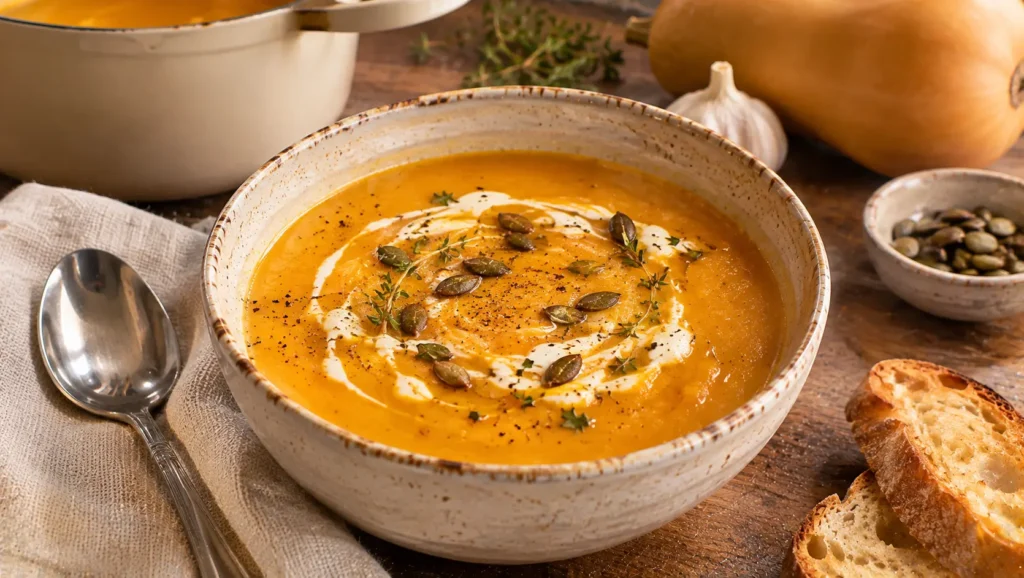
Easy Roasted Butternut Squash Soup
Roasted butternut squash soup is a smooth, blended vegetable soup made with caramelized butternut squash, roasted aromatics, vegetable broth, and herbs.
Unlike soups that cook raw squash directly in broth, this version begins in the oven. Roasting removes some moisture and encourages browning, producing a deeper, slightly nutty sweetness that makes the finished soup particularly flavorful.
Butternut squash has a naturally creamy texture when cooked and blended, which means you don’t need large amounts of cream to create a velvety consistency. A small splash of heavy cream adds richness, but the recipe can easily be made dairy-free.
For this version, we’ll roast cubed butternut squash alongside onion and whole garlic cloves. The vegetables are then blended with warm vegetable broth, thyme, sage, and a small pinch of nutmeg until completely smooth.
A touch of fresh lemon juice at the end balances the natural sweetness of the squash and keeps the soup from tasting flat.
This recipe works beautifully as a light dinner with crusty bread or as a starter for a holiday meal.
If you love cozy homemade soups, you might also enjoy Easy Creamy Potato Soup with Bacon and Chives, which offers a heartier, savory alternative.
For another comforting fall dinner, Slow Cooker Lasagna Soup brings rich tomato flavor and classic Italian-inspired ingredients into a warming bowl.
⭐ Why You’ll Love This Recipe
1. Deep roasted flavor. Oven-roasting the squash creates caramelized edges and brings out its natural sweetness.
2. Incredibly creamy texture. Blended butternut squash produces a silky consistency without needing much cream.
3. Simple, wholesome ingredients. The recipe relies on squash, onion, garlic, broth, olive oil, and herbs.
4. Perfect for fall and winter. Warm spices and roasted vegetables make this an inviting cold-weather meal.
5. Great for Thanksgiving. Its beautiful golden-orange color and smooth texture make it an elegant holiday starter.
6. Easy to make dairy-free. Simply replace the heavy cream with unsweetened coconut milk or omit it.
7. Naturally gluten-free when using suitable broth. No flour or wheat-based thickener is required.
8. Excellent for meal prep. The soup stores well and can be reheated throughout the week.
9. Freezer-friendly. Prepare a large batch and freeze portions for convenient future meals.
10. Easy to customize. Add ginger, curry spices, apples, or a little maple syrup for different flavor combinations.
🛒 Ingredients
This recipe makes approximately 6 servings.
For the Roasted Vegetables
– 1 large butternut squash, approximately 3 pounds (1.4 kg) whole: After peeling and removing the seeds, you’ll need approximately 2½ pounds (1.1 kg) of squash flesh. Choose a squash that feels heavy for its size and has firm, unblemished skin.
– 1 large yellow onion, cut into wedges: Roasting softens the onion’s sharpness and creates a sweet, savory flavor.
– 5 garlic cloves, peeled: Roasted garlic becomes mellow and slightly sweet, adding depth without overwhelming the soup.
– 3 tablespoons extra-virgin olive oil: Helps the vegetables roast evenly and develop lightly caramelized edges.
– ¾ teaspoon kosher salt, divided: Enhances the natural sweetness of the squash and balances the finished soup.
– ½ teaspoon freshly ground black pepper, divided: Adds gentle warmth and savory depth.
For the Soup
– 4 cups (960 ml) low-sodium vegetable broth: Provides the liquid base. Use a flavorful vegetable broth without excessive salt.
– 1 teaspoon fresh thyme leaves, or ½ teaspoon dried thyme: Adds a subtle earthy flavor.
– ½ teaspoon finely chopped fresh sage, or ¼ teaspoon dried sage: Gives the soup a warm, autumn-inspired herbal note.
– ⅛ teaspoon ground nutmeg: Enhances the squash’s natural sweetness without making the soup taste like dessert.
– ½ cup (120 ml) heavy cream: Adds a silky finish. This ingredient is optional, since the squash is naturally creamy.
– 1 teaspoon fresh lemon juice: Brightens the flavor and balances the roasted sweetness.
– Additional salt and black pepper, to taste: Adjust after blending.
Optional Garnishes
- 2 tablespoons toasted pumpkin seeds
- 2 tablespoons heavy cream, for drizzling
- Fresh thyme leaves
- Freshly cracked black pepper
- A few drops of extra-virgin olive oil
How to Choose the Best Butternut Squash
Look for a squash with smooth, firm, matte beige skin.
Avoid squash with soft spots, deep cuts, or signs of mold.
A squash with a long, thick neck is especially convenient because the neck contains solid flesh without a seed cavity, making it easier to peel and cube.
Why Roasting Makes the Soup Better
Roasting encourages the natural sugars in butternut squash to brown, producing deeper flavor than boiling alone.
The squash should develop lightly golden edges while remaining tender enough to pierce easily with a fork.
Avoid burning the vegetables, since dark, bitter areas can affect the finished soup.
Should You Use Vegetable or Chicken Broth?
Vegetable broth keeps the recipe vegetarian and allows the squash flavor to remain prominent.
Chicken broth can be substituted if you prefer a slightly richer savory flavor and don’t need the dish to be vegetarian.
Choose low-sodium broth so you can control the seasoning.
Is Heavy Cream Necessary?
No. Butternut squash becomes naturally thick and creamy when blended.
The heavy cream adds extra richness, but you can omit it entirely or replace it with unsweetened coconut milk.
If using coconut milk, the soup will develop a subtle coconut flavor.

👩🍳 How to Make Creamy Roasted Butternut Squash Soup
Step 1: Preheat the Oven
Preheat your oven to 425°F (220°C).
Line a large rimmed baking sheet with parchment paper for easier cleanup.
If your baking sheet is small, prepare two sheets to prevent overcrowding.
Step 2: Prepare the Butternut Squash
Wash and dry the squash.
Carefully trim off both ends, then peel the skin using a sturdy vegetable peeler.
Cut the squash in half lengthwise and scoop out the seeds with a spoon.
Cut the flesh into approximately 1-inch cubes.
Try to keep the pieces relatively uniform so they roast evenly.
Step 3: Prepare the Onion and Garlic
Peel the yellow onion and cut it into thick wedges.
Peel the garlic cloves, leaving them whole.
Keep the garlic cloves relatively large so they don’t burn during roasting.
Step 4: Season the Vegetables
Place the squash cubes and onion wedges in a large mixing bowl.
Add 3 tablespoons olive oil, ½ teaspoon kosher salt, and ¼ teaspoon black pepper.
Toss until evenly coated.
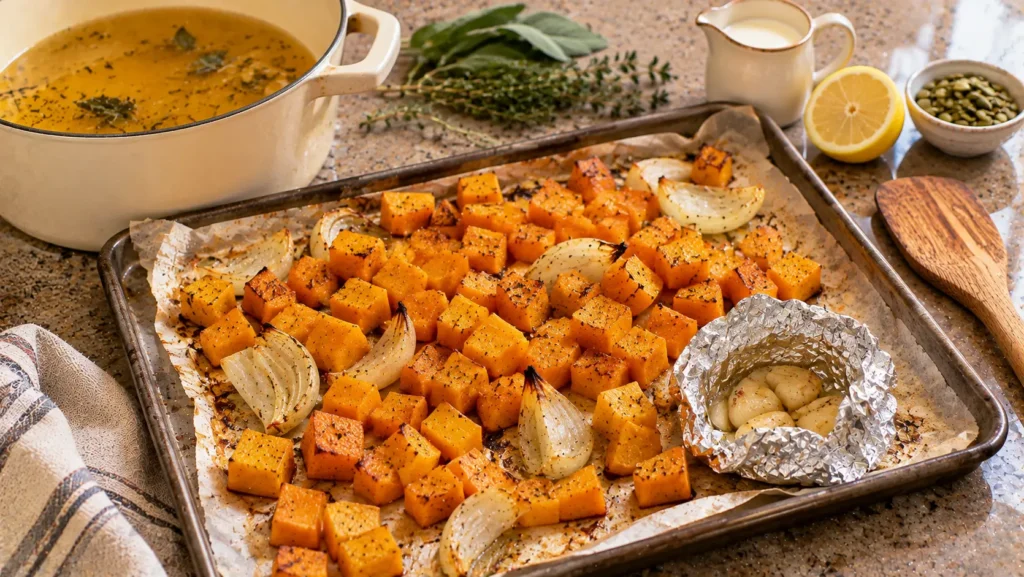
Spread the vegetables across the prepared baking sheet in a single layer.
Step 5: Prepare the Garlic for Roasting
Place the peeled garlic cloves on a small piece of aluminum foil.
Drizzle with a few drops of olive oil from the measured amount and fold the foil into a loose packet.
Place the packet on the baking sheet.
This protects the garlic from burning while allowing it to soften and become fragrant.
Step 6: Roast the Vegetables
Transfer the baking sheet to the preheated oven.
Roast for approximately 30–35 minutes, turning the squash and onion halfway through.
The squash should be fork-tender with lightly caramelized edges.
The onion should be soft and golden in places.
Step 7: Check the Garlic
Carefully open the garlic packet after roasting.
The garlic cloves should be soft, fragrant, and lightly golden.
If they need more time, close the packet and return it to the oven for another 5 minutes.
Step 8: Warm the Vegetable Broth
While the vegetables finish roasting, pour 4 cups vegetable broth into a large soup pot or Dutch oven.
Add the thyme, sage, and nutmeg.
Warm gently over medium-low heat.
Avoid boiling vigorously.
Step 9: Transfer the Roasted Vegetables
Carefully transfer the roasted squash and onion into the warm broth.
Add the roasted garlic cloves.
Scrape any flavorful browned juices from the baking sheet into the pot, provided they aren’t burned.
Step 10: Simmer Briefly
Bring the mixture to a gentle simmer.
Cook for approximately 5 minutes to allow the roasted vegetables and herbs to combine.
The squash should already be tender from roasting.
Step 11: Blend Until Smooth
Remove the pot from the heat.
Use an immersion blender to blend the soup until completely smooth.
Move the blender slowly around the pot to incorporate all the vegetables.
If using a countertop blender, allow the mixture to cool slightly and blend in small batches according to the manufacturer’s hot-liquid safety instructions.
Never fill a blender completely with hot soup or seal hot liquid in a container that cannot vent steam safely.
Step 12: Adjust the Thickness
Examine the consistency after blending.
For a thicker soup, leave it as it is.
For a thinner consistency, add extra warm broth or water, approximately ¼ cup at a time.
Blend briefly after each addition.
Step 13: Add the Heavy Cream
Return the pot to low heat.
Stir in ½ cup heavy cream, if using.
Warm gently until incorporated.
Avoid vigorous boiling after adding the cream.
Step 14: Add the Lemon Juice
Stir in 1 teaspoon fresh lemon juice.
Taste the soup.
The lemon should brighten the roasted squash flavor without making the soup noticeably sour.
Step 15: Adjust the Seasoning
Add the remaining ¼ teaspoon kosher salt and ¼ teaspoon black pepper, adjusting to taste.
If the squash is particularly sweet, a small additional squeeze of lemon can help balance the flavor.
If the soup tastes too earthy, a little more salt may bring the flavors together.
Step 16: Prepare the Garnishes
While the soup warms, toast the pumpkin seeds in a dry skillet over medium-low heat for approximately 2–3 minutes, stirring frequently.
Remove them once fragrant and lightly toasted.
Prepare a small amount of cream for drizzling and pick a few fresh thyme leaves.
Step 17: Ladle Into Bowls
Divide the hot soup among six serving bowls.
Use warm ceramic bowls for a cozy presentation.
The soup should have a smooth, velvety texture and a naturally golden-orange color.
Step 18: Garnish and Serve
Drizzle each bowl with a small swirl of cream, if desired.
Sprinkle with toasted pumpkin seeds, fresh thyme, and freshly cracked black pepper.
Serve immediately with crusty bread, toasted sourdough, or a fresh green salad.
💡 Expert Tips for Perfect Roasted Butternut Squash Soup
1. Roast at a high temperature. A 425°F (220°C) oven encourages browning while keeping the squash tender inside.
2. Cut the squash evenly. Similar-sized cubes cook at approximately the same rate.
3. Avoid overcrowding the baking sheet. Crowded vegetables release moisture and steam rather than developing caramelized edges.
4. Protect the garlic from burning. A loose foil packet allows the garlic to soften without becoming bitter.
5. Use flavorful broth. Since the ingredient list is relatively short, the quality of the broth makes a noticeable difference.
6. Blend thoroughly. A few extra moments of blending help create a smoother texture.
7. Add liquid gradually. It’s easier to thin a thick soup than to correct one that has become too watery.
8. Don’t overdo the nutmeg. A small pinch enhances the squash without making the soup taste overly spiced.
9. Finish with acidity. Lemon juice balances the natural sweetness and roasted flavors.
10. Garnish just before serving. Toasted pumpkin seeds stay crunchier when added at the last moment.
🔄 Variations and Substitutions
Vegan Roasted Butternut Squash Soup
Omit the heavy cream or replace it with unsweetened coconut milk.
Use vegetable broth and keep the remaining ingredients unchanged.
The soup will still be thick and creamy because of the blended squash.
Roasted Butternut Squash Soup with Coconut Milk
Replace the heavy cream with ½ cup full-fat unsweetened coconut milk.
The coconut adds richness and a subtle tropical flavor that pairs well with the sweet squash.
Roasted Butternut Squash and Apple Soup
Add one peeled, cored, and chopped tart apple to the baking sheet during the final 20 minutes of roasting.
The apple contributes a pleasant sweet-tart flavor.
Reduce the lemon juice slightly if the apple provides enough acidity.
Spicy Butternut Squash Soup
Add ¼ teaspoon crushed red pepper flakes or a pinch of cayenne pepper to the warm broth.
Start with a small amount and adjust gradually.
Ginger Butternut Squash Soup
Add 1 tablespoon freshly grated ginger to the broth.
Ginger provides a warming, slightly spicy flavor that complements roasted squash.
Curried Butternut Squash Soup
Add 1–2 teaspoons mild curry powder to the broth along with the herbs.
For a more cohesive flavor, replace the sage with a little additional curry powder.
Roasted Butternut Squash and Carrot Soup
Replace approximately ½ pound of squash with peeled carrots.
Roast the carrots alongside the squash until tender.
The carrots add natural sweetness and deepen the orange color.
Butternut Squash Soup Without Cream
Simply omit the heavy cream.
Blend the roasted squash thoroughly with the vegetable broth until smooth.
Add a tablespoon of olive oil if you’d like a slightly richer mouthfeel.
🧊 Storage, Freezing, and Reheating
How to Store Roasted Butternut Squash Soup
Allow the soup to cool briefly, then transfer it into shallow airtight containers.
Refrigerate within 2 hours of cooking, or within 1 hour if the surrounding temperature is above 90°F (32°C).
Store at 40°F (4°C) or below for up to 3–4 days.
Can You Freeze Butternut Squash Soup?
Yes. This soup freezes particularly well, especially when prepared without cream.
Transfer cooled portions to freezer-safe containers, leaving space for expansion.
Freeze at 0°F (-18°C) for up to 3 months for best quality.
If planning to freeze the soup, consider adding the cream after reheating rather than before freezing.
How to Thaw Frozen Soup
Transfer the frozen soup to the refrigerator and allow it to thaw overnight.
For quicker preparation, reheat from frozen in a covered saucepan over low heat, stirring frequently as the soup melts.
Add a splash of broth if necessary.
How to Reheat Butternut Squash Soup
Place the soup in a saucepan over medium-low heat.
Stir occasionally until heated thoroughly to 165°F (74°C).
If the soup has thickened during refrigeration, add a little water or vegetable broth.
Avoid prolonged vigorous boiling, particularly if the soup contains cream.
Can You Make This Soup Ahead?
Absolutely.
Roasted butternut squash soup is an excellent make-ahead recipe for Thanksgiving or other holiday meals.
Prepare it 1–2 days in advance, refrigerate safely, and reheat before serving.
Add fresh garnishes immediately before bringing the soup to the table.
❓ Frequently Asked Questions
1. Do you have to peel butternut squash before roasting it for soup?
Not necessarily. You can roast halved butternut squash with the skin on, then scoop out the tender flesh after cooking. However, peeling and cubing the squash before roasting creates more exposed surfaces for caramelization, which can develop deeper roasted flavor.
2. Why is my butternut squash soup bland?
Bland soup may need more salt, a better-quality broth, or a little acidity. Roasting the squash until lightly caramelized also improves flavor. Try adding a small amount of lemon juice and adjusting the seasoning gradually.
3. How do I make butternut squash soup thicker?
Simmer the blended soup uncovered for a few minutes to reduce excess liquid. Alternatively, add a little more cooked squash and blend again. Avoid adding too much broth at the beginning.
4. How do I make butternut squash soup thinner?
Add warm vegetable broth or water, approximately ¼ cup at a time, until you reach your preferred consistency. Stir or blend after each addition.
5. Can I make roasted butternut squash soup without cream?
Yes. Butternut squash becomes naturally creamy when blended, so heavy cream is optional. You can omit it completely or use unsweetened coconut milk for a dairy-free variation.
6. Can I use frozen butternut squash?
Yes. Frozen cubed butternut squash can be used, although it may release more moisture during roasting. Spread it across a large baking sheet without overcrowding and roast until tender and lightly browned. The cooking time may vary.
7. What herbs go best with butternut squash soup?
Thyme and sage are excellent choices because their earthy flavors complement the squash’s natural sweetness. Rosemary also works in small amounts. Fresh parsley or chives can be used as garnishes.
8. Can I make butternut squash soup in a blender?
Yes. A countertop blender can produce an exceptionally smooth texture. Allow the hot mixture to cool slightly, work in small batches, and follow your blender manufacturer’s safety instructions for hot liquids.
9. Is roasted butternut squash soup good for meal prep?
Yes. It stores well in the refrigerator for several days and can be frozen in individual portions. For the best texture, add cream and crunchy garnishes after reheating.
10. What can I serve with butternut squash soup?
Crusty bread, grilled cheese sandwiches, roasted vegetables, and fresh salads are excellent accompaniments. For a holiday meal, serve smaller portions as an appetizer before the main course.
🍽️ What to Serve With Roasted Butternut Squash Soup
Crusty sourdough bread: A thick slice of toasted sourdough is perfect for dipping into the smooth, creamy soup.
Grilled cheese sandwiches: The savory richness of melted cheese contrasts beautifully with the natural sweetness of roasted squash.
Harvest apple pecan salad: A fresh salad with crisp apples, toasted pecans, and a tangy vinaigrette creates a lovely seasonal combination. Our Harvest Apple Pecan Salad with Maple Vinaigrette is a natural pairing.
Roasted sweet potatoes: If you’re planning a larger fall dinner, Roasted Sweet Potato Halves can add another caramelized vegetable dish to the table.
Garlic bread: Warm garlic bread adds a savory, crunchy element that complements the soup’s silky texture.
Simple green salad: Mixed greens with lemon vinaigrette help balance the richness of the soup.
For more guidance on safe storage and reheating, consult the USDA Food Safety and Inspection Service.
❤️ Final Thoughts
Creamy Roasted Butternut Squash Soup with Garlic and Herbs is a wonderful example of how simple ingredients can become something truly special. Roasting the squash, onion, and garlic develops deep flavor, while fresh herbs and a touch of cream transform everything into a smooth, comforting soup.
It’s easy enough for a relaxed weeknight dinner, elegant enough for Thanksgiving, and convenient enough to prepare ahead for busy days.
The naturally sweet squash, savory roasted garlic, and fragrant herbs create a beautifully balanced flavor that doesn’t require complicated ingredients or techniques.
Whether you serve it with crusty bread, a fresh salad, or as the first course of a holiday meal, this roasted butternut squash soup is a cozy recipe worth returning to throughout the colder months.
Save this recipe for your next fall or winter dinner and enjoy a warm bowl of homemade comfort.
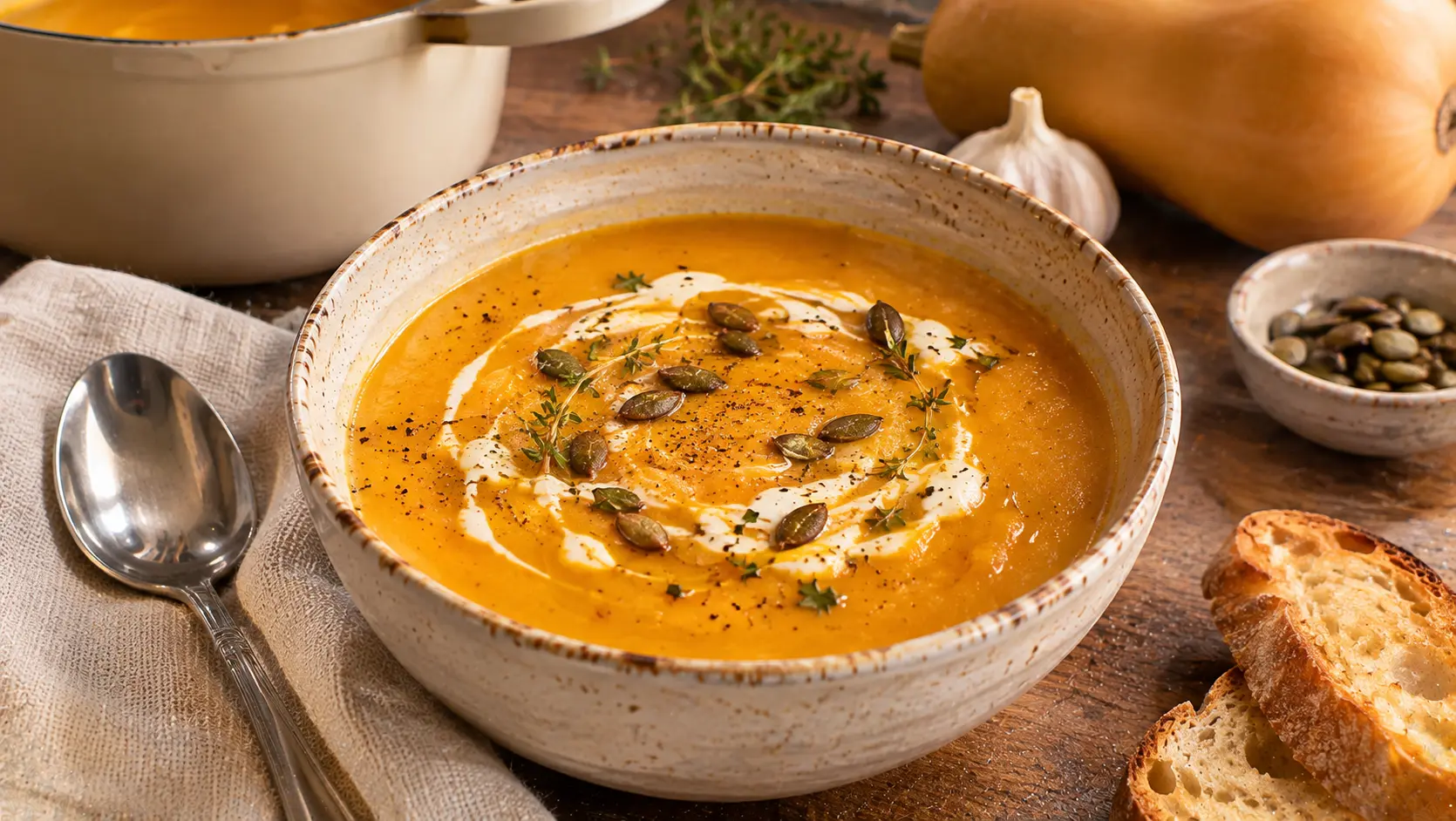
Creamy Roasted Butternut Squash Soup with Garlic and Herbs
Ingredients
Method
- Preheat the oven. Set the oven to 425°F (220°C). Line one or two large rimmed baking sheets with parchment paper.
- Prepare the squash. Peel the butternut squash, cut it lengthwise, remove the seeds, and dice the flesh into approximately 1-inch cubes.
- Prepare the aromatics. Cut the yellow onion into thick wedges and peel the garlic cloves.
- Season the vegetables. Toss the squash and onion with 3 tablespoons olive oil, ½ teaspoon kosher salt, and ¼ teaspoon black pepper. Spread in a single layer.
- Wrap the garlic. Place the garlic cloves in a small foil packet with a few drops of the measured olive oil. Place the packet on the baking sheet.
- Roast. Roast for 30–35 minutes, turning the squash and onion halfway through, until tender and lightly caramelized.
- Check the garlic. Carefully open the packet. The garlic should be soft and fragrant. Roast a few minutes longer if needed.
- Warm the broth. Add vegetable broth, thyme, sage, and nutmeg to a large soup pot or Dutch oven. Warm gently over medium-low heat.
- Add the vegetables. Transfer the roasted squash, onion, and garlic to the pot. Add any flavorful browned juices from the baking sheet.
- Simmer. Simmer gently for approximately 5 minutes to combine the flavors.
- Blend. Remove from the heat and blend with an immersion blender until smooth. If using a countertop blender, follow the manufacturer’s hot-liquid safety instructions.
- Adjust the consistency. Add extra warm broth or water, approximately ¼ cup at a time, if the soup is too thick.
- Add the cream. Return to low heat and stir in ½ cup heavy cream, if using. Warm gently without boiling vigorously.
- Add lemon juice. Stir in 1 teaspoon freshly squeezed lemon juice.
- Season. Add the remaining ¼ teaspoon kosher salt and ¼ teaspoon black pepper, adjusting to taste.
- Prepare the garnish. Toast pumpkin seeds in a dry skillet for 2–3 minutes, stirring frequently, until lightly fragrant.
- Serve. Ladle the soup into six bowls.
- Garnish. Finish with optional cream, toasted pumpkin seeds, fresh thyme, black pepper, and a few drops of olive oil.
Notes
-
Squash size: A 3-pound whole butternut squash should yield approximately 2½ pounds of prepared flesh, depending on its shape and seed cavity.
-
Roasting: Roast until fork-tender and lightly browned, not deeply charred.
-
Garlic: Keep the garlic in a loose foil packet to prevent burning.
-
Consistency: Add broth gradually after blending until the soup reaches your preferred thickness.
-
Cream: Heavy cream is optional because blended butternut squash is naturally creamy.
-
Dairy-free option: Omit the cream or substitute unsweetened coconut milk.
-
Vegan option: Use vegetable broth and plant-based cream or no cream.
-
Herbs: Thyme and sage complement the squash without overwhelming its natural sweetness.
-
Nutmeg: Use sparingly; too much can overpower the soup.
-
Lemon juice: Add at the end to balance the roasted sweetness.
-
Make ahead: Prepare 1–2 days in advance and refrigerate promptly.
-
Storage: Refrigerate in airtight containers for up to 3–4 days.
-
Freezing: Freeze for up to 3 months for best quality, preferably before adding cream.
-
Reheating: Reheat thoroughly to 165°F (74°C), adding broth if needed.
-
Garnish: Add toasted pumpkin seeds just before serving to preserve their crunch.