Ingredients
Method
- Thaw the puff pastry according to package directions while keeping it cold.
- Preheat the oven to 400°F (205°C). Line a large baking sheet with parchment paper.
- Core the apples and peel them if desired. Slice approximately 1/8–1/4 inch thick.
- Toss the apple slices with fresh lemon juice.
- Melt the butter in a large skillet over medium heat.
- Add the apples, brown sugar, cinnamon, nutmeg, and salt.
- Cook for 4–5 minutes, stirring gently, until the apples begin to soften but still hold their shape.
- Sprinkle the cornstarch over the apples and gently stir.
- Cook for another minute until the released juices become slightly thickened and glossy.
- Remove from the heat and stir in the vanilla extract.
- Allow the caramelized apple mixture to cool for approximately 10 minutes.
- Place the cold puff pastry on the parchment-lined baking sheet.
- If necessary, gently roll it into approximately a 10 × 12-inch rectangle.
- Lightly score a 3/4-inch border around the pastry without cutting completely through.
- Prick the center section several times with a fork, leaving the border untouched.
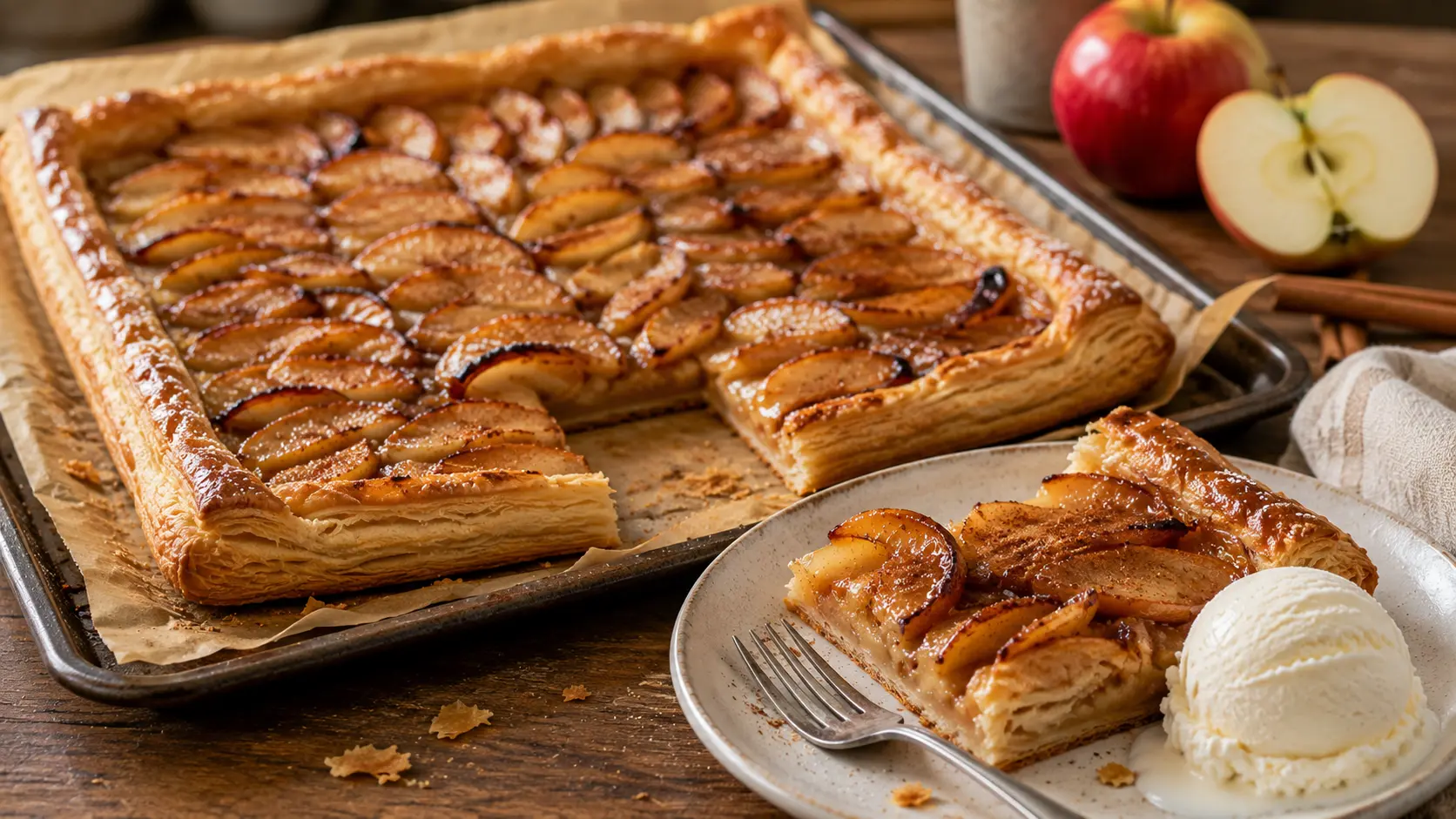
- Arrange the cooled caramelized apple slices inside the scored border, overlapping them slightly.
- Spoon a small amount of the thick caramelized juices over the apples, avoiding excessive liquid.
- Whisk the egg with 1 teaspoon water.
- Brush the exposed puff pastry border lightly with egg wash.
- Sprinkle the border with coarse sugar if using.
- Bake for 20–25 minutes, until the pastry is puffed and deeply golden and the apples are tender.
- Bake for an additional 2–3 minutes if the pastry still appears pale.
- Remove from the oven and cool for 10–15 minutes.
- Dust lightly with powdered sugar if desired.
- Slice into 8 portions and serve slightly warm or at room temperature.
Notes
Keep the puff pastry cold until shortly before baking for the best rise and flaky layers.
Use firm baking apples such as Granny Smith, Honeycrisp, Pink Lady, or Braeburn.
Do not completely soften the apples during stovetop caramelization because they will continue cooking in the oven.
Allow the apple mixture to cool before placing it on the pastry.
Avoid adding excessive caramelized apple liquid to the pastry because too much moisture can create a soggy bottom.
Score the pastry border without cutting all the way through.
Only prick the center of the puff pastry with a fork; leave the border untouched so it can rise.
Bake until the pastry is deeply golden rather than merely pale yellow.
The tart has its best crisp texture on the day it is baked.
Store leftovers refrigerated for up to 3 days and reheat in a 350°F oven for the best texture.