Chewy Brown Butter Pumpkin Snickerdoodle Cookies
Pumpkin cookies have a reputation for being soft and cakey, but they don’t have to be. These Chewy Brown Butter Pumpkin Snickerdoodle Cookies are designed specifically for people who want the warm flavor of pumpkin with the dense, chewy texture of a great snickerdoodle.
The difference starts with brown butter. Cooking the butter until its milk solids turn golden brown creates a deep, nutty flavor that works beautifully with pumpkin, cinnamon, and brown sugar. Instead of simply adding more pumpkin spice, the browned butter gives these cookies another layer of flavor that makes them taste richer and more complex.
The other key is controlling moisture. Pumpkin purée contains a lot of water, and too much of it can quickly push cookies toward a muffin-like texture. Here, we’ll remove some excess moisture from the pumpkin before adding it to the dough. The cookies are then rolled generously in cinnamon sugar and baked just until their edges are set, leaving the centers soft and chewy.
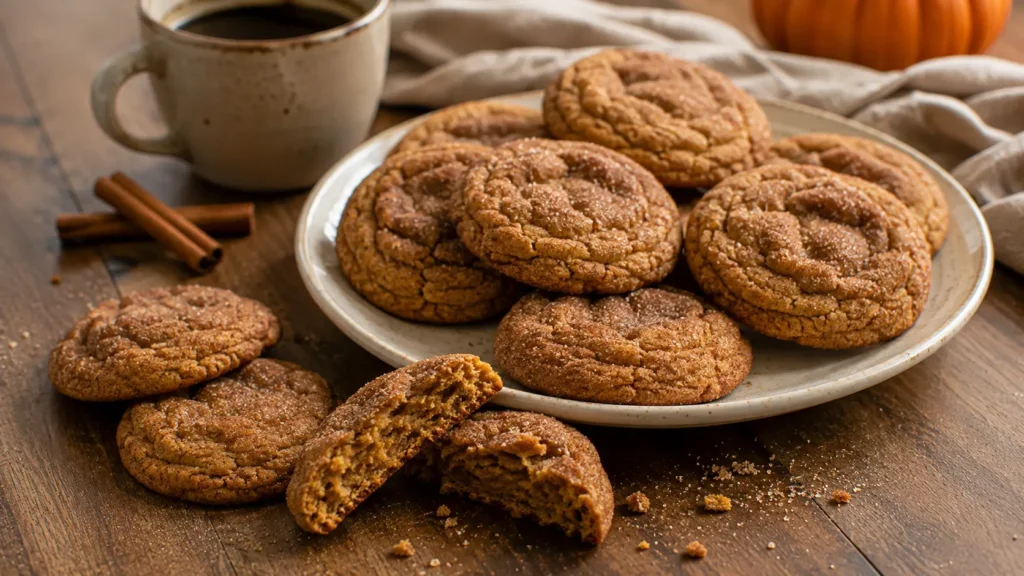
Easy Chewy Brown Butter Pumpkin Snickerdoodle Cookies
These aren’t traditional snickerdoodles with a spoonful of pumpkin added for seasonal color.
The recipe has been built around the ingredients that make pumpkin cookies challenging in the first place.
Traditional cookie dough depends on a careful balance between fat, sugar, flour, and moisture. Pumpkin introduces additional water, which can encourage a softer, cakier crumb. That’s why simply adding a large scoop of pumpkin to an ordinary snickerdoodle recipe often doesn’t produce a genuinely chewy cookie.
For this recipe, we use a modest amount of pumpkin and blot away some of its excess moisture first. We also use an egg yolk rather than a whole egg, which provides richness and binding without introducing as much additional liquid.
Brown butter brings another advantage: some of the butter’s water evaporates during browning, concentrating its flavor.
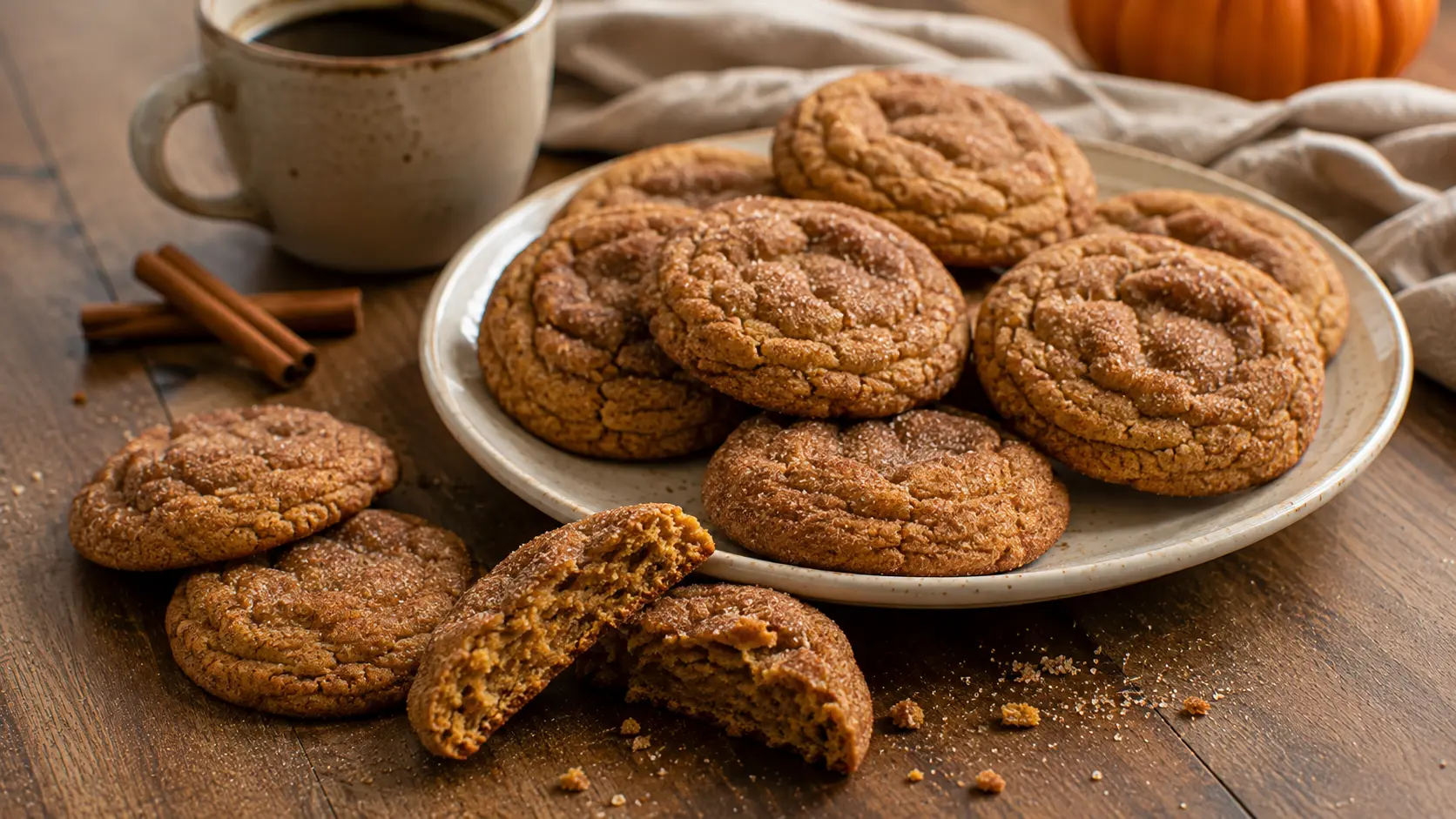
The result is a cookie with crisp cinnamon-sugar edges, a soft and chewy center, subtle pumpkin flavor, and the toasted nuttiness of browned butter.
If you want a more decadent pumpkin cookie with a surprise center, Pumpkin Cheesecake Snickerdoodle Cookies take the same fall flavor family in a completely different direction with a frozen cream cheese filling sealed inside each cookie.
⭐ Why You’ll Love This Recipe
Actually Chewy Pumpkin Cookies
The recipe intentionally controls moisture so the finished cookies don’t simply turn into little pumpkin cakes.
Brown Butter Adds Serious Flavor
Browning butter transforms an everyday ingredient into something deeply nutty and toasted.
No Mixer Required
Because the butter is melted during browning, you don’t need to cream softened butter in a stand mixer.
Classic Cinnamon-Sugar Exterior
Each cookie gets rolled generously in cinnamon sugar immediately before baking.
Perfect for Fall
Pumpkin, cinnamon, nutmeg, brown sugar, vanilla, and browned butter make these particularly good from early fall through Thanksgiving.
Easy to Make Ahead
The dough can be prepared and chilled before baking, making this a convenient cookie for parties or holiday dessert trays.
🛒 Ingredients
Unsalted Butter
You’ll need ¾ cup (170 g) unsalted butter.
We’re going to brown it before making the dough.
Using unsalted butter gives you better control over the final salt level.
Pumpkin Purée
Use ½ cup pumpkin purée before blotting.
You want plain 100% pumpkin, not pumpkin pie filling.
Pumpkin pie filling contains added sugar and spices and isn’t interchangeable with pure pumpkin.
All-Purpose Flour
All-purpose flour provides enough structure to keep the cookies chewy without making them tough.
For best results, weigh the flour. If you’re using measuring cups, spoon the flour into the cup and level the top rather than scooping directly from the bag.
Brown Sugar
Brown sugar adds moisture, caramel flavor, and chewiness.
Dark brown sugar works particularly well with brown butter, although light brown sugar can also be used.
Granulated Sugar
Granulated sugar appears in the dough and in the cinnamon-sugar coating.
It contributes sweetness while helping the edges develop a slightly crisper texture.
Egg Yolk
We use one large egg yolk instead of a whole egg.
That gives the dough richness and binding while limiting additional water.
Vanilla Extract
Vanilla complements both browned butter and pumpkin.
Ground Cinnamon
Cinnamon goes into the dough and the exterior coating.
Ground Nutmeg
A small amount of nutmeg adds warmth without overpowering the brown butter.
Cream of Tartar
Cream of tartar gives snickerdoodles their characteristic subtle tang and works with baking soda to provide lift.
Baking Soda
Baking soda helps the cookies spread and brown properly.
Salt
Salt is especially important when using browned butter because it sharpens the toasted, caramel-like flavors.
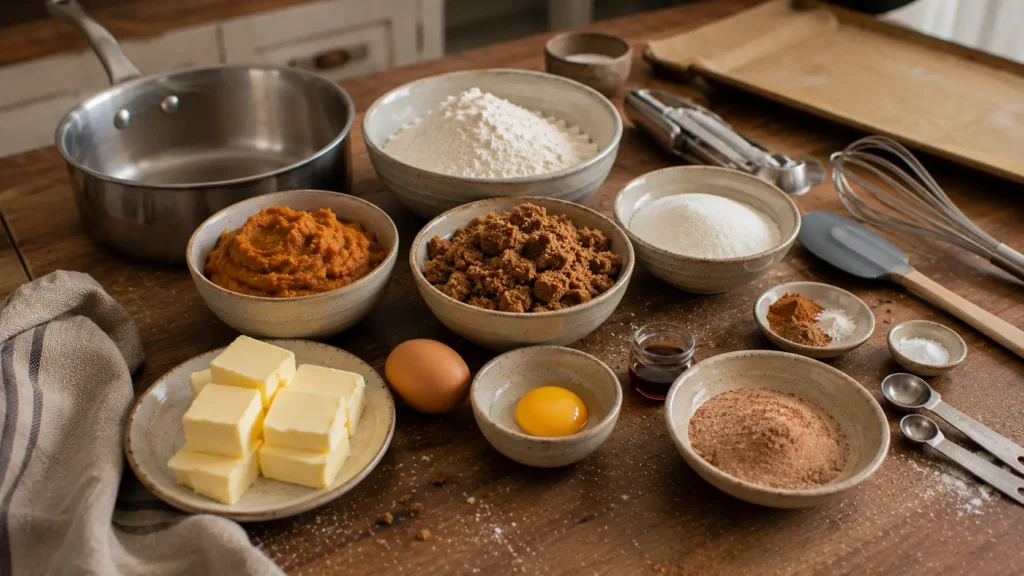
Ingredients
For the Cookies
- ¾ cup (170 g) unsalted butter
- ½ cup (120 g) pure pumpkin purée, measured before blotting
- 1½ cups (180 g) all-purpose flour
- 1 teaspoon cream of tartar
- ½ teaspoon baking soda
- ½ teaspoon fine salt
- 1 teaspoon ground cinnamon
- ¼ teaspoon ground nutmeg
- ¾ cup (150 g) packed dark brown sugar
- ¼ cup (50 g) granulated sugar
- 1 large egg yolk
- 2 teaspoons vanilla extract
For the Cinnamon-Sugar Coating
- ⅓ cup (67 g) granulated sugar
- 2 teaspoons ground cinnamon
👩🍳 How to Make Chewy Brown Butter Pumpkin Snickerdoodles
1. Brown the Butter
Place the butter in a light-colored saucepan or skillet over medium heat.
A light interior makes it much easier to see the milk solids changing color.
Allow the butter to melt completely.
It will begin bubbling and foaming as water cooks away.
Continue cooking, swirling or stirring frequently.
2. Watch the Milk Solids Carefully
After several minutes, you’ll notice small specks at the bottom of the pan changing from pale to golden brown.
The butter should smell nutty and toasted.
As soon as the milk solids become a deep golden brown, remove the pan from the heat.
Don’t wait until they’re black. Brown butter can move from perfectly toasted to burned very quickly.
3. Transfer the Brown Butter
Immediately pour the butter—including all those browned milk solids—into a large heat-safe mixing bowl.
Leaving it in the hot pan can cause it to continue cooking.
Allow it to cool for approximately 15–20 minutes.
It can remain liquid, but it shouldn’t be piping hot when the other ingredients are added.
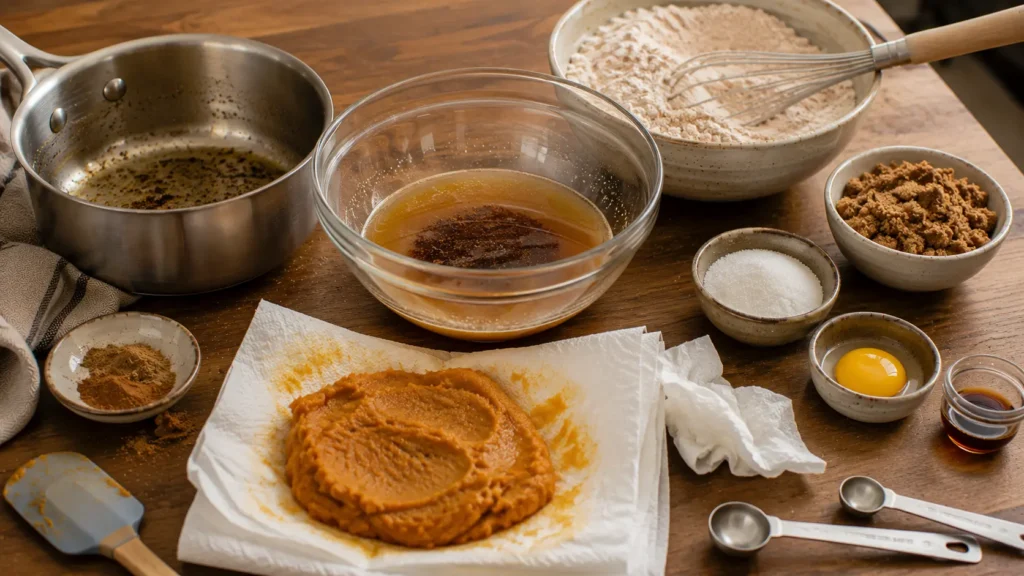
4. Blot the Pumpkin
While the butter cools, spread the pumpkin purée onto several layers of paper towel.
Place additional paper towel over the top and press gently.
The towels should absorb noticeable moisture.
Repeat with fresh paper towel if necessary.
The pumpkin will become thicker, darker, and almost paste-like.
Don’t try to make it completely dry.
5. Combine the Dry Ingredients
In a medium bowl, whisk together:
- flour
- cream of tartar
- baking soda
- salt
- cinnamon
- nutmeg
Set aside.
6. Add the Sugars to the Brown Butter
Whisk the brown sugar and granulated sugar into the cooled browned butter.
Make sure you scrape all the toasted brown milk solids from the bottom of the bowl into the mixture.
Those specks contain a lot of flavor.
7. Add the Egg Yolk
Whisk in the egg yolk until incorporated.
8. Add Pumpkin and Vanilla
Add the blotted pumpkin and vanilla extract.
Whisk until the mixture is mostly smooth.
Small streaks of pumpkin are fine.
9. Add the Dry Ingredients
Add the flour mixture to the wet ingredients.
Fold with a rubber spatula just until no obvious dry flour remains.
Avoid aggressively mixing the dough.
10. Chill the Dough
Cover the bowl and refrigerate for approximately 45–60 minutes.
Chilling allows the flour to hydrate and makes the dough considerably easier to portion.
It also helps control spreading in the oven.
11. Prepare the Cinnamon Sugar
Combine ⅓ cup granulated sugar with 2 teaspoons cinnamon in a shallow bowl.
Mix thoroughly.
12. Preheat the Oven
Preheat your oven to 350°F (175°C).
Line two light-colored baking sheets with parchment paper.
13. Portion the Dough
Scoop approximately 2 tablespoons of dough per cookie.
Roll gently into rough balls.
They don’t need to be perfectly spherical.
14. Coat Generously
Roll every dough ball thoroughly in the cinnamon-sugar mixture.
The entire exterior should receive a visible coating.
15. Arrange on Baking Sheets
Place the cookies approximately 2½–3 inches apart.
Give them enough room to spread.
16. Bake
Bake for approximately 10–12 minutes.
The edges should look set, while the centers should still appear slightly soft and underdone.
That’s intentional.
17. Reshape if Necessary
If some cookies spread unevenly, you can gently circle a large round cookie cutter around each cookie immediately after it comes out of the oven.
Don’t obsess over making every cookie identical, though. Slightly irregular homemade cookies look and feel more natural.
18. Let Them Finish on the Baking Sheet
Leave the cookies on the hot baking sheet for approximately 8–10 minutes.
Residual heat will continue setting the centers without drying them out.
19. Transfer to a Cooling Rack
Carefully transfer the cookies to a wire rack.
The texture becomes noticeably chewier as they cool.
20. Serve
These cookies are excellent once completely cooled, when the edges have set and the centers have developed their chewy texture.
🍽️ Equipment Needed
You’ll need:
- Light-colored saucepan or skillet
- Heat-safe mixing bowl
- Medium mixing bowl
- Whisk
- Rubber spatula
- Measuring cups and spoons
- Kitchen scale, ideally
- Paper towels
- Cookie scoop
- Two baking sheets
- Parchment paper
- Wire cooling rack
A light-colored pan is especially helpful when browning butter because you can actually see the milk solids changing color.
🔁 Variations & Substitutions
Add White Chocolate
Fold approximately ¾ cup white chocolate chunks into the finished dough.
The sweetness works well with brown butter and cinnamon, although the cookies will taste noticeably sweeter.
Add Toasted Pecans
Add ½ cup finely chopped toasted pecans for additional nutty flavor.
Add More Spice
For a stronger pumpkin-spice profile, add ⅛ teaspoon ground cloves and ⅛ teaspoon ground ginger.
Don’t overdo the cloves—they can quickly dominate the cookie.
Add Maple
Replace ½ teaspoon vanilla with maple extract for a subtle maple note.
Make Larger Cookies
Use approximately 3 tablespoons of dough per cookie and increase the baking time slightly.
Watch the edges rather than relying exclusively on the timer.
💡 Pro Tips for Success
Don’t Walk Away From Browning Butter
Butter changes slowly at first and then very quickly near the end.
Stay near the stove once the foam begins subsiding.
Keep the Brown Bits
The brown particles at the bottom aren’t something to strain away. They’re toasted milk solids and contain much of the flavor you’re trying to create.
King Arthur Baking describes brown butter as butter cooked until its milk solids toast, creating a deeper nutty flavor that can transform baked goods. King Arthur Baking’s guide to brown butter
Blot the Pumpkin Properly
This is the biggest texture trick in the recipe.
If your pumpkin remains very wet, you’ll introduce considerably more moisture into the cookie dough and increase the likelihood of a cakey texture.
Don’t Overmeasure Flour
Too much flour creates thick, dry cookies rather than chewy ones.
Don’t Skip Chilling
The dough needs time to firm up after being made with melted brown butter.
Slightly Underbake
If you wait until the centers look completely baked while they’re still in the oven, the cookies may become dry after cooling.
Pull them when the edges are set but the centers still look soft.
🧊 Storage & Freezing
Allow the cookies to cool completely before storing them.
Keep them in an airtight container at room temperature for approximately 3–4 days.
For the best chewy texture, don’t refrigerate the baked cookies unless necessary, since refrigeration can make cookies firm more quickly.
Freezing Baked Cookies
Place completely cooled cookies in a freezer-safe container with parchment between layers.
Freeze for up to approximately 2 months.
Allow them to thaw at room temperature before serving.
Freezing Cookie Dough
You can also freeze the portioned dough.
Form the dough into balls but don’t roll them in cinnamon sugar yet.
Freeze the balls on a parchment-lined tray until firm, then transfer them to a freezer-safe container.
When ready to bake, allow the dough to soften just enough for the cinnamon sugar to adhere, coat each ball, and bake.
You may need to add a minute or two to the baking time if the centers are still very cold.
❓ Frequently Asked Questions
Why Are Pumpkin Cookies Usually Cakey?
Pumpkin contains a substantial amount of water.
That additional moisture encourages a softer, more cake-like structure, particularly when combined with a whole egg.
This recipe reduces that problem by blotting the pumpkin, limiting the quantity used, and using an egg yolk instead of a whole egg.
Can I Skip Browning the Butter?
Technically, you could use melted butter, but I wouldn’t recommend it for this particular recipe.
Brown butter is one of the primary flavors that distinguishes these cookies from ordinary pumpkin snickerdoodles.
Can I Use Pumpkin Pie Filling?
No.
Use plain 100% pumpkin purée.
Pumpkin pie filling contains added sweeteners and spices.
Why Didn’t My Cookies Spread?
The dough may have been too cold, or too much flour may have been added.
Allow very firm refrigerated dough to sit at room temperature for approximately 5–10 minutes before baking.
Why Did My Cookies Spread Too Much?
The brown butter may still have been too warm when the dough was mixed, or the dough may not have chilled long enough.
Return the remaining dough to the refrigerator before baking another tray.
Can I Make the Dough Ahead?
Yes.
Prepare the dough, cover it tightly, and refrigerate overnight.
If it becomes very firm, allow it to sit at room temperature briefly before scooping.
Do These Taste Strongly Like Pumpkin?
The pumpkin is noticeable, but it isn’t overwhelming.
Brown butter, cinnamon, brown sugar, vanilla, and nutmeg all share the spotlight.
🍽️ What to Serve With Pumpkin Snickerdoodles
These cookies are excellent with black coffee, chai, hot chocolate, cold milk, or a mug of tea.
For a fall dessert platter, pairing them with Pumpkin Cheesecake Snickerdoodle Cookies actually works well because the two recipes showcase very different textures. The cheesecake version is thick and stuffed with a creamy center, while these brown butter cookies are simpler, flatter, and deliberately chewy.
For brunch, add a batch alongside Pumpkin Cinnamon Rolls with Maple Cream Cheese Frosting. The cinnamon rolls provide a soft yeast-bread centerpiece while the cookies are easy for guests to grab throughout the morning.
If you want something less sweet on the same table, Pumpkin Pie Baked Oatmeal gives you a heartier breakfast option while keeping the autumn pumpkin theme.
📊 Approximate Nutrition
Based on approximately 16 cookies, each cookie contains roughly:
Calories: 185
Carbohydrates: 26 g
Protein: 2 g
Fat: 8 g
Saturated Fat: 5 g
Sugar: 15 g
Fiber: 1 g
Sodium: 110 mg
Nutrition is an estimate and will vary depending on exact ingredient brands and cookie size.
Chewy Brown Butter Pumpkin Snickerdoodle Cookies
Ingredients
Method
- Melt butter in a light-colored saucepan over medium heat.
- Continue cooking and stirring until the milk solids become golden brown and smell nutty.
- Immediately transfer the brown butter to a heat-safe bowl and cool for 15–20 minutes.
- Blot pumpkin purée thoroughly with paper towels until noticeably thicker.
- Whisk flour, cream of tartar, baking soda, salt, cinnamon, and nutmeg together.
- Whisk brown sugar and granulated sugar into the cooled brown butter.
- Add egg yolk and whisk until incorporated.
- Add blotted pumpkin and vanilla.
- Fold in the dry ingredients just until combined.
- Cover and refrigerate for 45–60 minutes.
- Preheat oven to 350°F (175°C) and line baking sheets with parchment.
- Mix the coating sugar and cinnamon in a shallow bowl.
- Portion approximately 2 tablespoons of dough per cookie.
- Roll each portion generously in cinnamon sugar.
- Arrange 2½–3 inches apart on prepared baking sheets.
- Bake for 10–12 minutes until the edges are set but centers remain soft.
- Cool on the baking sheets for 8–10 minutes.
- Transfer carefully to a wire rack to finish cooling.