Easy Brown Butter Pumpkin Snickerdoodle Cookies
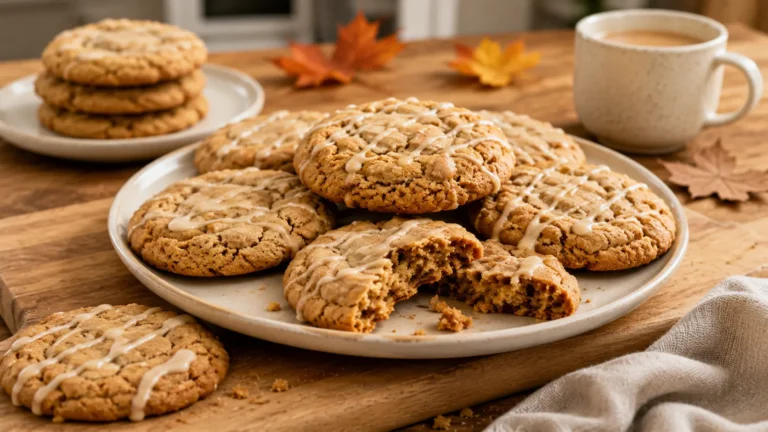
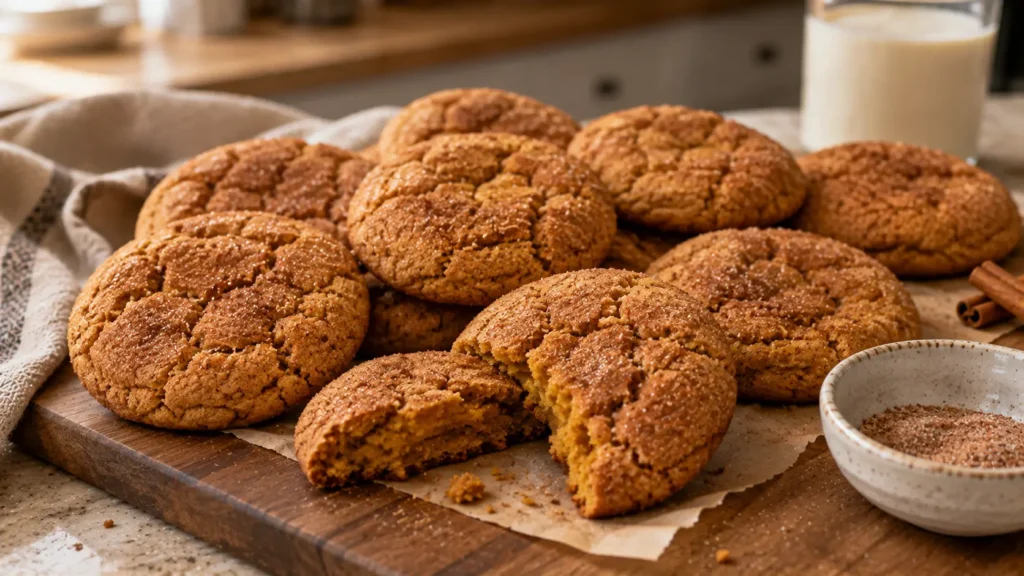
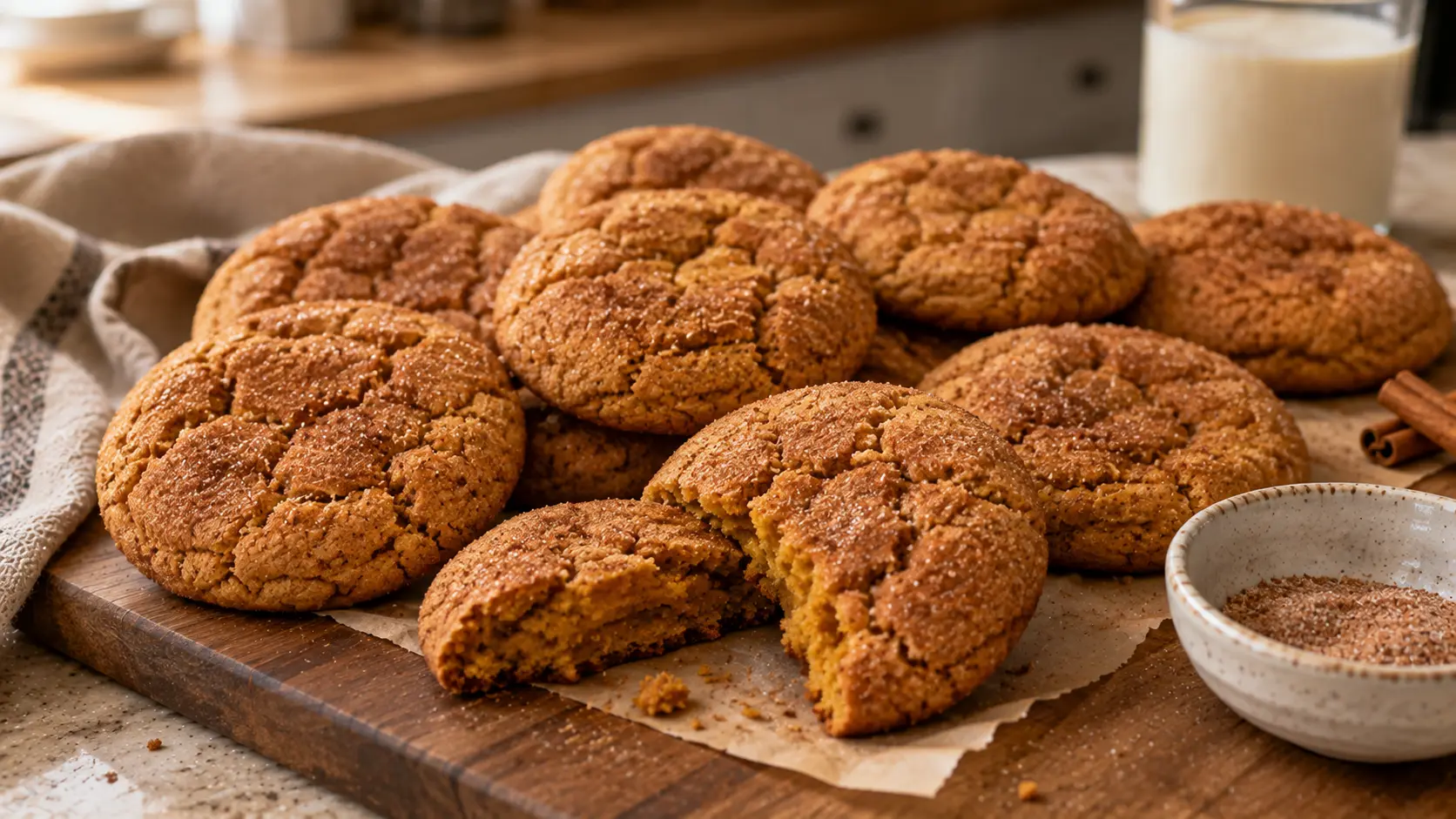
These Easy Brown Butter Pumpkin Snickerdoodle Cookies combine everything that makes fall baking irresistible: nutty brown butter, real pumpkin, warm cinnamon, and a soft, chewy center wrapped in classic snickerdoodle cinnamon sugar. They have crisp, lightly crinkled edges with tender centers and just enough pumpkin flavor without becoming cakey.
Pumpkin cookies can easily turn soft and muffin-like because pumpkin puree contains so much moisture. The trick here is browning the butter for deeper flavor and removing some excess moisture from the pumpkin before adding it to the dough. That gives us a cookie with a much more satisfying chewy texture.
They’re especially good when you want something different from traditional pumpkin bread or muffins, and the cinnamon-sugar coating makes the kitchen smell incredible while they bake.
Easy Brown Butter Pumpkin Snickerdoodle Cookies
Traditional snickerdoodles are known for their buttery dough, cinnamon-sugar coating, and slightly tangy flavor from cream of tartar.
This pumpkin version keeps those familiar characteristics while adding real pumpkin puree and warm fall spices.
The brown butter is especially important. Cooking butter until the milk solids turn golden brown develops toasted, nutty flavors that complement pumpkin and cinnamon beautifully.
If you’re already planning a fall baking weekend, these cookies pair naturally with our Pumpkin Cream Cheese Muffins for another easy pumpkin treat.
Why You’ll Love These Pumpkin Snickerdoodles
- Brown butter flavor: Adds deep, nutty richness.
- Real pumpkin: No artificial pumpkin flavor needed.
- Soft and chewy: Moist without becoming cakey.
- Cinnamon-sugar coating: Gives every cookie classic snickerdoodle character.
- No complicated decorating: Roll, bake, and enjoy.
- Perfect for fall: Pumpkin, cinnamon, nutmeg, and brown butter are made for cooler weather.
- Freezer-friendly: The dough can be portioned and frozen.
- Beautiful natural cracks: The cookies develop rustic crinkled tops as they bake.
Ingredients
Unsalted Butter
Use ¾ cup (170g) unsalted butter.
We’ll brown the butter before making the dough.
As the butter cooks, some water evaporates, while the milk solids toast and develop a nutty aroma.
Pumpkin Puree
Use ½ cup pure pumpkin puree, measured before blotting.
Make sure you’re using pure pumpkin rather than pumpkin pie filling.
Pumpkin contains considerable moisture, so spread it over several layers of paper towel and gently blot before adding it to the dough.
After blotting, you’ll have a smaller, more concentrated quantity.
Brown Sugar
Use ¾ cup packed light brown sugar.
Brown sugar helps create a softer, chewier center and contributes subtle caramel notes that work especially well with brown butter.
Granulated Sugar
Use ¼ cup granulated sugar in the dough.
You’ll need additional sugar for the cinnamon coating.
Egg Yolk
Use 1 large egg yolk.
Using the yolk rather than a whole egg helps control excess moisture while adding richness.
Vanilla Extract
Use 2 teaspoons pure vanilla extract.
All-Purpose Flour
Use 1¾ cups all-purpose flour, spooned and leveled.
Too much flour can make the cookies dry, so avoid packing it into the measuring cup.
Cream of Tartar
Use 1½ teaspoons cream of tartar.
This gives snickerdoodles their characteristic subtle tang and helps with texture.
Baking Soda
Use ½ teaspoon baking soda.
Ground Cinnamon
Use 1 teaspoon cinnamon in the dough, plus additional cinnamon for rolling.
Pumpkin Pie Spice
Use 1 teaspoon pumpkin pie spice.
This adds warm notes of cinnamon, ginger, nutmeg, and cloves without overpowering the pumpkin.
Salt
Use ½ teaspoon fine salt.
Salt is particularly useful here because it balances the sweetness and emphasizes the toasted flavor of the brown butter.
Cinnamon-Sugar Coating
For rolling, combine:
- ¼ cup granulated sugar
- 1½ teaspoons ground cinnamon
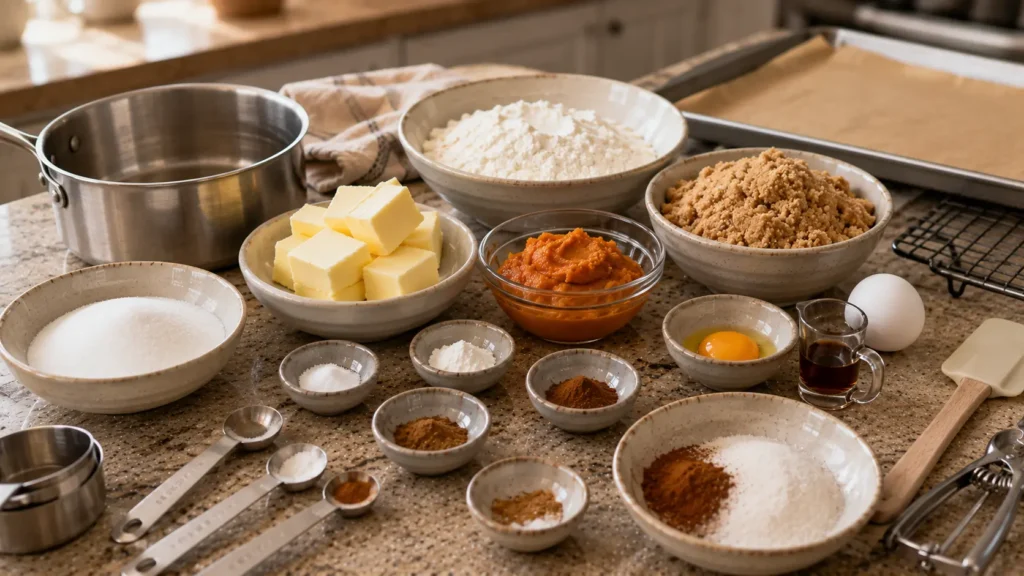
How to Make Brown Butter Pumpkin Snickerdoodle Cookies
1. Brown the butter
Place the butter in a light-colored saucepan over medium heat.
Allow it to melt completely.
2. Continue cooking
The butter will begin bubbling and foaming as its water evaporates.
Stir or swirl the pan periodically.
3. Watch the milk solids
After several minutes, you’ll notice small golden-brown specks forming at the bottom of the saucepan.
The aroma should become noticeably nutty.
4. Remove from the heat
Once the milk solids are amber-brown, immediately transfer the butter—including all those flavorful browned bits—to a heat-safe mixing bowl.
Don’t leave it in the hot pan, where it can continue cooking and burn.
5. Cool the brown butter
Allow the brown butter to cool for approximately 15–20 minutes.
It can still be slightly warm, but it shouldn’t be piping hot when mixed with the sugar.
6. Blot the pumpkin
Place the pumpkin puree between several layers of paper towel.
Gently press to remove excess moisture.
Repeat with fresh paper towel if necessary.
The pumpkin should become noticeably thicker and more concentrated.
7. Combine the dry ingredients
In a medium bowl, whisk together:
- flour
- cream of tartar
- baking soda
- cinnamon
- pumpkin pie spice
- salt
Set aside.
8. Combine brown butter and sugars
Add the brown sugar and granulated sugar to the cooled brown butter.
Whisk until thoroughly combined.
9. Add the egg yolk
Whisk in the egg yolk.
10. Add pumpkin
Add the blotted pumpkin puree and mix until incorporated.
11. Add vanilla
Mix in the vanilla extract.
12. Add dry ingredients
Add the flour mixture to the wet ingredients.
13. Fold into a dough
Use a rubber spatula to fold everything together just until no obvious dry flour remains.
Don’t overmix.
14. Chill the dough
Cover the bowl and refrigerate the dough for approximately 30–45 minutes.
Chilling makes the dough easier to roll and helps control spreading.
15. Preheat the oven
Preheat the oven to 350°F (175°C).
Line two baking sheets with parchment paper.
16. Make the cinnamon sugar
Combine ¼ cup granulated sugar with 1½ teaspoons cinnamon in a shallow bowl.
17. Portion the dough
Scoop approximately 1½ tablespoons of dough per cookie.
The portions don’t need to be mathematically identical.
18. Roll into balls
Gently roll each portion into a ball.
19. Coat with cinnamon sugar
Roll each dough ball generously in the cinnamon-sugar mixture.
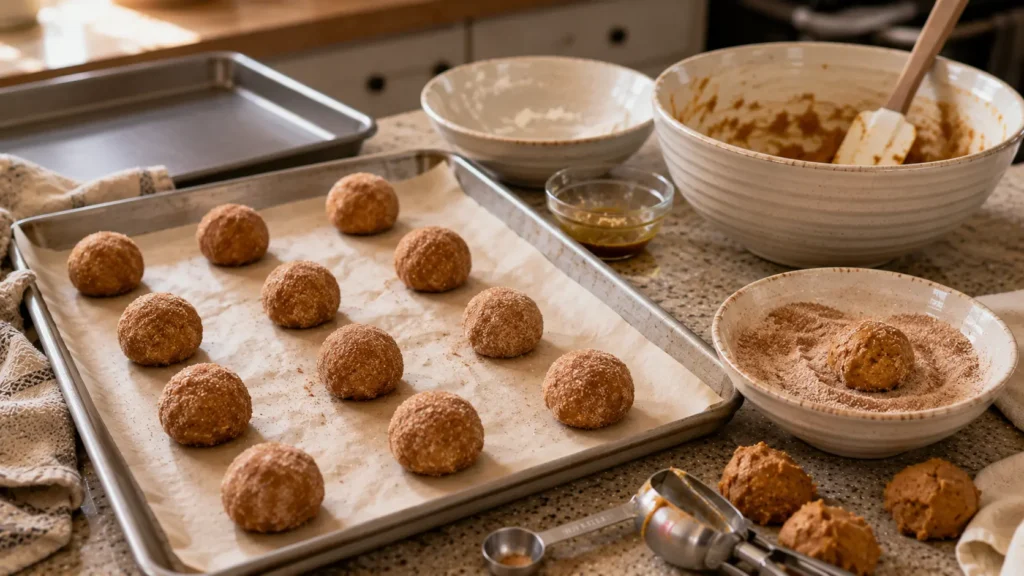
20. Arrange on baking sheets
Place the coated dough balls approximately 2 inches apart.
21. Bake
Bake for approximately 10–12 minutes.
The cookies should spread and develop lightly crinkled surfaces.
22. Check the centers
The edges should look set while the centers remain slightly soft.
Don’t wait until the centers look completely firm.
23. Remove from the oven
Take the baking sheet out and allow the cookies to remain on it for about 5 minutes.
24. Transfer
Carefully move the cookies to a wire cooling rack.
25. Cool
Let them cool enough for the structure to set.
The centers should remain soft and chewy.
Equipment You’ll Need
- Light-colored saucepan
- Heat-safe mixing bowl
- Medium mixing bowl
- Whisk
- Rubber spatula
- Cookie scoop
- Shallow bowl
- Baking sheets
- Parchment paper
- Wire cooling rack
- Measuring cups and spoons
- Kitchen scale, optional
Easy Variations
Pumpkin Chocolate Chip Snickerdoodles
Fold ½ cup semi-sweet chocolate chips into the dough before chilling.
If you’re looking for a loaf rather than cookies, our Wholesome Pumpkin Chocolate Chip Bread with Cream Cheese Swirl uses that same pumpkin-and-chocolate combination.
Maple Pumpkin Snickerdoodles
Add a small amount of maple extract to the dough alongside the vanilla.
Avoid adding too much liquid maple syrup because it can change the cookie texture.
Pumpkin Pecan Snickerdoodles
Fold approximately ½ cup finely chopped toasted pecans into the dough.
The pecans work especially well with the toasted brown-butter flavor.
Extra-Spiced Pumpkin Cookies
Increase the pumpkin pie spice slightly or add a small pinch of additional nutmeg.
Don’t overdo cloves, which can quickly dominate the other flavors.
Cream Cheese Pumpkin Snickerdoodles
For a richer variation, add a small cream cheese filling to the center of each dough ball.
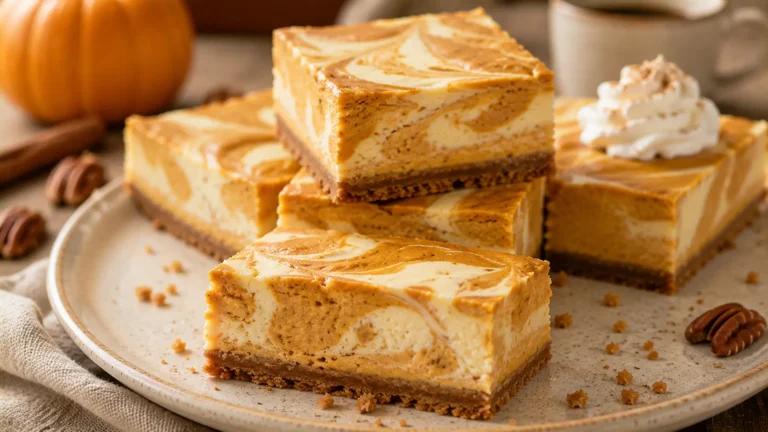
For an easier cream-cheese pumpkin dessert, try our Swirled Pumpkin Cheesecake Bars with Graham Cracker Crust.
Why Blot Pumpkin Puree for Cookies?
Pumpkin puree contains a surprising amount of water.
That’s helpful when you’re making cakes and muffins, where extra moisture contributes tenderness, but cookies behave differently.
Too much pumpkin moisture can create cookies that puff instead of spreading and develop a soft, cakey texture rather than a chewy center.
Blotting removes some of that water while keeping the concentrated pumpkin flavor.
Don’t try to make the puree completely dry. You simply want it noticeably thicker than it was straight from the can.
How to Brown Butter Without Burning It
A light-colored saucepan makes the process much easier because you can actually see the milk solids changing color.
The butter will move through several stages:
First it melts.
Then it bubbles and foams.
Eventually the foam begins subsiding and small brown particles become visible underneath.
Once those milk solids reach a golden-to-amber brown and smell nutty, remove the pan from the heat immediately.
Those browned particles are packed with flavor, so scrape all of them into your mixing bowl.
If the particles turn black and the butter smells sharply bitter, it has burned and should be restarted.
Why Do Snickerdoodles Use Cream of Tartar?
Cream of tartar contributes the subtle tang traditionally associated with snickerdoodles.
It also interacts with baking soda and influences the cookies’ texture and spread.
While there are cookie recipes that imitate snickerdoodles using only baking powder, using cream of tartar gives these pumpkin cookies more of the recognizable character of the classic version.
Pro Tips for Soft and Chewy Pumpkin Cookies
Blot the pumpkin. This is probably the most important step for avoiding cakey cookies.
Don’t burn the butter. Golden-brown milk solids taste nutty; black ones taste bitter.
Let the brown butter cool. Very hot butter can negatively affect the dough.
Measure flour carefully. Too much flour can create thick, dry cookies.
Chill the dough. The brown butter makes freshly mixed dough relatively soft.
Don’t overmix. Stop once the flour has been incorporated.
Don’t overbake. The centers should still look slightly soft when the cookies leave the oven.
Let them rest on the baking sheet. They’ll continue setting from residual heat.
Can I Make the Dough Ahead?
Yes.
Prepare the dough, cover it tightly, and refrigerate it.
For best results, use refrigerated dough within approximately 48 hours.
If it becomes very firm, allow it to sit briefly at room temperature until it’s scoopable.
You can also portion the dough before refrigerating, which makes baking later even faster.
Can You Freeze Pumpkin Snickerdoodle Dough?
Yes.
Portion the dough into balls but don’t bake them.
Freeze the portions on a parchment-lined tray until firm, then transfer them to a freezer-safe container.
For the best cinnamon-sugar coating, roll the frozen or slightly thawed portions in fresh cinnamon sugar shortly before baking.
You may need to add a minute or two to the baking time when starting with colder dough.
Storage
Room Temperature
Store completely cooled cookies in an airtight container at room temperature for approximately 3–4 days.
Refrigerator
Refrigeration isn’t necessary for the standard cookies and can make them firmer.
Freezer
Freeze completely cooled cookies in a freezer-safe container for up to approximately 2 months.
Place parchment between layers if necessary.
Allow them to thaw at room temperature before serving.
Frequently Asked Questions
Can I use pumpkin pie filling?
No.
Use 100% pure pumpkin puree.
Pumpkin pie filling already contains sugar and spices and will alter the recipe.
Why are my pumpkin cookies cakey?
The pumpkin may have contained too much moisture, or too much flour may have been used.
Blotting the pumpkin helps significantly.
Why didn’t my cookies spread?
The dough may have been chilled too long, there may be too much flour, or the pumpkin may have been blotted excessively.
Why did my cookies spread too much?
The brown butter may have been too warm or the dough may not have chilled sufficiently.
Can I skip browning the butter?
Technically, you can make pumpkin cookies with regular melted butter, but you’ll lose one of the defining flavors of this recipe.
Can I use salted butter?
Yes. Reduce the additional salt accordingly.
Do I have to chill the dough?
I recommend it. The short chilling period improves handling and helps prevent excessive spreading.
What to Serve with Pumpkin Snickerdoodle Cookies
These cookies are particularly good with coffee, tea, chai, or a cold glass of milk.
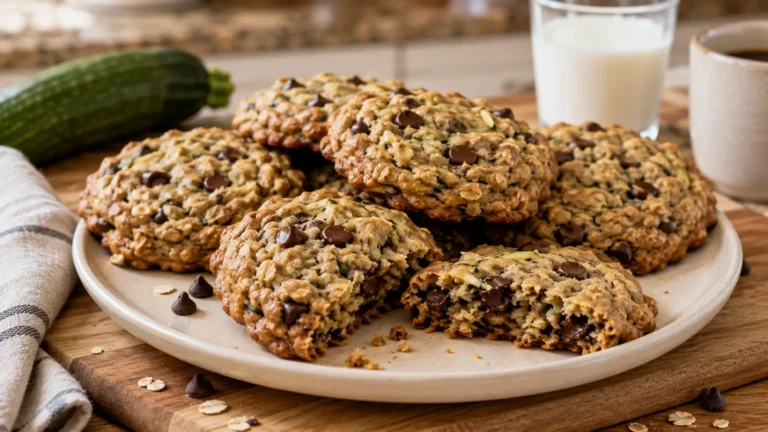
For a fall dessert spread, serve them alongside Pumpkin Cream Cheese Muffins and Pumpkin Oatmeal Breakfast Cookies for several different pumpkin textures and flavors.
If you want a richer dessert on the same table, Swirled Pumpkin Cheesecake Bars with Graham Cracker Crust provide a creamy contrast to the chewy cinnamon-coated cookies.
And for another brown-sugar-forward cookie, our Maple Brown Sugar Cookies make a natural companion without repeating the pumpkin flavor.
Nutrition Information
Approximate nutrition per cookie, based on 18 cookies:
- Calories: 175
- Protein: 2g
- Carbohydrates: 24g
- Fat: 8g
- Saturated Fat: 5g
- Fiber: 1g
- Sugar: 13g
- Sodium: 100mg
Nutrition values are estimates and will vary according to ingredients and actual cookie size.
Easy Brown Butter Pumpkin Snickerdoodle Cookies
Ingredients
Method
- Melt butter in a light-colored saucepan over medium heat.
- Continue cooking until it foams and the milk solids become golden brown and nutty.
- Immediately transfer brown butter and browned milk solids to a heat-safe bowl.
- Cool for 15–20 minutes.
- Blot pumpkin puree with paper towels until noticeably thicker.
- Whisk flour, cream of tartar, baking soda, cinnamon, pumpkin pie spice, and salt together.
- Whisk brown sugar and granulated sugar into the cooled brown butter.
- Add egg yolk and mix well.
- Mix in the blotted pumpkin and vanilla.
- Fold the dry ingredients into the wet mixture just until a dough forms.
- Cover and chill for 30–45 minutes.
- Preheat oven to 350°F (175°C).
- Line baking sheets with parchment.
- Combine the coating sugar and cinnamon in a shallow bowl.
- Portion approximately 1½ tablespoons dough per cookie.
- Gently roll into balls.
- Roll each ball in cinnamon sugar.
- Arrange approximately 2 inches apart on the prepared baking sheets.
- Bake for 10–12 minutes until the edges are set and centers remain slightly soft.
- Cool on the baking sheet for approximately 5 minutes.
- Transfer to a wire rack to finish cooling.
Notes
- Use pure pumpkin puree, not pumpkin pie filling.
- Blotting the pumpkin helps prevent cakey cookies.
- Transfer brown butter from the saucepan immediately after browning to prevent burning.
- Include the browned milk solids—they contain much of the nutty flavor.
- Let the brown butter cool before making the dough.
- Measure flour using the spoon-and-level method or a kitchen scale.
- Chill the dough before rolling.
- Avoid overbaking if you want soft, chewy centers.
- Cookie size affects baking time.