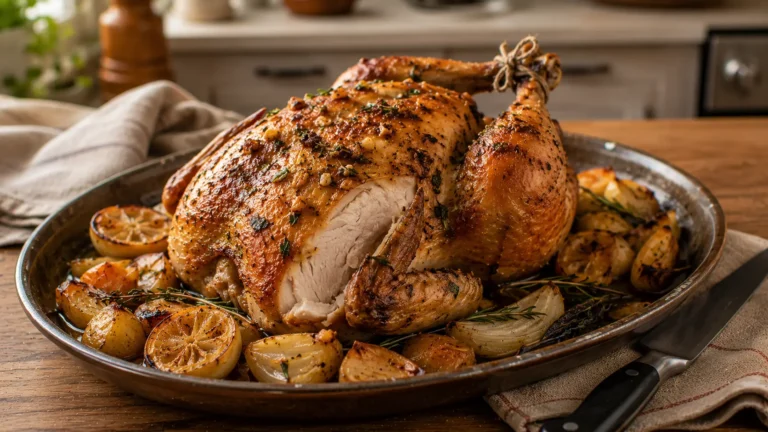
Crispy Garlic Herb Butter Roasted Turkey Legs
If you love the deeply golden skin and juicy dark meat of a holiday turkey but don’t need an entire bird, these Crispy Garlic Herb Butter Roasted Turkey Legs are an easy way to get the best parts of a roast turkey dinner on a smaller scale. Each turkey leg is coated with a savory butter mixture loaded with fresh garlic, rosemary, thyme, sage, lemon zest, and a touch of smoked paprika before roasting until beautifully browned.
Turkey legs are especially good for roasting because dark meat is naturally richer than breast meat. The herb butter goes both under and over the skin, helping season the meat itself while encouraging a crisp, flavorful exterior. There’s no complicated brine, no constant basting, and no giant roasting pan required.
Serve these turkey legs for a small Thanksgiving dinner, Christmas meal, Sunday roast, or cozy fall dinner. Add roasted vegetables and a fresh seasonal salad, and you’ve got a holiday-worthy meal without committing to a whole turkey.
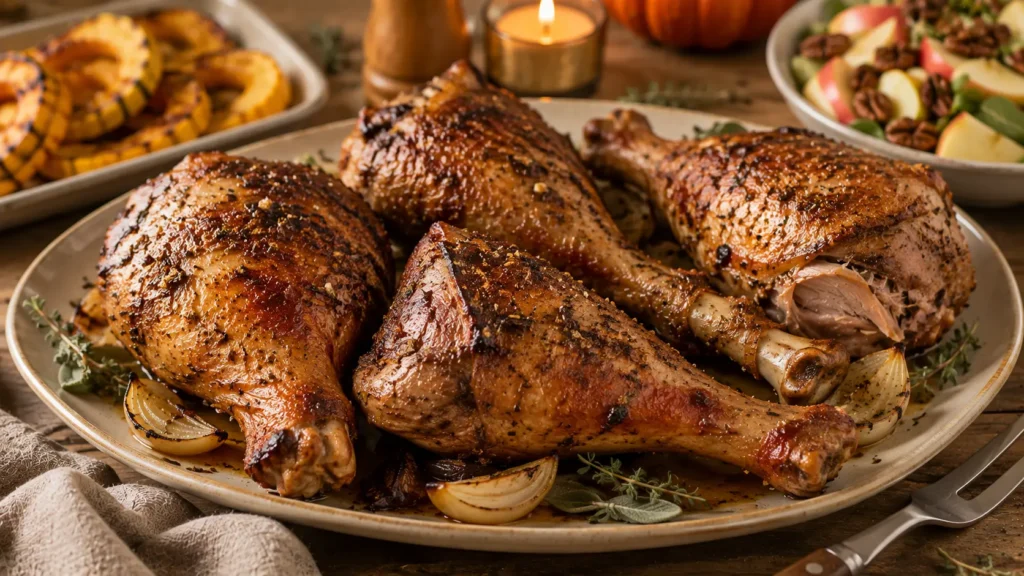
Easy Oven-Roasted Turkey Legs
The goal with this recipe is straightforward: juicy dark meat + deeply browned, crispy skin + plenty of garlic-herb flavor.
The first step toward crispy skin actually happens before the turkey enters the oven. Patting the legs thoroughly dry removes surface moisture that would otherwise have to evaporate before browning can begin.
Then we make a compound butter with softened butter, garlic, rosemary, thyme, sage, lemon zest, smoked paprika, black pepper, and salt.
Part of that butter goes underneath the skin.
That’s important because simply spreading butter over the exterior gives you flavorful skin but doesn’t season the meat nearly as effectively. Getting the herbs and butter directly against the turkey gives every bite more flavor.
The turkey legs then roast uncovered at 400°F (204°C) until properly cooked and tender.
USDA states that all poultry, including turkey pieces, must reach a minimum safe internal temperature of 165°F (74°C) as measured with a food thermometer. Consumers can choose to cook poultry to a higher temperature for personal preference.
For turkey legs specifically, I prefer allowing the dark meat to cook beyond that minimum when necessary for a more tender texture. The exact endpoint depends on the legs, so use both temperature and tenderness rather than relying only on a fixed roasting time.
⭐ Why You’ll Love This Recipe
- Crispy, deeply golden skin.
- Rich and juicy dark turkey meat.
- Loaded with fresh garlic and herbs.
- Much easier than roasting a whole turkey.
- Great for a small Thanksgiving.
- No brining required.
- No constant basting.
- Simple oven-roasting method.
- Easy to scale for more people.
- Perfect with classic Thanksgiving sides.
- Leftovers reheat beautifully when handled gently.
- The garlic-herb butter can be prepared ahead.
🛒 Ingredients
Turkey Legs
Use 4 turkey legs, approximately 12–16 ounces each.
Try to choose legs that are relatively similar in size so they finish cooking at roughly the same time.
If frozen, thaw them completely before cooking. USDA recognizes refrigerator thawing, cold-water thawing, and microwave thawing as safe methods; poultry thawed using cold water or a microwave should be cooked immediately.
And there’s no need to rinse the turkey. USDA advises against washing raw poultry because splashing water can spread bacteria around the kitchen.
Unsalted Butter
Use 6 tablespoons softened unsalted butter.
Softened—not melted—butter is easiest to spread underneath the skin.
Using unsalted butter also gives us better control over seasoning.
Fresh Garlic
Use 4 garlic cloves, finely grated or minced.
Fresh garlic gives the butter a much more pronounced savory flavor than garlic powder alone.
Fresh Rosemary
Use 1 tablespoon finely chopped fresh rosemary.
Rosemary is powerful, so chop it finely to distribute it evenly rather than leaving large woody pieces on the skin.
Fresh Thyme
Use 1 tablespoon fresh thyme leaves.
Thyme adds a lighter herbal flavor that complements the stronger rosemary and sage.
Fresh Sage
Use 1 tablespoon finely chopped fresh sage.
Sage immediately gives the turkey that familiar fall and Thanksgiving character.
Lemon Zest
Use approximately 1 teaspoon finely grated lemon zest.
The lemon shouldn’t make the turkey taste citrusy. It simply adds brightness against the rich butter and dark meat.
Smoked Paprika
Use 1 teaspoon smoked paprika.
It provides gentle smokiness and contributes to the warm color of the herb butter.
If you don’t enjoy smoky flavors, regular sweet paprika works too.
Kosher Salt
Use approximately 1½ teaspoons kosher salt, adjusting according to the turkey you’re using.
Always check the package first.
Some turkey products are already injected with or soaked in a salt solution. If yours is, significantly reduce the additional salt.
Black Pepper
Use ¾ teaspoon freshly ground black pepper.
Olive Oil
Use approximately 1 tablespoon olive oil.
A small amount mixed into the herb butter helps make it easier to spread.
Onion
Use 1 large yellow onion, cut into thick wedges.
The onion sits underneath and around the turkey and flavors the pan juices as it roasts.
Chicken or Turkey Broth
Use approximately ½ cup low-sodium broth.
This helps prevent the drippings at the bottom of the pan from scorching.
Don’t pour it over the skin—we want that skin to stay dry enough to crisp.
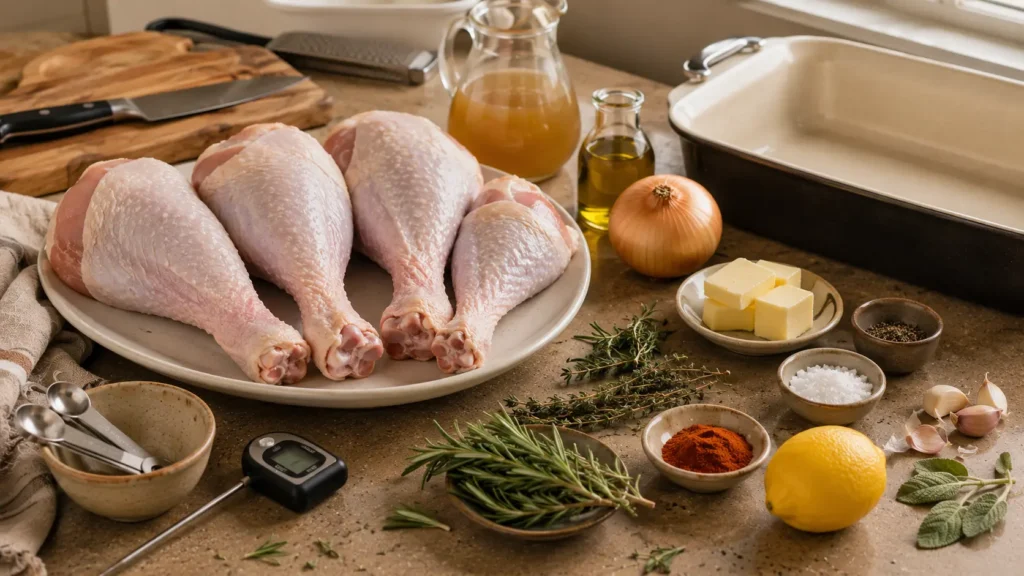
👩🍳 How to Make Crispy Garlic Herb Butter Roasted Turkey Legs
1. Thaw the turkey completely
If you’re starting with frozen turkey legs, make sure they’re completely thawed before roasting.
For easiest planning, thaw them in the refrigerator.
2. Preheat the oven
Preheat your oven to 400°F (204°C).
Position a rack around the middle of the oven.
3. Prepare your pan
Arrange the thick onion wedges in the bottom of a roasting pan or large oven-safe baking dish.
Pour approximately ½ cup low-sodium broth around the onions.
4. Don’t rinse the turkey
Remove the turkey legs from their packaging and transfer them directly to your preparation area.
There’s no need to wash them; USDA specifically advises against washing raw poultry because it can spread contamination through splashing.
5. Dry thoroughly
Pat every turkey leg thoroughly dry with paper towels.
Pay particular attention to the skin.
Surface moisture works against crisping.
6. Make the herb butter
In a small bowl, combine:
- softened butter
- garlic
- rosemary
- thyme
- sage
- lemon zest
- smoked paprika
- kosher salt
- black pepper
- olive oil
Mix until the herbs and seasonings are distributed throughout.
7. Check your salt
Before seasoning the turkey, look at its packaging.
If the turkey contains an added salt solution, reduce the salt in the butter mixture.
8. Loosen the skin
Carefully slide your fingers underneath the skin of each turkey leg.
Separate it gently from the meat without tearing or completely removing it.
9. Add butter underneath
Spread roughly half of the herb butter underneath the skin of the turkey legs.
Massage it gently over the meat.
10. Coat the exterior
Rub the remaining herb butter over the outside of each turkey leg.
Try to cover the skin evenly, but don’t worry about making the coating perfectly smooth.
11. Position the turkey
Arrange the turkey legs over the onions with the skin side facing upward.
Leave a little space between them when possible so hot air can circulate.
12. Keep the broth below the skin
Check the liquid level.
The broth should remain at the bottom of the pan rather than covering the turkey skin.
13. Begin roasting
Transfer the pan to the preheated oven.
Roast the turkey legs uncovered.
14. Don’t constantly baste
There’s no need to repeatedly open the oven and spoon liquid over the skin.
Doing so can soften the exterior we’re trying to crisp.
15. Check after about 45 minutes
Look at the skin and pan.
The turkey should be developing a deep golden color.
If the bottom of the pan looks dry and the drippings are beginning to burn, add a small splash of broth around the turkey.
16. Rotate the pan if necessary
If your oven browns unevenly, rotate the roasting pan.
You don’t need to turn the turkey legs over.
17. Check the internal temperature
Insert an instant-read thermometer into the thickest meaty portion of the leg, keeping the probe away from the bone.
The turkey must reach at least 165°F (74°C) for safety.
18. Continue roasting as needed
Depending on size, turkey legs commonly need roughly 60–90 minutes at this temperature, but treat that only as an estimate.
The thermometer matters more than the clock.
19. Check tenderness
Turkey legs contain connective tissue, so although 165°F is the safe minimum, you may prefer the texture after additional cooking.
The meat should feel tender when pierced and should not have a rubbery texture around the joints.
20. Protect the skin if necessary
If the skin becomes deeply browned before the meat reaches the texture you want, loosely tent the darkest areas with aluminum foil.
21. Optional final crisping
If the turkey is fully cooked and tender but you’d like slightly crisper skin, increase the oven heat briefly or use the broiler for a very short period.
Watch constantly.
Garlic and herbs can burn quickly.
22. Remove from the oven
Transfer the cooked turkey legs to a clean serving platter.
23. Rest
Allow the legs to rest for approximately 10–15 minutes before serving.
24. Check the pan juices
Remove large onion pieces and skim excess fat if desired.
Taste the remaining pan juices.
If they’re overly concentrated, dilute them with a little warm low-sodium broth.
25. Serve
Spoon a small amount of pan juice around or beside the turkey rather than soaking the crispy skin.
Finish with a few fresh thyme or rosemary leaves if desired.
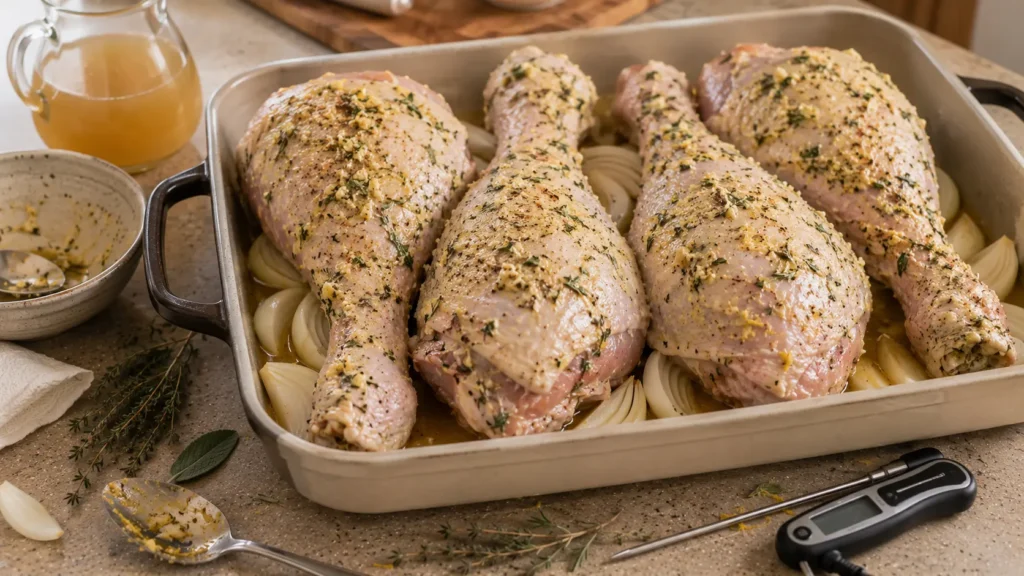
🍽️ Equipment Needed
You’ll need:
- Large roasting pan or baking dish
- Small mixing bowl
- Sharp knife
- Cutting board
- Measuring spoons
- Microplane or fine grater
- Paper towels
- Instant-read food thermometer
- Aluminum foil
- Serving platter
A thermometer matters here
Turkey legs vary substantially in size and thickness.
That makes cooking strictly by time unreliable.
Use the roasting time to estimate when you should start checking, not to determine whether the turkey is definitely done.
🔁 Variations & Substitutions
Garlic Parmesan Turkey Legs
During the final few minutes of roasting, add a small amount of finely grated Parmesan over the legs.
Watch closely because cheese can brown quickly.
Cajun Turkey Legs
Replace the rosemary, thyme, and sage with your favorite Cajun-style seasoning.
Check its salt content before adding additional salt.
Lemon Herb Turkey Legs
Increase the lemon zest slightly and add fresh parsley to the herb butter.
Maple Herb Turkey Legs
Mix approximately 1 tablespoon pure maple syrup into the herb butter.
Because maple contains sugar, watch the skin carefully as it browns.
Spicy Garlic Turkey Legs
Add ¼–½ teaspoon cayenne pepper to the butter.
Smoked Paprika Turkey Legs
Increase the smoked paprika to approximately 1½ teaspoons for a more pronounced smoky flavor.
Dried Herb Version
Fresh herbs are my preference, but dried herbs work when that’s what you have.
Because dried herbs are more concentrated, use smaller amounts.
💡 Pro Tips for Crispy, Juicy Turkey Legs
Don’t wash the turkey
This isn’t necessary and can spread raw poultry juices around your sink and nearby surfaces.
Dry the skin thoroughly
This is one of the simplest improvements you can make.
Less surface moisture means the skin can begin browning sooner.
Put butter underneath the skin
This seasons the actual meat rather than leaving all the flavor on the exterior.
Don’t drown the roasting pan in broth
We’re roasting, not braising.
Use enough liquid to protect the drippings without submerging the turkey.
Don’t baste the crispy skin
Repeatedly covering the skin with liquid works against crispness.
Use similarly sized turkey legs
One enormous leg and three small ones won’t finish simultaneously.
Check the package before salting
Pre-brined or solution-injected turkey can become excessively salty if you season it as aggressively as untreated poultry.
Keep garlic from burning
Very dark garlic becomes bitter.
If the exterior is browning too quickly, loosely cover the darkest areas with foil.
Use a thermometer
Color alone cannot tell you whether poultry is safely cooked.
USDA recommends using a food thermometer and cooking poultry to at least 165°F.
🧊 Storage, Freezing & Reheating
Turkey leftovers should be refrigerated promptly.
USDA advises refrigerating leftovers within 2 hours—or within 1 hour when temperatures are above 90°F/32°C—and using refrigerated leftovers within 3–4 days.
Refrigerator
Allow the turkey to cool without leaving it at room temperature beyond the safe window.
Transfer leftovers to an airtight container.
Refrigerate for 3–4 days.
Reheating in the Oven
For the best skin, I prefer the oven.
Place the turkey legs in a baking dish with a small splash of broth in the bottom.
Keep the skin above the liquid.
Warm until thoroughly heated.
Reheating in the Microwave
The microwave works for speed, although the skin won’t remain as crisp.
Removing the meat from the bone first can make reheating individual portions easier.
Freezing
Remove the cooked meat from the bone if desired and freeze it in airtight freezer-safe portions.
Adding a spoonful of pan juices can help protect the meat from drying out.
❓ Frequently Asked Questions
How long do turkey legs take in the oven?
For medium-to-large turkey legs at 400°F, plan on roughly 60–90 minutes, but size varies considerably.
Use that range only as a guide for when to begin checking.
What temperature should turkey legs reach?
USDA’s safe minimum internal temperature for turkey pieces is 165°F (74°C) measured with a food thermometer.
Can turkey legs be cooked beyond 165°F?
Yes. USDA notes consumers may choose to cook poultry to higher temperatures for personal preference.
With dark meat, additional cooking can sometimes produce a more tender texture.
Where should I put the thermometer?
Insert it into the thickest meaty area while avoiding direct contact with bone.
How do you make turkey skin crispy?
The biggest factors in this recipe are:
- drying the skin thoroughly
- roasting uncovered
- keeping broth away from the skin
- avoiding constant basting
- using sufficiently high oven heat
Should I cover turkey legs while roasting?
Not initially.
Leaving them uncovered encourages browning.
If the skin becomes too dark before the meat is ready, loosely tent the browned areas with foil.
Should I wash turkey legs before cooking?
No.
USDA advises against washing raw poultry because splashing can spread bacteria to surrounding surfaces.
Can I season the turkey legs overnight?
Yes.
Season them and keep them covered in the refrigerator.
You can also refrigerate the dried, seasoned turkey uncovered for part of the time to help dry the skin further, provided your refrigerator is clean and cross-contamination is prevented.
Can I use turkey thighs instead?
Yes, although cooking time will differ.
Again, rely on internal temperature rather than simply copying the turkey-leg timing.
Can I make only two turkey legs?
Absolutely.
Halve the herb butter ingredients as needed.
The roasting time won’t necessarily be cut in half because each individual turkey leg is still approximately the same thickness.
🍂 What to Serve With Roasted Turkey Legs
These roasted turkey legs are easy enough for an ordinary Sunday dinner but fit especially well into a small Thanksgiving menu.
For a fresh side, serve them with Fresh Harvest Apple Pecan Salad with Maple Vinaigrette. Crisp apples, pecans, greens, and tangy vinaigrette provide welcome contrast against the rich dark turkey meat.
Add Brown Sugar Roasted Delicata Squash Rings for a warm vegetable side. Their caramelized edges and subtle sweetness pair naturally with sage, rosemary, and thyme.
If you’re deciding between different turkey options for a smaller Thanksgiving, the Brown Butter Sage Roasted Turkey Breast for Two gives you a white-meat alternative. You don’t need to make both for two people, but linking the recipes gives readers a genuinely useful choice based on which cut they prefer.
For an appetizer, Caramelized Onion & Apple Cheese Dip works especially well if you’re serving a larger fall gathering.
And for dessert, No-Bake Pumpkin Cheesecake Cups can be prepared in advance, which means dessert is already waiting in the refrigerator while you’re dealing with the turkey.
📊 Approximate Nutrition
Per turkey leg, assuming 4 servings:
Calories: approximately 520–620
Protein: approximately 50–60 g
Carbohydrates: approximately 3–5 g
Fat: approximately 34–42 g
Saturated Fat: approximately 13–17 g
Sodium: highly variable depending on the turkey product
Nutrition is approximate because turkey legs vary significantly in size and the amount of skin and herb butter consumed differs from serving to serving.
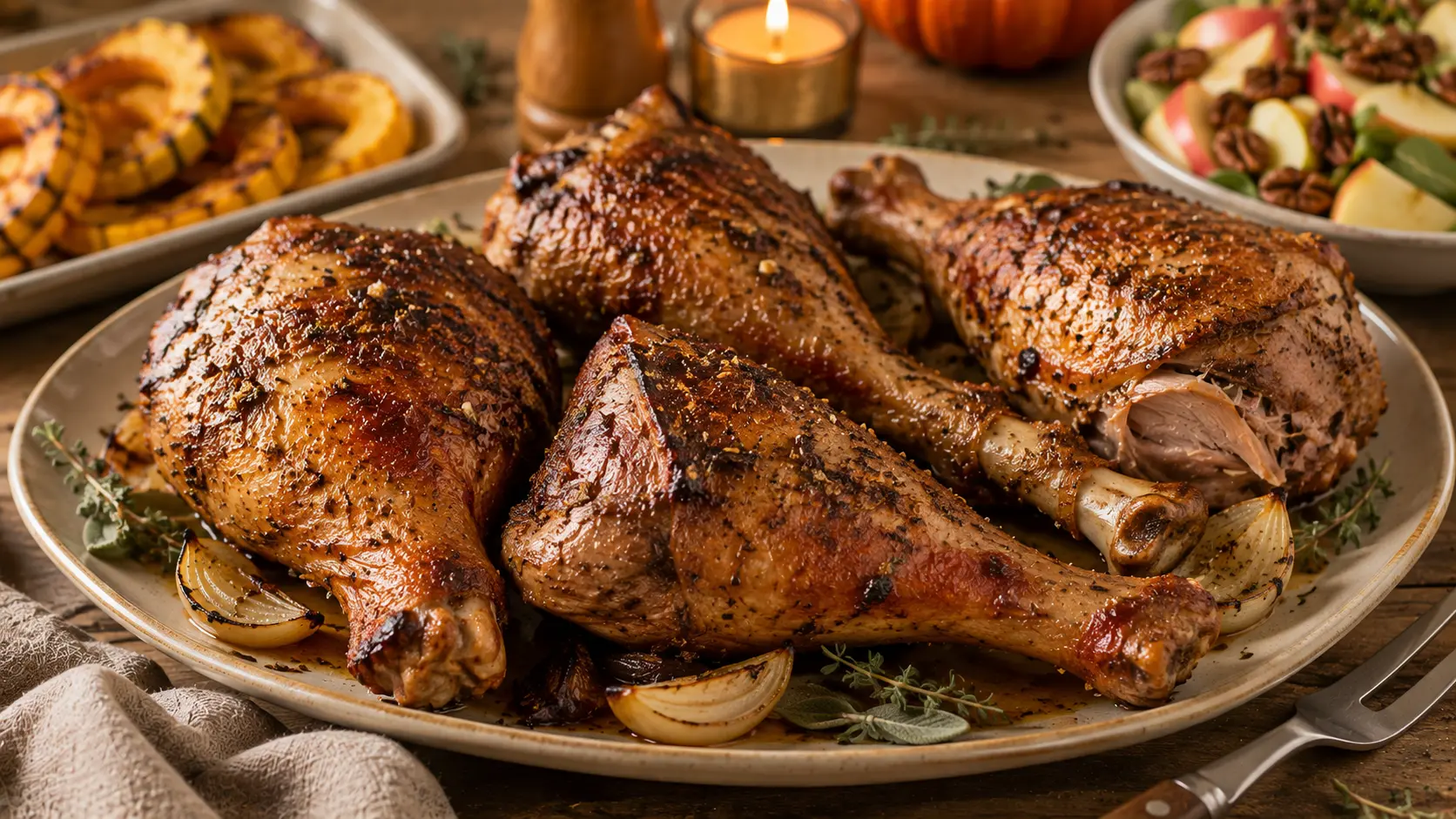
Crispy Garlic Herb Butter Roasted Turkey Legs
Ingredients
Method
- Preheat the oven to 400°F (204°C).
- Arrange the onion wedges in a large roasting pan or baking dish and pour 1/2 cup broth around them.
- Do not rinse the turkey legs. Pat them thoroughly dry with paper towels.
- Combine the softened butter, garlic, rosemary, thyme, sage, lemon zest, smoked paprika, salt, black pepper, and olive oil.
- Check the turkey packaging for added salt solution and reduce the salt in the herb butter if necessary.
- Carefully loosen the skin from each turkey leg without removing or tearing it.
- Spread approximately half of the garlic herb butter underneath the skin.
- Rub the remaining herb butter over the exterior of the turkey legs.
- Arrange the turkey legs skin-side up over the onions, leaving some space between them.
- Make sure the broth remains below the turkey skin.
- Roast uncovered at 400°F.
- After approximately 45 minutes, check the skin and the liquid in the bottom of the pan.
- If the drippings begin to scorch, add a small splash of broth around the turkey without pouring it over the skin.
- Rotate the roasting pan if your oven browns unevenly.
- Begin checking the internal temperature in the thickest meaty part of the legs, avoiding the bone.
- Continue roasting until the turkey reaches at least 165°F (74°C) and the dark meat has reached the tenderness you prefer.
- Expect approximately 60–90 minutes for medium-to-large turkey legs, but use temperature and tenderness rather than time alone.
- If the skin becomes too dark before the meat is ready, loosely cover the darkest areas with foil.
- If desired, briefly increase the heat or broil fully cooked turkey legs to improve crispness, watching constantly to prevent burning.
- Transfer the turkey legs to a clean serving platter.
- Rest for 10–15 minutes.
- Taste the pan juices and dilute with a little warm low-sodium broth if they are too concentrated.
- Serve the turkey legs with a small amount of pan juice alongside or around them, keeping the crispy skin mostly dry.