Lighter Classic Meatloaf with Brown Sugar Glaze
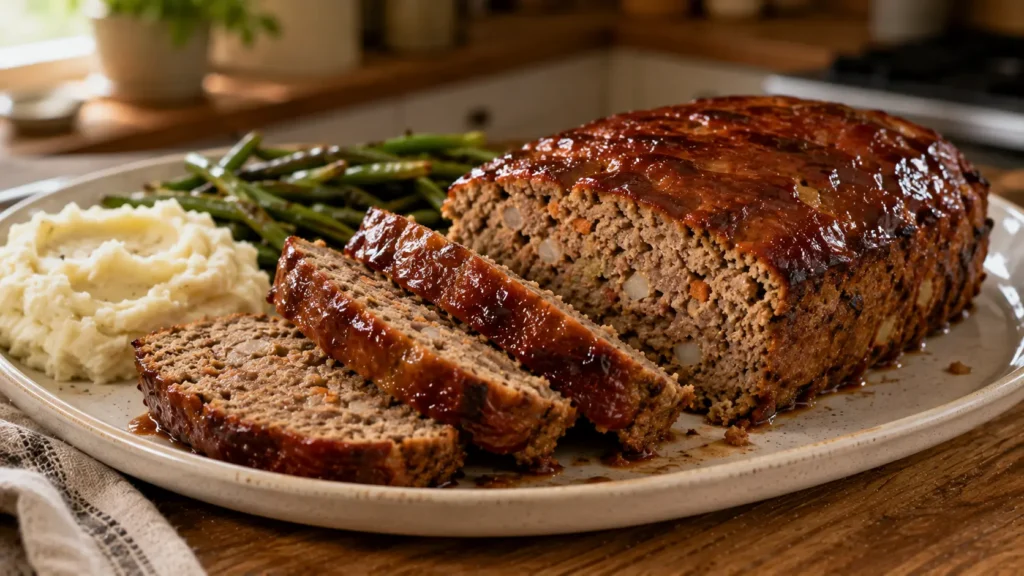
This Lighter Classic Meatloaf with Brown Sugar Glaze has everything you want from old-fashioned comfort food—a juicy, tender center, savory onion and garlic, classic seasonings, and that sticky sweet-and-tangy glaze across the top. The difference is that this version uses lean ground beef, plenty of finely chopped vegetables, oats, and milk to keep the meatloaf moist without relying on fattier meat.
The brown sugar glaze is still here because it’s one of the best parts of classic meatloaf. Instead of making it excessively sweet, a modest amount of brown sugar is balanced with ketchup, Dijon mustard, and apple cider vinegar. As the meatloaf bakes, the glaze becomes glossy and lightly caramelized around the edges.
This is an easy family dinner that pairs with mashed potatoes, roasted vegetables, green beans, or a simple salad—and leftovers make excellent sandwiches the next day.
Easy Lighter Classic Meatloaf
Lean meatloaf has one major challenge: keeping it juicy.
Fat normally provides both flavor and moisture, so simply replacing traditional ground beef with very lean beef can produce a dry, firm loaf.
This recipe solves that with a few simple ingredients. Finely chopped onion and grated carrot add moisture, milk hydrates the oats, and an egg gently binds everything together. Most importantly, the meat mixture is handled as little as possible.
The result is a meatloaf that slices cleanly but remains tender.
If you enjoy easy family dinners with minimal prep, our Easy Lemon Butter Baked Salmon is another useful weeknight option when you want something lighter and quicker.
Why You’ll Love This Meatloaf
- Classic comfort-food flavor
- Made with lean ground beef
- Moist and tender interior
- Hidden vegetables in the meat mixture
- No complicated ingredients
- Easy brown sugar glaze
- Family-friendly flavor
- Excellent for leftovers
- Freezer-friendly
- Easy weeknight dinner
- No loaf pan required
Ingredients
Lean Ground Beef
Use 1½ pounds 90–93% lean ground beef.
This keeps the meatloaf lighter while still providing enough flavor.
I don’t recommend using extremely lean beef unless necessary because the finished loaf can become noticeably drier.
Old-Fashioned Rolled Oats
Use ½ cup old-fashioned rolled oats, lightly pulsed or finely chopped if they’re particularly large.
Oats replace traditional breadcrumbs while helping retain moisture.
Milk
Use ½ cup milk.
The oats absorb the milk before being combined with the beef, creating a simple panade-like mixture that helps keep the meatloaf tender.
Egg
Use 1 large egg.
It binds the loaf without making it overly firm.
Onion
Use 1 small yellow onion, very finely diced.
Large onion pieces can cause meatloaf slices to fall apart, so chop it finely.
Carrot
Use ½ cup finely grated carrot.
The carrot adds moisture and a subtle natural sweetness without making the meatloaf taste strongly of vegetables.
Garlic
Use 2 cloves garlic, finely minced.
Worcestershire Sauce
Use 1 tablespoon Worcestershire sauce for savory depth.
Dijon Mustard
Use 1 teaspoon Dijon mustard in the meat mixture.
Dried Thyme
Use ½ teaspoon dried thyme.
Smoked Paprika
Use ½ teaspoon smoked paprika.
Salt and Pepper
Use:
- 1 teaspoon fine salt
- ½ teaspoon freshly ground black pepper
Brown Sugar Glaze
The glaze is deliberately simple.
You’ll need:
- ⅓ cup ketchup
- 1½ tablespoons light brown sugar
- 1 teaspoon Dijon mustard
- 1 teaspoon apple cider vinegar
- ¼ teaspoon garlic powder
Brown sugar helps the glaze caramelize, while vinegar and mustard keep it from tasting one-dimensionally sweet.
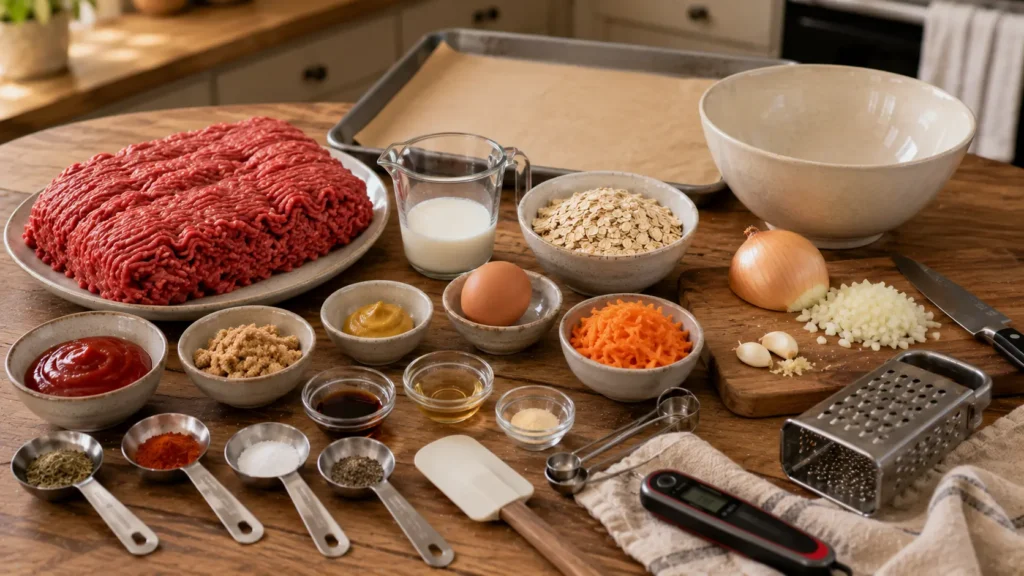
How to Make Lighter Meatloaf with Brown Sugar Glaze
1. Preheat the oven
Preheat your oven to 375°F (190°C).
2. Prepare the baking sheet
Line a rimmed baking sheet with parchment paper or foil.
Lightly coat the center with cooking spray if necessary.
3. Prepare the oats
Place the rolled oats in a medium mixing bowl.
If your oats are particularly large, pulse them briefly in a food processor first.
Don’t grind them into flour.
4. Add milk
Pour the milk over the oats.
Stir and let the mixture sit for approximately 5–10 minutes.
5. Prepare the vegetables
Finely dice the onion, grate the carrot, and mince the garlic.
The pieces should be small enough to distribute evenly throughout the meatloaf.
6. Add the egg
Add the egg to the hydrated oat mixture.
7. Add the seasonings
Stir in the Worcestershire sauce, Dijon mustard, thyme, smoked paprika, salt, and black pepper.
8. Add the vegetables
Mix in the onion, carrot, and garlic.
9. Add the beef
Add the ground beef.
10. Mix gently
Using clean hands or a fork, combine everything just until evenly distributed.
Don’t repeatedly squeeze or compact the meat.
Overworking is one of the biggest causes of tough meatloaf.
11. Shape the loaf
Transfer the mixture to the prepared baking sheet.
Gently shape it into a loaf approximately 9 inches long and 4–5 inches wide.
Keep the loaf evenly thick so it cooks consistently.
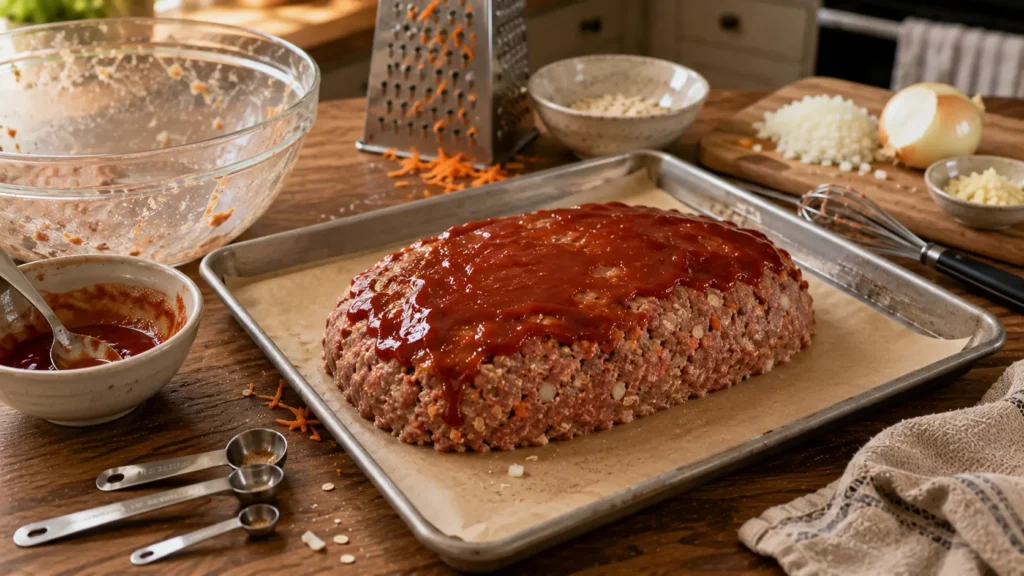
12. Make the brown sugar glaze
In a small bowl, combine:
- ketchup
- brown sugar
- Dijon mustard
- apple cider vinegar
- garlic powder
Stir until smooth.
13. Add the first layer of glaze
Spread approximately half of the glaze over the top and sides of the raw meatloaf.
Don’t use all of it yet.
14. Begin baking
Bake uncovered for approximately 30 minutes.
15. Add the remaining glaze
Carefully remove the meatloaf from the oven.
Spread the remaining glaze over the top.
16. Return to the oven
Continue baking for approximately 20–30 minutes.
17. Check the temperature
Insert an instant-read thermometer into the thickest center portion.
Ground beef should reach 160°F (71°C).
Use temperature rather than color alone to determine doneness.
18. Remove from the oven
Once the center reaches the safe temperature, remove the baking sheet.
19. Rest
Let the meatloaf rest for 10–15 minutes before slicing.
This helps the juices redistribute and makes cleaner slices.
20. Slice
Use a sharp knife to cut the meatloaf into approximately 8 slices.
21. Serve
Serve warm with your favorite vegetables or potatoes.
Equipment You’ll Need
- Rimmed baking sheet
- Parchment paper or foil
- Large mixing bowl
- Medium bowl
- Small bowl
- Box grater
- Cutting board
- Sharp knife
- Measuring cups and spoons
- Rubber spatula or spoon
- Instant-read meat thermometer
Why Bake Meatloaf on a Sheet Pan?
You can bake meatloaf inside a loaf pan, but free-form baking has a few advantages.
More of the exterior is exposed to the oven’s heat, allowing the glaze to caramelize around the top and sides.
It also prevents the meatloaf from sitting in as much rendered liquid.
Just make sure the loaf is shaped evenly so thinner areas don’t overcook before the center reaches temperature.
How to Keep Lean Meatloaf Moist
Several small techniques make a big difference.
First, hydrate the oats with milk before adding the meat.
Second, use moisture-rich vegetables such as finely chopped onion and grated carrot.
Third, avoid excessively lean ground beef if possible.
Finally—and perhaps most importantly—don’t overmix or overcook the meatloaf.
Mix only until the ingredients are distributed, then rely on an instant-read thermometer rather than baking for an unnecessarily long time.
Why Does Meatloaf Need to Rest?
Cutting immediately after baking allows more of the hot juices to escape onto your cutting board.
Resting for about 10–15 minutes gives the loaf time to settle.
It also firms the structure slightly, which makes it much easier to cut attractive slices without the meatloaf crumbling apart.
Easy Variations
Turkey Meatloaf
Replace the ground beef with ground turkey.
Because turkey varies considerably in fat content, the final texture may be different. Ground poultry should reach 165°F (74°C).
Beef and Turkey Meatloaf
Use half lean ground beef and half ground turkey for a slightly lighter variation while maintaining some beef flavor.
Meatloaf Without Oats
Replace the oats with approximately ½ cup plain breadcrumbs.
Still soak them briefly in the milk before adding the beef.
Spicy Brown Sugar Meatloaf
Add a small amount of cayenne or hot sauce to the glaze.
BBQ Meatloaf
Replace part of the ketchup with your favorite barbecue sauce.
Remember that barbecue sauces vary considerably in sugar and salt.
Mini Meatloaves
Divide the mixture into several smaller loaves.
They’ll cook considerably faster, so begin checking their internal temperature early.
Pro Tips for the Best Meatloaf
Don’t overmix the beef. Stop once everything is distributed.
Finely chop the onion. Large pieces make slicing more difficult.
Grate the carrot finely. It should blend naturally into the meat mixture.
Soak the oats. Don’t add them completely dry.
Shape evenly. Consistent thickness promotes even cooking.
Glaze twice. This creates better flavor and a fresher top layer.
Use a thermometer. Don’t judge ground beef doneness from color alone.
Rest before slicing. Ten minutes makes a noticeable difference.
Don’t drown it in glaze. You should still taste the savory meatloaf beneath it.
Can I Prepare Meatloaf Ahead of Time?
Yes.
Prepare and shape the meatloaf, then cover it tightly and refrigerate for up to about 24 hours before baking.
Keep the glaze separately refrigerated.
When you’re ready to cook, add the first glaze layer and bake.
Because the meatloaf will be cold from the refrigerator, it may require slightly more time to reach the proper internal temperature.
Storage
Refrigerator
Cool leftover meatloaf promptly and transfer it to an airtight container.
Refrigerate for approximately 3–4 days.
Freezer
Meatloaf freezes very well.
For convenient portions, cool the cooked meatloaf completely, slice it, and freeze individual slices separated with parchment.
Transfer them to a freezer-safe container once firm.
For best quality, use within approximately 2–3 months.
Reheating
Reheat individual slices gently in the microwave or covered in the oven until thoroughly hot.
Adding a teaspoon of water or a small amount of additional sauce can help prevent slices from drying out during reheating.
What to Serve with Meatloaf
Mashed potatoes are the classic choice, but they aren’t your only option.
Roasted potatoes, steamed green beans, broccoli, roasted carrots, or a simple green salad all work well.
For a fall dinner, Maple Roasted Brussels Sprouts with Bacon make a flavorful seasonal side.
You could also pair the meatloaf with Caramelized Brown Sugar Roasted Delicata Squash Rings when you want a sweeter roasted vegetable alongside the savory beef.
For another easy protein-centered dinner on a different night, Crispy Air Fryer Garlic Parmesan Chicken Thighs provide a faster alternative.
Leftover Meatloaf Sandwiches
One of the best reasons to make meatloaf is what happens the next day.
Cut a chilled slice and reheat it in a skillet until lightly browned on each side.
Serve it between toasted bread with lettuce, sliced tomato, mustard, or a small amount of leftover glaze.
You can also serve the meatloaf cold if you prefer.
Frequently Asked Questions
What ground beef is best for lighter meatloaf?
I recommend approximately 90–93% lean ground beef.
Can I use 96% lean beef?
You can, but the meatloaf will have less fat and may be somewhat drier.
Why do you add oats?
They absorb moisture and help bind the meatloaf while keeping the texture tender.
Can I taste the carrot?
Not strongly when it’s finely grated. It mostly contributes moisture and subtle sweetness.
Can I leave out the brown sugar?
Yes, although you’ll lose some of the classic sweet-and-tangy character of the glaze.
Can I use breadcrumbs instead of oats?
Yes.
Should I cover meatloaf while baking?
No. Bake this version uncovered so the glaze can set and caramelize.
What temperature should meatloaf reach?
A ground-beef meatloaf should reach 160°F (71°C) in the center.
Why does my meatloaf fall apart?
Common causes include cutting it immediately after baking, insufficient binding, overly large vegetable pieces, or incorrect ingredient ratios.
Why is my meatloaf tough?
The meat was probably overmixed, overcompacted, or overcooked.
Nutrition Information
Approximate nutrition per serving, based on 8 servings:
- Calories: 315
- Protein: 27g
- Carbohydrates: 20g
- Fat: 14g
- Saturated Fat: 5g
- Fiber: 2g
- Sugar: 10g
- Sodium: 600mg
Nutrition values are estimates and will vary according to the beef, milk, ketchup, and other brands used.
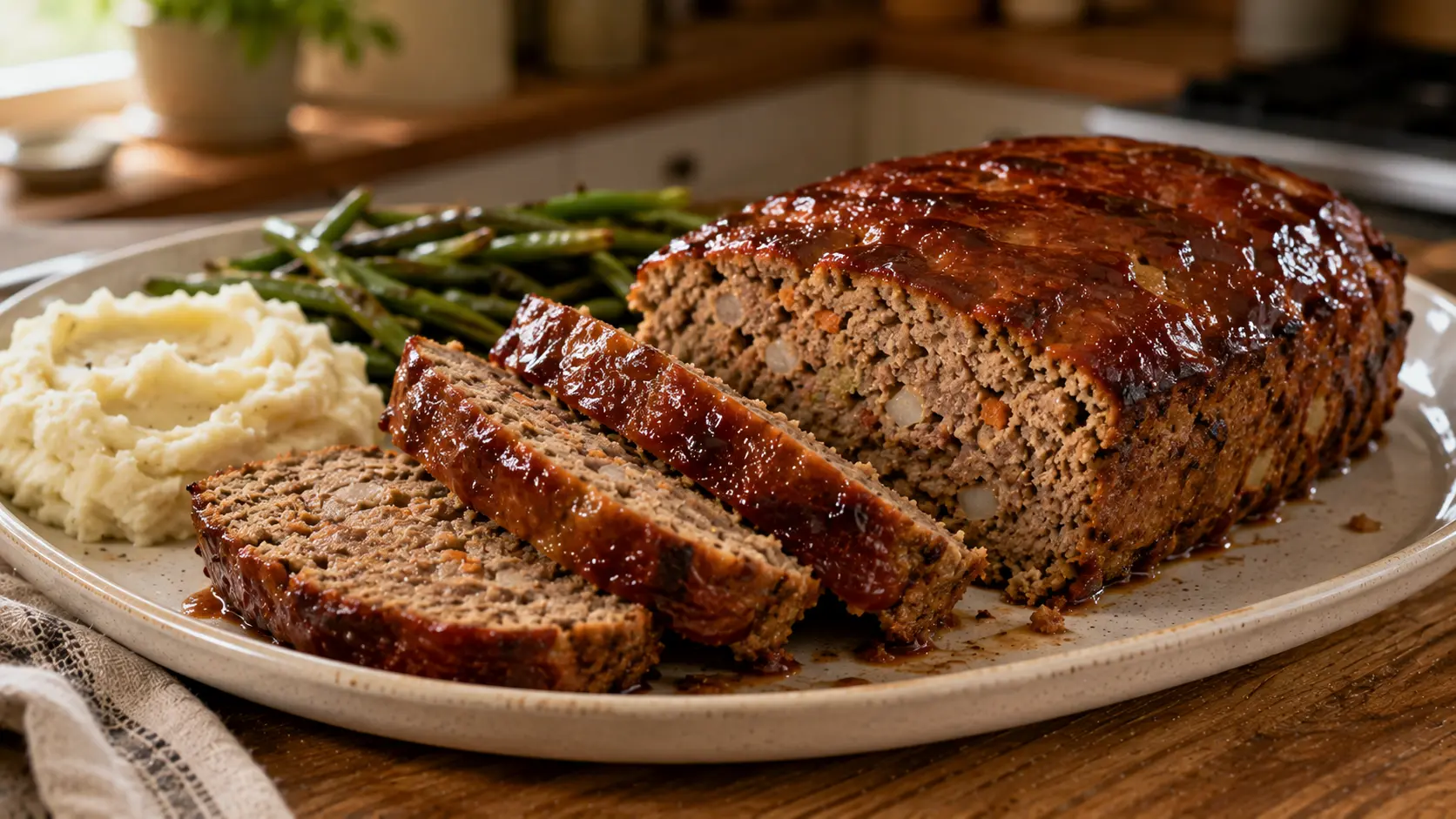
Lighter Classic Meatloaf with Brown Sugar Glaze
Ingredients
Method
- Preheat oven to 375°F (190°C).
- Line a rimmed baking sheet with parchment paper or foil.
- Place oats in a mixing bowl and pour milk over them.
- Let the oats hydrate for 5–10 minutes.
- Finely dice onion, grate carrot, and mince garlic.
- Add egg, Worcestershire sauce, Dijon mustard, thyme, paprika, salt, and pepper to the oat mixture.
- Stir in onion, carrot, and garlic.
- Add ground beef.
- Mix gently just until evenly combined.
- Transfer mixture to the prepared baking sheet.
- Shape gently into an approximately 9-inch-long loaf.
- Mix ketchup, brown sugar, Dijon, apple cider vinegar, and garlic powder in a small bowl.
- Spread approximately half the glaze over the raw meatloaf.
- Bake uncovered for 30 minutes.
- Remove from oven and spread remaining glaze over the top.
- Return to oven and bake approximately 20–30 minutes longer.
- Check the thickest center with an instant-read thermometer.
- Remove when the ground-beef meatloaf reaches 160°F (71°C).
- Rest for 10–15 minutes.
- Slice and serve.
Notes
- Use 90–93% lean beef for a good balance between a lighter recipe and moist texture.
- Hydrate the oats before adding the meat.
- Finely chop or grate vegetables so the loaf holds together well.
- Mix the beef gently and only until combined.
- Don’t tightly compact the loaf while shaping.
- Bake uncovered.
- Use an instant-read thermometer to determine doneness.
- Ground beef should reach 160°F (71°C).
- Rest the meatloaf for at least 10 minutes before slicing.
- Leftovers can be refrigerated for approximately 3–4 days.
- For best freezer quality, use frozen cooked meatloaf within approximately 2–3 months.