Lighter Garlic Herb Butter Roasted Turkey
A Thanksgiving turkey doesn’t need an entire stick of butter under every inch of skin to turn out juicy and flavorful. This Lighter Garlic Herb Butter Roasted Turkey uses a smaller amount of butter combined with olive oil, fresh garlic, rosemary, thyme, parsley, and lemon to create golden skin and plenty of savory flavor without making the bird feel unnecessarily heavy.
The key is concentrating the herb butter where it matters most: directly over and under the breast skin, then using a lighter olive-oil coating over the rest of the turkey. That gives the breast protection as it roasts while keeping the overall recipe more balanced.
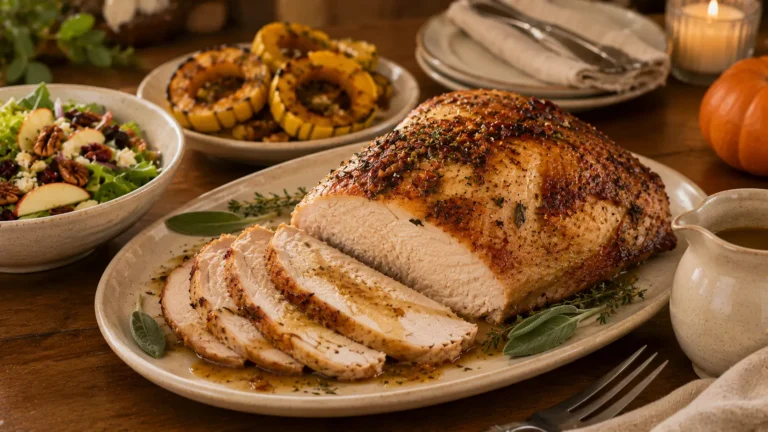
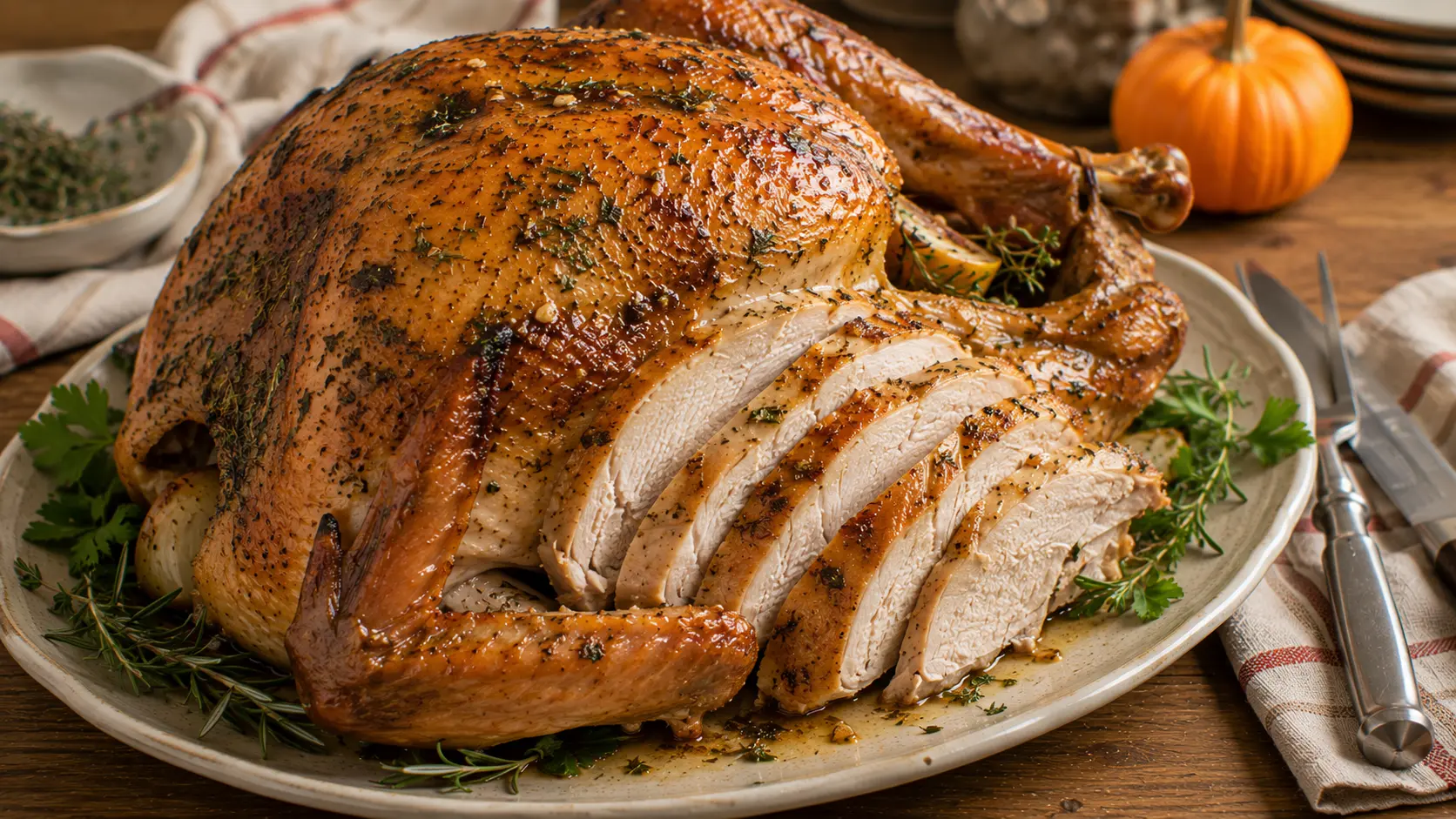
The result is a classic golden Thanksgiving turkey with crisp skin, juicy meat, fragrant herbs, and pan juices that are perfect for spooning over carved slices or turning into gravy.
Serve it with our Cozy Brown Butter Sage Stuffing with Sausage for a traditional savory side, or pair it with Slow Cooker Cranberry Sauce with Orange Zest for a brighter contrast on the plate.
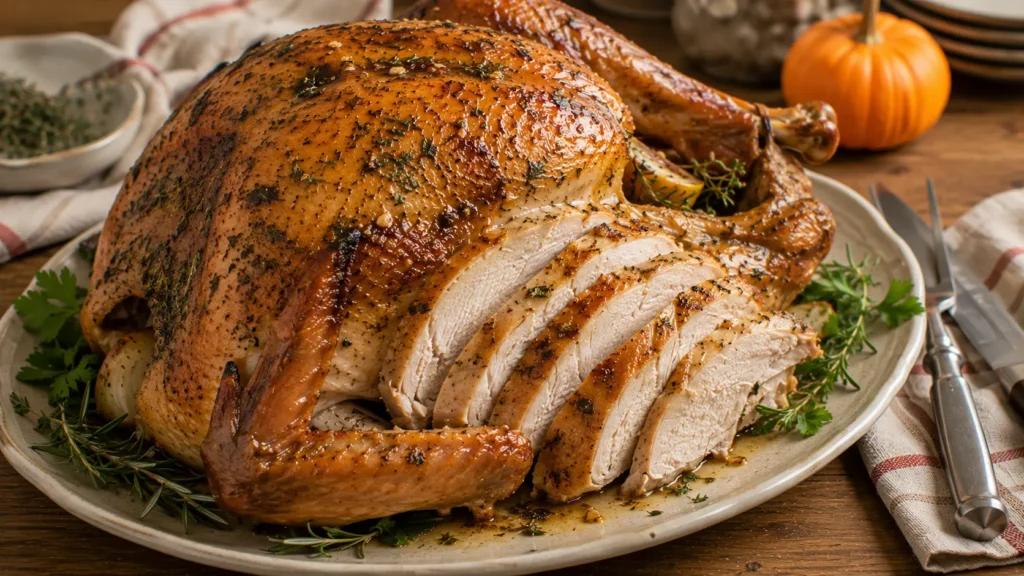
Easy Thanksgiving Garlic Herb Turkey
Roasting a whole turkey is mostly about managing moisture and temperature.
The outside needs enough fat to brown beautifully, but the breast meat can dry out if the turkey stays in the oven too long.
For this version, we use a modest garlic-herb butter mixture underneath the breast skin, where it can directly protect and flavor the leanest meat. Olive oil is used over the rest of the skin so the turkey still browns without requiring a large quantity of butter.
The cavity is filled with onion, lemon, garlic, and herbs—not as stuffing, but simply to add aroma while the turkey roasts.
And rather than trusting a fixed cooking time, we rely on internal temperature to determine when the turkey is ready.
⭐ Why You’ll Love This Recipe
Lighter than traditional butter-heavy turkey: You still get rich flavor, but with less butter overall.
Classic Thanksgiving taste: Garlic, rosemary, thyme, parsley, and lemon keep the flavor familiar.
Juicy breast meat: Herb butter under the skin helps protect the lean white meat.
Golden skin: Olive oil helps the exterior roast beautifully.
Perfect holiday centerpiece: A whole turkey gives you that classic Thanksgiving presentation.
Works with almost any side dish: Stuffing, Brussels sprouts, cranberry sauce, sweet potatoes, and salads all fit naturally around it.
If you want a different turkey option for a smaller gathering, our Cranberry Orange Glazed Turkey Breast offers a sweet-tart holiday flavor instead.
🛒 Ingredients
Whole Turkey — 12 to 14 Pounds
Use a completely thawed turkey.
Check the cavity and remove the neck and giblet packet before seasoning.
Unsalted Butter — 4 Tablespoons
This is intentionally less than many traditional roast turkey recipes.
The butter goes primarily under the breast skin where it has the most impact.
Olive Oil — 3 Tablespoons
Olive oil helps coat the exterior and encourages even browning.
Garlic — 5 Cloves
Finely mince or grate the garlic so it blends smoothly into the herb butter.
Fresh Rosemary — 1 Tablespoon, Finely Chopped
Rosemary brings that unmistakable holiday aroma.
Fresh Thyme — 1 Tablespoon
Fresh thyme works particularly well with turkey and lemon.
Fresh Parsley — 2 Tablespoons, Finely Chopped
Parsley adds freshness and rounds out the herb mixture.
Lemon Zest — 1 Teaspoon
A small amount brightens the garlic and herbs.
Kosher Salt — 2½ Tablespoons
Adjust this if your turkey is pre-brined or injected with a salt solution.
Black Pepper — 1½ Teaspoons
Freshly ground black pepper adds gentle savory heat.
Garlic Powder — 1 Teaspoon
A little garlic powder helps season the exterior evenly.
Onion — 1 Large
Quarter it and place it loosely in the cavity.
Lemon — 1
Halve it and place it inside the cavity.
Fresh Herb Sprigs
Use a few extra rosemary, thyme, and parsley sprigs inside the cavity.
Chicken or Turkey Broth — 2 Cups
Add broth to the roasting pan so the drippings don’t scorch.
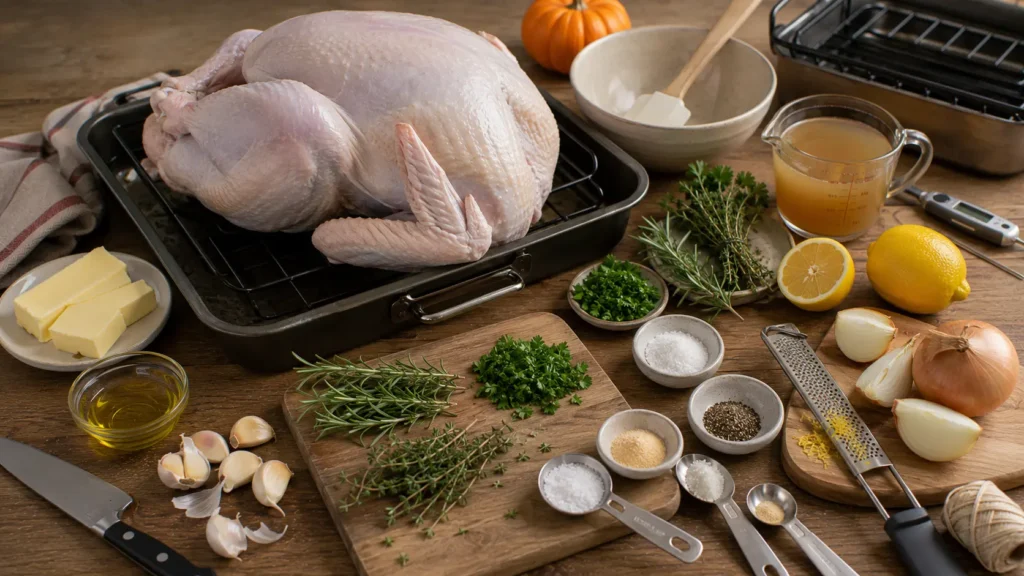
👩🍳 How to Make Lighter Garlic Herb Butter Roasted Turkey
1. Thaw the Turkey Completely
Make sure the turkey is completely thawed before cooking.
A partially frozen turkey will cook unevenly.
2. Remove the Turkey From the Refrigerator
Take the turkey out approximately 45–60 minutes before roasting.
3. Preheat the Oven
Preheat your oven to 325°F (165°C).
4. Prepare the Roasting Pan
Place a roasting rack inside a large roasting pan.
Pour approximately 1 cup of broth into the bottom of the pan.
5. Remove Neck and Giblets
Check both cavities and remove the neck and giblet packet.
Save them for gravy if desired.
6. Dry the Turkey Thoroughly
Pat the entire turkey dry with paper towels.
Dry skin browns far more effectively than wet skin.
7. Make the Herb Butter
In a small bowl, combine:
- softened butter
- minced garlic
- rosemary
- thyme
- parsley
- lemon zest
- 1 teaspoon black pepper
Mix until evenly combined.
8. Loosen the Breast Skin
Carefully slide your fingers underneath the breast skin from the cavity side.
Work slowly so you don’t tear it.
9. Add Herb Butter Under the Skin
Spread approximately two-thirds of the garlic herb butter directly over the breast meat beneath the skin.
10. Add Remaining Butter
Rub the remaining butter lightly over the upper breast skin.
11. Coat With Olive Oil
Rub olive oil over the remaining turkey skin, including the legs and wings.
12. Season the Outside
Sprinkle evenly with kosher salt, remaining black pepper, and garlic powder.
13. Fill the Cavity
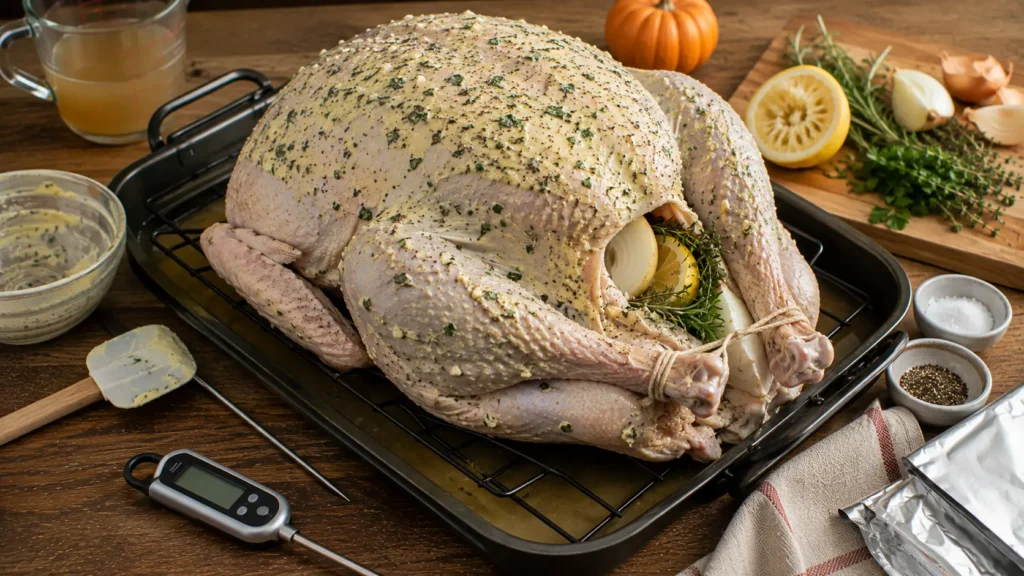
Place the onion quarters, lemon halves, and several herb sprigs loosely inside the turkey cavity.
Do not pack them tightly.
14. Tuck the Wings
Tuck the wing tips underneath the turkey to reduce burning.
15. Tie the Legs Loosely
Tie the drumsticks loosely together with kitchen twine if desired.
Avoid pulling them extremely tight.
16. Place the Turkey on the Rack
Position it breast-side up.
17. Begin Roasting
Roast uncovered at 325°F (165°C).
18. Check the Pan Liquid
After about 1½ hours, check the roasting pan.
If the broth has mostly evaporated, carefully add more.
19. Monitor Browning
If the breast skin becomes deeply golden before the meat is finished, loosely tent it with aluminum foil.
20. Begin Temperature Checks
Start checking earlier than you think necessary.
Insert a thermometer into the thickest part of the breast and inner thigh without touching bone.
21. Roast Until Safe
Continue roasting until the turkey reaches at least 165°F (74°C) in the thickest parts.
A 12–14 pound turkey will often take around 3 to 3½ hours, but temperature—not the clock—should determine doneness.
22. Remove From the Oven
Transfer the turkey carefully from the oven.
23. Rest
Let it rest for 30–40 minutes before carving.
This is essential for retaining juices.
24. Carve and Serve
Carve the breast, legs, and thighs and arrange on a platter.
Spoon a small amount of pan juice over the carved meat if desired.
🍳 Equipment
You’ll need a large roasting pan, roasting rack, instant-read thermometer or probe thermometer, small mixing bowl, silicone spatula, chef’s knife, cutting board, kitchen twine, measuring spoons, aluminum foil, carving knife, and serving platter.
A reliable thermometer is much more important than following a strict minutes-per-pound formula.
🔄 Variations
Lemon Herb Turkey
Increase the lemon zest and add additional lemon halves inside the cavity for a brighter flavor.
Sage Herb Turkey
Add 1 tablespoon finely chopped fresh sage to the herb butter.
Garlic Rosemary Turkey
Increase the rosemary and reduce the parsley for a stronger herb profile.
Spatchcock Turkey
Butterfly the turkey for faster, more even cooking.
Cooking time will be dramatically shorter.
Turkey Breast Version
Use the same lighter herb-butter approach on a bone-in turkey breast.
If you’re cooking for just a few people, our Brown Butter Sage Roasted Turkey Breast for Two may be an even easier choice.
💡 Pro Tips
Dry the skin thoroughly. This is one of the simplest ways to improve browning.
Keep the butter concentrated under the breast skin. That’s where it protects the leanest meat most effectively.
Use olive oil on the rest. It gives you golden skin without needing excessive butter.
Don’t overstuff the cavity. Aromatics should sit loosely inside.
Watch the breast color. Tent with foil if it browns too quickly.
Use internal temperature. Turkey size and oven calibration vary too much to rely solely on time.
Rest the turkey. Thirty minutes might feel long, but carving too early causes much more juice loss.
🧊 Make Ahead & Storage
You can prepare the garlic-herb butter up to 3 days ahead and refrigerate it in an airtight container.
Let it soften before spreading under the turkey skin.
The turkey can also be seasoned several hours before roasting and refrigerated uncovered. This can help dry the skin further, but keep the turkey properly chilled until you’re ready to cook.
Store cooked turkey leftovers in airtight containers in the refrigerator for 3–4 days.
For freezing, remove the meat from the bones, portion it into freezer-safe containers, and add a small amount of broth or pan juices to help prevent drying.
Freeze for up to 2–3 months for best quality.
❓ Frequently Asked Questions
How Much Turkey Do I Need Per Person?
For a bone-in whole turkey, approximately 1 to 1¼ pounds per person is a useful guideline, especially if you want leftovers.
Do I Need to Baste the Turkey?
Not constantly.
Opening the oven repeatedly lowers the temperature and slows cooking.
The herb butter and oil already provide plenty of surface fat.
Can I Use Salted Butter?
Yes, but reduce the amount of added salt accordingly.
Should I Cover the Turkey From the Beginning?
No.
Roasting uncovered allows the skin to brown.
Tent the breast later only if it becomes too dark.
How Do I Know the Turkey Is Done?
Use a thermometer.
The thickest portions of the breast and thigh should reach a safe final temperature of 165°F (74°C).
Can I Make This With a Pre-Brined Turkey?
Yes, but significantly reduce the added salt.
Always check the packaging first.
Why Is My Turkey Dry?
The most common cause is overcooking.
Use internal temperature and remove the turkey once it reaches a safe final temperature.
🍽️ What to Serve With Garlic Herb Roasted Turkey
This turkey works with nearly every classic Thanksgiving side.
Serve it with Cozy Brown Butter Sage Stuffing with Sausage for a savory bread side, Slow Cooker Cranberry Sauce with Orange Zest for tart sweetness, and Perfect Maple Roasted Brussels Sprouts with Bacon for caramelized vegetables.
Our Easy Brown Sugar Pecan Sweet Potato Casserole adds the classic sweet Thanksgiving side.
For dessert, finish with Maple Bourbon Pecan Pie Brownies if you want something rich and chocolatey instead of another pie.
📊 Approximate Nutrition
Based on approximately 12 servings:
Calories: ~390
Protein: ~52 g
Carbohydrates: ~2 g
Fat: ~19 g
Sugar: ~0.5 g
Sodium: ~680 mg
Nutrition is an estimate and varies depending on turkey size, skin consumed, and serving size.
Lighter Garlic Herb Butter Roasted Turkey
Ingredients
Method
- Remove turkey from refrigerator 45–60 minutes before roasting.
- Preheat oven to 325°F (165°C).
- Place a rack inside a large roasting pan and add 1 cup broth.
- Remove neck and giblets.
- Pat turkey thoroughly dry.
- Combine softened butter, garlic, rosemary, thyme, parsley, lemon zest, and 1 teaspoon black pepper.
- Carefully loosen skin over the breast.
- Spread approximately two-thirds of the herb butter under the breast skin.
- Rub remaining butter lightly over the upper breast skin.
- Rub olive oil over the remaining exterior.
- Season with kosher salt, remaining pepper, and garlic powder.
- Place onion, lemon, and herb sprigs loosely inside the cavity.
- Tuck wing tips underneath.
- Tie legs loosely with kitchen twine if desired.
- Place turkey breast-side up on the roasting rack.
- Roast uncovered.
- Check pan liquid after approximately 1½ hours and add broth if needed.
- Tent the breast loosely with foil if it becomes too dark.
- Begin checking internal temperature before the estimated cooking time ends.
- Roast until the thickest parts reach at least 165°F (74°C).
- Remove from oven.
- Rest 30–40 minutes.
- Carve and serve with pan juices if desired.